Greatest Premier League moments that changed tactics, rules and culture
Greatest Premier League moments fans must know and what they teach East Africa
This article highlights some of the greatest Premier League moments and explains what happened, why each moment mattered and the practical lessons for football fans in Tanzania and East Africa. Readers will learn match dates, the immediate impact on tactics, rules or culture, and simple takeaways to use when following fixtures, fantasy football or local coaching conversations.
Why these moments rank among the greatest Premier League moments
Each selected match changed how people played, watched or regulated the game — from finales to incidents that forced clubs and governing bodies to act. The list is ranked by long-term influence rather than drama alone. After each entry you’ll find brief context and clear takeaways so local fans can connect global football history to domestic interest.
Top moments 1–4: drama, discipline and the underdog effect
1) Eric Cantona sends a message — Manchester United vs Crystal Palace, 25 January 1995
What happened: At Selhurst Park Eric Cantona stamped on a Crystal Palace fan after being sent off, an incident that led to a long suspension and legal consequences.
Why it mattered: The episode forced the FA and clubs to tighten rules on player conduct and match security and pushed clubs to manage reputational risk more actively.
Practical takeaways for Tanzanian and East African fans:
- Track suspensions and club statements as closely as lineups—discipline shapes results and image.
- Expect clearer sanctions now; clubs use PR and internal discipline to protect sponsors and fans.
2) Aguerooooo! The title that changed Premier League culture — Manchester City 3–2 QPR, 13 May 2012
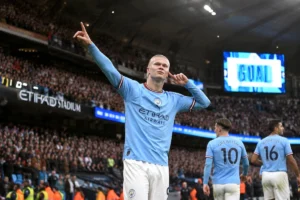
What happened: Sergio Agüero’s stoppage-time goal on 13 May 2012 won City the title on the final day, a moment that amplified the Premier League’s global appeal.
Why it mattered: The finish highlighted the commercial power of dramatic endings and underlined how investment and squad depth can produce last-minute success.
Practical takeaways for Tanzanian and East African fans:
- Never assume a match is over—stoppage-time events affect fantasy picks and match outcomes.
- Watch substitutions and squad rotation; small late-game changes often decide tight contests.
3) The slip that exposed pressure — Liverpool vs Chelsea, 27 April 2014
What happened: Steven Gerrard’s high-profile slip allowed Demba Ba to score, a moment that derailed Liverpool’s title push.
Why it mattered: It exposed how psychological pressure and fatigue can overturn seasons, prompting more focus on mental resilience and recovery in training.
Practical takeaways for Tanzanian and East African fans:
- Form and fatigue matter—monitor minutes played when choosing fantasy players.
- Local coaches can emphasise concentration drills and recovery to reduce costly errors.
4) The Leicester lesson: belief, scouting and smart tactics — Chelsea 2–2 Tottenham, 2 May 2016 (date Leicester clinched)
What happened: Leicester City were confirmed as 2015–16 champions when Chelsea and Tottenham drew 2–2, completing one of the biggest upsets in league history.
Why it mattered: Leicester’s title showed that structured scouting, clear tactics and team cohesion can overcome budget gaps.
Practical takeaways for Tanzanian and East African fans:
- Well-organised teams with good recruitment can upset hierarchies—watch cohesion over headline signings.
- Local clubs can adopt focused tactics and analytics at modest cost to improve competitiveness.
5) The Invincibles show a blueprint for consistency — Arsenal vs Leicester City, 15 May 2004
What happened: Arsenal completed the 2003–04 season unbeaten, sealing the “Invincibles” tag with a 2–1 win over Leicester City on 15 May 2004.
Why it mattered: The run highlighted long-term planning, a coherent playing identity and the value of youth integration and rotation across a full season.
Practical takeaways for Tanzanian and East African fans:
- Value consistency—reward players with sustained minutes and form in fantasy and scouting.
- Develop youth and coaching continuity to replicate success with limited budgets.
- Expect managers to rotate during congested fixtures to protect form over a season.
6) Big money rewrites the league — Manchester City takeover completed, 1 September 2008
What happened: The Abu Dhabi United Group completed its takeover of Manchester City on 1 September 2008, triggering rapid investment in players, staff and facilities.
Why it mattered: The takeover marked a shift to an era of large-scale investment: transfer fees and wages rose, clubs pursued wealthy owners, and infrastructure and analytics became priority areas.
Practical takeaways for Tanzanian and East African fans:
- Follow ownership and infrastructure, not just player names, when assessing long-term club prospects.
- Support investment in academies and facilities locally—transparent, strategic funding lifts domestic leagues.
7) VAR arrives and changes how we watch — Premier League adopts VAR, start of 2019–20 season (August 2019)
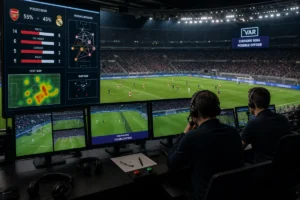
What happened: VAR became fully used in the Premier League from 2019–20, altering decisions on goals, penalties and red cards and introducing new stoppages for reviews.
Why it mattered: VAR changed in-game management and player behaviour near the goal, adding accuracy but also new pauses and debates about subjectivity.
Practical takeaways for Tanzanian and East African fans:
- Be patient during live games—reviews can change final results after delays.
- Learn the principles behind VAR (offside lines, handball interpretation) to understand overturned calls.
- As technology spreads locally, push for transparent protocols and referee training to preserve match flow.
8) José Mourinho arrives and resets English pragmatism — Chelsea appointed manager, 2 June 2004
What happened: José Mourinho’s appointment on 2 June 2004 introduced a highly organised, pragmatic style that emphasised defensive structure and match preparation.
Why it mattered: Mourinho proved tactical discipline and psychology could win titles, influencing coaching priorities across England and beyond.
Practical takeaways for Tanzanian and East African fans:
- Balance flair with organisation—value defensive structure and set-piece preparation in assessments.
- Monitor managerial changes—they often trigger rapid tactical shifts that affect results.
9) Guardiola’s arrival accelerates positional play and data use — Pep Guardiola at Manchester City, 1 July 2016
What happened: Pep Guardiola joined Manchester City on 1 July 2016 and introduced intense positional play, inverted full-backs and heavy analytical support.
Why it mattered: His methods raised tactical standards, encouraged sports science and analytics investment, and influenced youth coaching and recruitment philosophies.
Practical takeaways for Tanzanian and East African fans:
- Watch roles and space, not just names—formation and positioning often predict outcomes.
- Encourage simple data-driven coaching locally—basic tracking and video review improve player development.
10) Financial governance changes reshape club strategy — UEFA Financial Fair Play era (introduced c. 2010–2011)
What happened: Around 2010–2011 UEFA formalised Financial Fair Play rules to limit unsustainable club losses and encourage responsible spending and long-term planning.
Why it mattered: FFP shifted the market toward sustainability: clubs prioritised commercial growth, academy development and smarter recruitment over reckless spending.
Practical takeaways for Tanzanian and East African fans:
- Understand finances as well as pitch results—stable governance underpins long-term success.
- Support academy development and transparent reporting in local football to build durable pathways.
Watching with purpose: how fans turn these moments into action
These moments show that football evolves through decisions on and off the pitch — from single incidents to long-term policies. For fans in Tanzania and East Africa the opportunity is simple: watch actively, learn deliberately and use the lessons to strengthen local football culture. Attend matches, support youth coaching, ask clubs for transparency, and bring the same curiosity you use following the Premier League to domestic campaigns and conversations. When fans combine attention with practical support, the next influential moment in regional football can start at home.