How Modern Football Is Influencing African Clubs and Tanzanian Teams
How Modern Football Is Influencing African Clubs and Tanzanian Teams
Modern football is changing how African clubs compete
Modern football is influencing African clubs in the way teams plan matches, recruit players and develop talent. For clubs in Tanzania and across East Africa, success is no longer based only on individual skill or physical strength. Coaching structure, tactical flexibility, football statistics and professional daily habits are becoming equally important.
This shift can be seen in domestic competitions such as the NBC Premier League, as well as in CAF club tournaments. Teams are expected to manage different match situations, study opponents and maintain intensity for longer periods. A club that can adjust its approach during a match often has a better chance of controlling football results, especially against opponents with different styles.
Modern methods do not mean that every African club must copy European teams. Instead, they offer practical tools that can be adapted to local conditions, available facilities and the strengths of each squad.
Tactical flexibility and high pressing are key influences
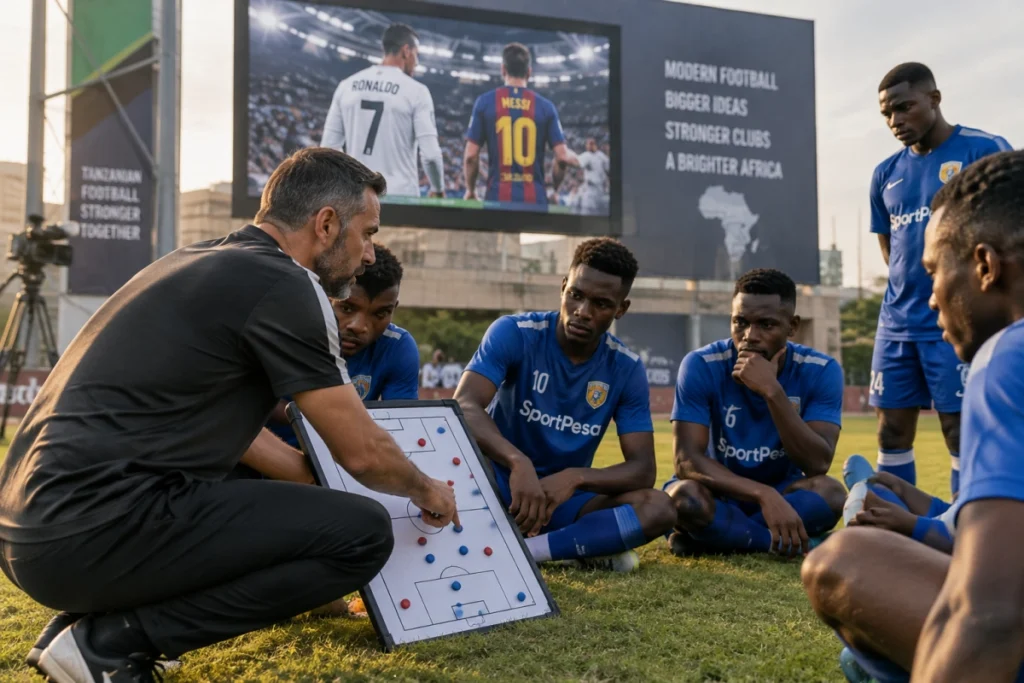
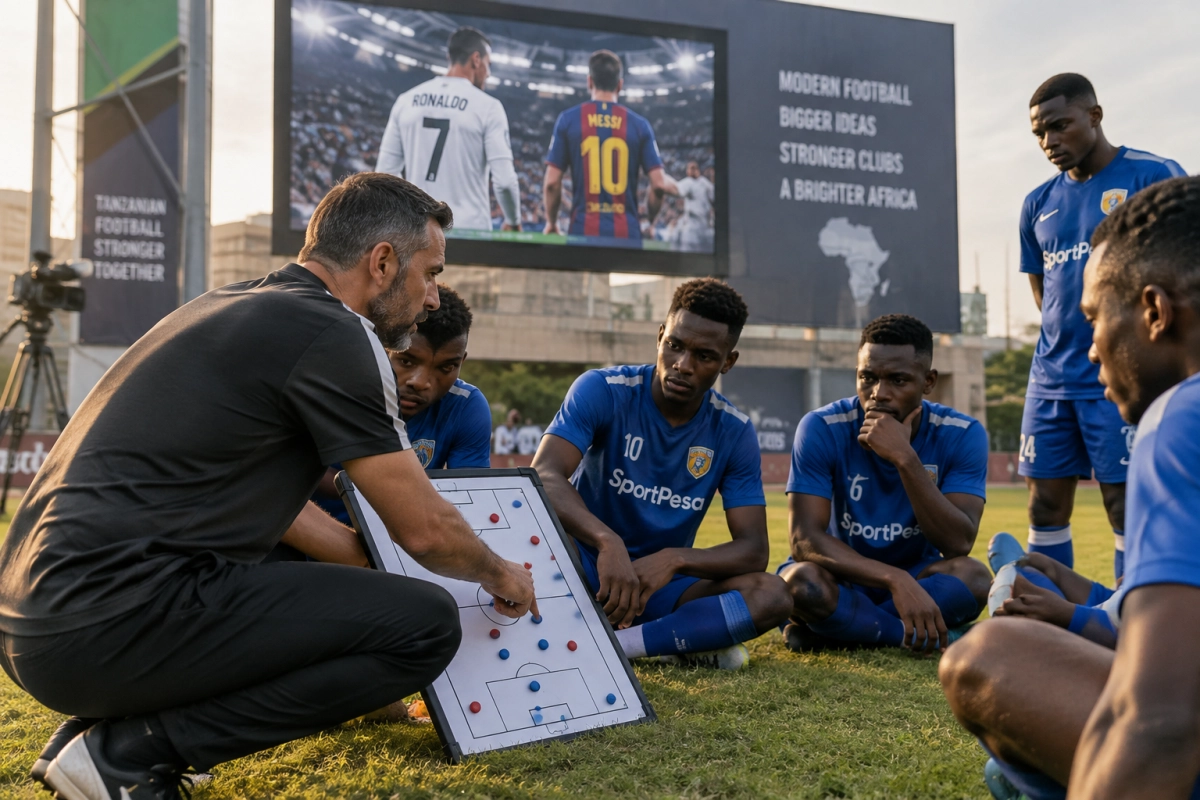
One major change is the growing importance of tactical flexibility. A team may begin with a 4-3-3 formation but move into a 4-4-2 when defending or a 3-2-5 shape when building attacks. These changes can help a club create space, protect a lead or respond to an opponent’s formation.
How pressing affects match performance
High pressing means trying to win the ball soon after losing it. Players do not simply run towards the opponent; they follow planned pressing triggers, such as a poor first touch, a pass back to the goalkeeper or a defender receiving the ball near the touchline.
- Defenders: Move forward together to reduce space between the lines.
- Midfielders: Block passing options and support the first challenge.
- Forwards: Guide the opponent towards areas where a mistake is more likely.
When pressing is coordinated, it can produce quick transitions and goal-scoring chances. However, it also requires fitness, communication and discipline. If one player presses alone, gaps can appear behind the midfield or between the full-back and centre-back. This is why coaches increasingly use video analysis to show players when to press, when to delay and when to recover into a defensive shape.
Data-informed recruitment supports better squad building
Recruitment is also becoming more detailed. Coaches and sporting directors now consider more than goals, assists or reputation. They may assess passing accuracy, ball recoveries, progressive runs, sprint capacity and decision-making under pressure.
Data is most useful when combined with live scouting. A statistic can identify a promising winger, but scouts still need to examine the player’s technique, attitude, consistency and ability to adapt to a new league. In African football, behavioural qualities and technical ability remain especially important because players must often handle travel, changing pitches and demanding competition schedules.
This approach can help Tanzanian clubs find suitable talent instead of signing players based only on short-term results. The next part will examine how academies, education, fitness programmes and professional standards can turn recruitment into lasting player development.
Academies are linking player development with education
Player development is becoming more organised as African clubs invest in academies and youth programmes. Rather than focusing only on winning age-group matches, coaches are expected to build technical, tactical and personal skills over several years. Young players may work on receiving under pressure, scanning before getting the ball, combining in small spaces and making decisions quickly.
Education is an important part of this process. Players who understand communication, time management and basic financial responsibility may be better prepared for the demands of professional football. Schooling also gives young people an alternative pathway if they do not reach the highest level of the sport. For Tanzanian clubs, combining football training with education can make academies more attractive to families and create a stronger foundation for long-term development.
Good academies also use age-appropriate training. A young player should not be judged only by physical size or early speed, because late developers can become important professionals. Regular assessments of technique, movement, decision-making and attitude help coaches identify progress more fairly. This can give clubs a wider talent pool and reduce the risk of releasing players too early.
Fitness programmes are becoming more specific and measurable
The physical side of football is also changing. Fitness training is no longer limited to running laps or general strength exercises. Modern programmes are designed around the demands of a player’s position and the team’s style. A full-back in a pressing system may need repeated high-speed runs, while a central midfielder may require endurance, agility and the ability to recover quickly between actions.
Coaches and medical staff can use training records, GPS devices where available and simple performance tests to monitor workload. These tools can show how far a player runs, how often they sprint and whether their performance is dropping during a busy period. Even clubs without expensive technology can record attendance, exercise intensity, recovery complaints and match minutes to make better decisions.
Recovery is equally important. Sleep, hydration, nutrition, stretching and injury prevention can help players maintain performance across domestic fixtures and CAF competitions. This is particularly valuable in East Africa, where long journeys, warm conditions and uneven recovery time can place extra pressure on squads. A well-planned rotation policy may protect key players without reducing the team’s competitiveness.
Professional standards are raising expectations across East Africa
Modern football is also influencing the daily culture of clubs. Punctuality, organised travel, clear communication and consistent training attendance are becoming signs of a serious professional environment. Players are expected to arrive prepared, follow tactical instructions and take responsibility for their physical condition.
Club staff are becoming more specialised as well. In addition to the head coach, a team may rely on assistant coaches, analysts, fitness trainers, physiotherapists and doctors. Their work helps connect recruitment, training and match preparation instead of treating each area separately. Strong administration is important too, including reliable contracts, player registration, safeguarding procedures and clear communication about payments.
For Tanzanian and other East African clubs, these standards can improve trust among players, supporters and sponsors. They can also make it easier to retain talent and compete for players who have several options. Professionalism does not depend entirely on expensive facilities; it begins with consistent processes, accountability and a willingness to improve.
Building a stronger future for African football
The influence of modern football will continue to grow as African clubs adapt useful ideas to their own competitive environments. The most successful teams will be those that combine new methods with local knowledge, strong leadership and a clear understanding of their players’ needs.
For Tanzanian and East African football, progress will depend on patience and consistency. Better coaching, reliable club structures and improved development pathways can create benefits that extend beyond a single season. With the right balance of ambition, discipline and practical investment, clubs can become more competitive while giving players a stronger foundation for long-term success.