Greatest Premier League Moments: Title Races, Goals and Turning Points
Greatest Premier League Moments: Title Races, Goals and Turning Points
Why the Greatest Premier League Moments Still Matter
The greatest Premier League moments are more than memorable goals or famous celebrations. They have changed title races, shaped club identities and created football memories shared by supporters around the world, including fans across Tanzania and East Africa. This historical examination follows the competition from its launch in 1992, highlighting title-deciding matches, extraordinary goals, dramatic comebacks, record-breaking performances and landmark events.
The Premier League quickly became known for its speed, competitive pressure and global reach. Early champions such as Manchester United established a winning standard, while Blackburn Rovers’ 1994/95 triumph showed that the title could be won by a well-built challenger. These moments helped create the modern league’s central appeal: every season can produce an unexpected hero or a decisive result on the final day.
Early Title Races That Defined the Competition
Manchester United’s first Premier League era
Manchester United won the inaugural Premier League title in the 1992/93 season under Sir Alex Ferguson. The achievement ended the club’s 26-year wait for an English top-flight championship and began a period of sustained success. Players such as Eric Cantona brought creativity and leadership, while the team’s ability to perform consistently over a long season became a model for future champions.
The 1998/99 campaign produced another landmark moment. Manchester United secured the title on 16 May 1999 after recovering from a goal down to defeat Tottenham Hotspur 2-1 at Old Trafford. Although the match was not the final fixture of the season, it confirmed United as champions and completed the first part of an historic treble that also included the FA Cup and UEFA Champions League.
Blackburn Rovers challenge the established order
On 14 May 1995, Blackburn Rovers won the Premier League title despite losing 2-1 away to Liverpool on the final day. Manchester United defeated West Ham United 1-0 but finished one point behind Blackburn. Alan Shearer’s goals were central to the campaign, and the title demonstrated how effective recruitment, strong organisation and consistent finishing could disrupt the league’s developing hierarchy.
Unbeaten Arsenal and the Rise of New Contenders
Arsenal’s 2003/04 season remains one of the competition’s defining achievements. Arsène Wenger’s side completed the campaign without defeat, recording 26 wins and 12 draws. The team became known as the “Invincibles”, combining Thierry Henry’s attacking quality with Patrick Vieira’s midfield strength and a disciplined defensive structure.
The unbeaten run also changed how Premier League success was judged. Arsenal did not simply win the league; the club created a record that remains a reference point whenever supporters compare dominant teams. It showed that technical football, tactical flexibility and consistency could overcome the pressure of a 38-match season.
Other defining moments would soon come from dramatic comebacks and late title-winning goals, with Manchester City, Leicester City and several unforgettable individual performances adding new chapters to Premier League history.
Manchester City’s Last-Gasp Title Triumph
Aguero’s goal changes the title race
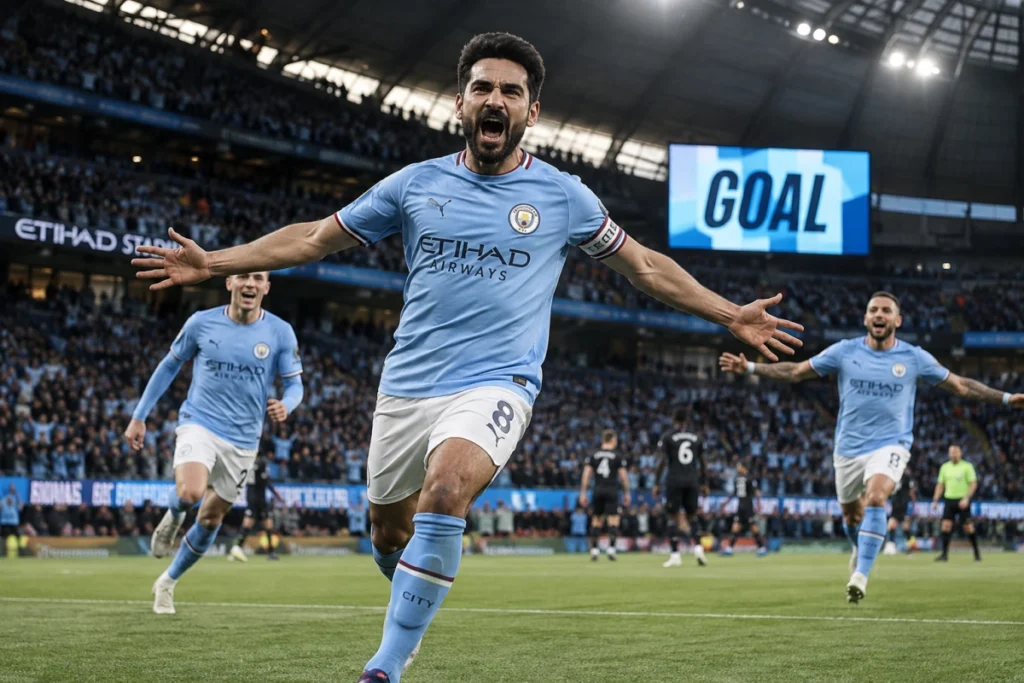
The 2011/12 title race produced one of the most dramatic endings in Premier League history. Manchester City needed to beat Queens Park Rangers at the Etihad Stadium on 13 May 2012 to be certain of winning their first league title since 1968. City appeared to be in control when Pablo Zabaleta opened the scoring, but QPR responded with two goals and led 2-1 deep into stoppage time.
Edin Džeko equalised in the 92nd minute before Sergio Agüero received the ball from Mario Balotelli and scored in the fourth minute of added time. His low finish into the corner completed a 3-2 victory and gave City the championship on goal difference over Manchester United. The goal was significant not only because it decided the title, but because it marked a change in the Premier League’s balance of power. Manchester City had become a major force, capable of challenging the established dominance of United, Arsenal and Chelsea.
Leicester City’s Unlikely Championship
A 5,000-1 story becomes reality
Leicester City’s 2015/16 title win is widely regarded as the Premier League’s greatest underdog achievement. The club had narrowly avoided relegation the previous season, yet Claudio Ranieri built a team that combined defensive discipline, rapid counter-attacking and remarkable consistency. Jamie Vardy scored in 11 consecutive league matches, setting a new Premier League record, while Riyad Mahrez provided creativity and finished the campaign as the division’s outstanding individual player.
Leicester confirmed the title on 2 May 2016 when Chelsea drew 2-2 with Tottenham Hotspur at Stamford Bridge. The result ended Tottenham’s challenge and allowed Leicester’s players and supporters to celebrate without playing that evening. Their success showed that a club without the financial resources or recent history of the traditional powers could still win the league through clear tactics, collective confidence and exceptional recruitment.
Records, Comebacks and a New Standard of Excellence
Liverpool’s relentless pursuit of the title
Liverpool’s 2018/19 campaign demonstrated how a title can be lost despite an extraordinary points total. Jürgen Klopp’s side collected 97 points, then the highest total achieved by a team that did not win the Premier League. Manchester City finished one point ahead after a season-long contest in which both clubs set an exceptional standard for consistency. Liverpool responded the following season, winning the 2019/20 title with seven matches remaining and ending a 30-year wait for the English championship.
Record-breaking performances reshape expectations
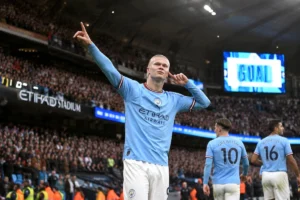
Individual records have also become central to the league’s history. Erling Haaland scored 36 goals for Manchester City in 2022/23, setting a new record for goals by a player in a Premier League season. His achievement reflected the competition’s continuing evolution, as elite forwards, advanced data analysis and increasingly demanding tactical systems pushed attacking standards higher. Alongside title deciders and dramatic comebacks, such performances show why Premier League history is continually being rewritten.
The Premier League’s Enduring Legacy
The Premier League continues to thrive because its defining moments are never limited to one type of story. A last-minute goal, an unexpected champion, a record-breaking individual display or a dramatic shift in power can all reshape how football is remembered. That uncertainty keeps every season compelling and ensures that new generations of supporters can find their own place in the competition’s history.
From 1992 to the present, these moments have given the league a distinctive identity built on intensity, ambition and emotional unpredictability. As clubs, players and managers continue to challenge established records, the next unforgettable chapter is always waiting to be written.