La Liga History and Records: Clubs, Scores and Historic Milestones
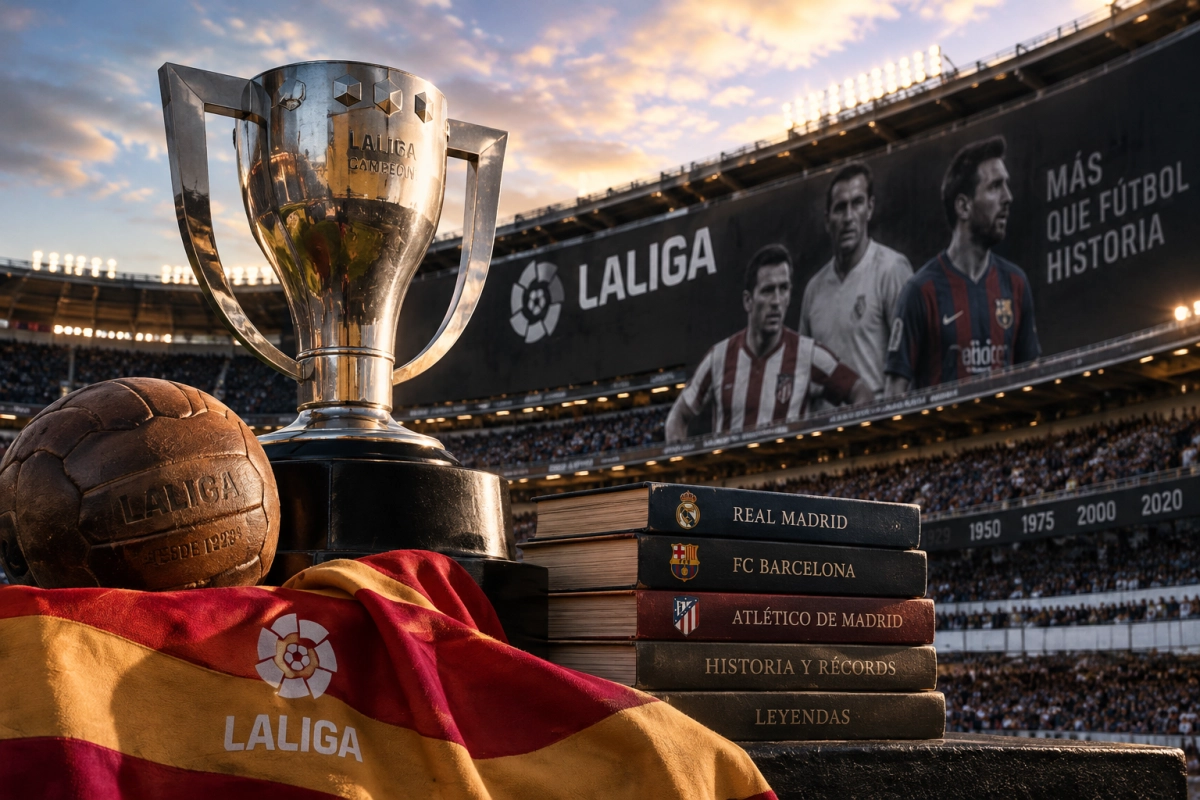
Understanding La Liga History and Records
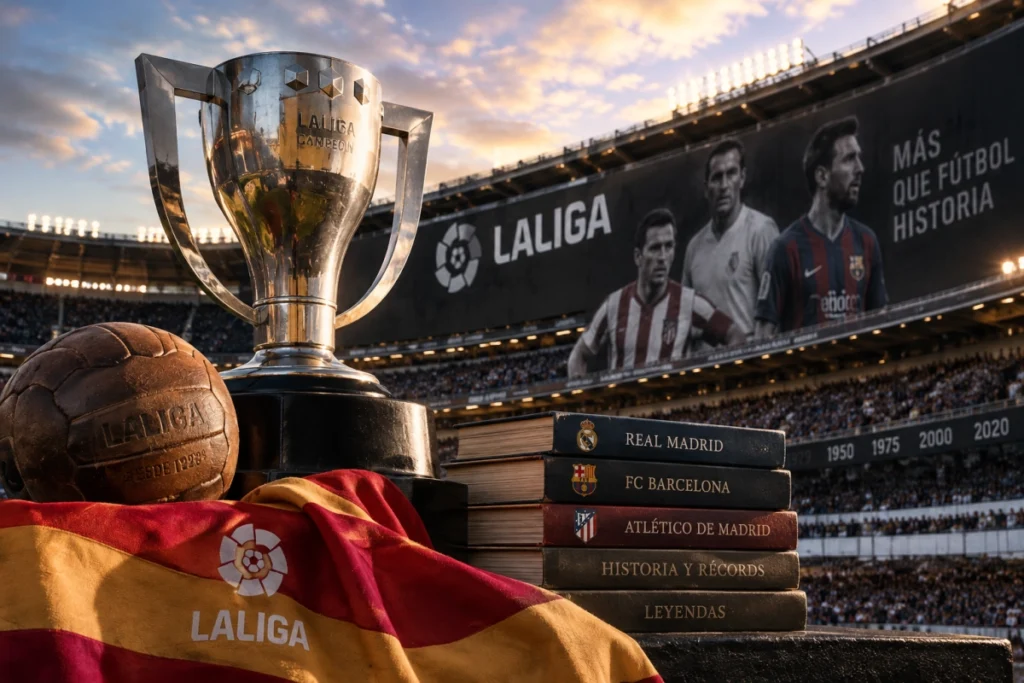
La Liga history and records reveal how Spain’s top division has changed from its early years to the modern era. This guide examines the most successful clubs, remarkable scorelines, unbeaten runs, appearance leaders and leading goalscorers, while explaining why each achievement matters to football supporters in Tanzania, East Africa and around the world.
La Liga began in the 1929 season with 10 clubs. Since then, the competition has expanded, changed its format and developed into one of Europe’s most influential leagues. Its records reflect more than numbers: they show the impact of strong academies, tactical innovation, financial power and long-term club organisation.
It is also important to separate league records from achievements in all competitions. A player’s total goals for a club may include the Copa del Rey and European matches, while the statistics in this guide focus on La Liga fixtures unless stated otherwise.
Real Madrid Lead the List of La Liga’s Most Successful Clubs
Real Madrid remain the most successful club in La Liga history, with 36 league titles through the 2025–26 season. Their dominance has appeared across several eras, from the team led by Alfredo Di Stéfano in the 1950s to the modern sides built around elite international players.
Barcelona are next with 29 championships, including their latest title in May 2026. The club’s success has often been connected to its possession-based style and famous youth academy, La Masia. Barcelona’s influence became especially strong during the late 2000s and 2010s, when players such as Xavi, Andrés Iniesta and Lionel Messi helped shape a highly successful generation.
- Real Madrid: 36 La Liga titles
- Barcelona: 29 titles
- Atlético Madrid: 11 titles
- Athletic Club: 8 titles
- Valencia: 6 titles
Atlético Madrid’s 11 championships provide an important contrast. While Real Madrid and Barcelona have generally enjoyed greater financial resources, Atlético have repeatedly challenged them through defensive organisation, disciplined pressing and effective squad building. Athletic Club’s eight titles also carry special historical importance because the club has traditionally relied on players connected to the Basque region.
Why the title record matters
The distribution of titles shows that La Liga has never been completely equal, but it has not been defined by only two clubs either. Atlético, Athletic Club, Valencia, Real Sociedad, Deportivo La Coruña and Sevilla have all won the competition. Deportivo’s 1999–2000 championship remains particularly memorable because it interrupted the usual dominance of Spain’s biggest institutions.
Big Scorelines Show La Liga’s Changing Eras
Large victories are another important part of La Liga history and records. Early Spanish football often produced open matches, with attacking teams taking advantage of less structured defensive systems. One of the competition’s most famous results came in 1931, when Athletic Club defeated Barcelona 12–1.
That scoreline remains the record for the biggest victory in La Liga. It must be viewed in its historical setting rather than compared directly with modern results. Today’s teams use more organised defensive shapes, specialised coaching and detailed match analysis, making extreme scorelines less common.
These historic results provide the foundation for the next records: the longest unbeaten and winning runs, followed by the players who have appeared and scored most often in Spain’s top flight.
Barcelona’s Unbeaten Run Sets a Modern League Benchmark
Barcelona hold La Liga’s longest unbeaten run, going 43 league matches without defeat between April 2017 and May 2018. The sequence began near the end of the 2016–17 campaign and continued through the following season, when Barcelona won the title under Ernesto Valverde.
The run included 34 victories and nine draws, showing that consistency was as important as attacking quality. Lionel Messi, Luis Suárez and Andrés Iniesta provided creativity and goals, while Sergio Busquets helped control matches from midfield. Barcelona eventually lost to Levante in a remarkable 5–4 match, with the title already secured.
Before Barcelona’s achievement, Real Sociedad had gone unbeaten for 38 matches across the 1979–80 and 1980–81 seasons. That earlier record remains significant because it was achieved in a different tactical era, when teams played fewer matches with modern sports science, squad rotation and data analysis. Real Sociedad’s run ended without a championship, but the club still won the title the following season.
Winning streaks measure dominance differently
An unbeaten run rewards resistance and reliability, while a winning streak demonstrates complete control. Real Madrid’s 22 consecutive league victories from the end of the 2014–15 season into 2015–16 remain the competition’s longest winning sequence. The team, managed by Carlo Ancelotti, combined Cristiano Ronaldo’s finishing with the midfield quality of Luka Modrić, Toni Kroos and James Rodríguez.
These records matter because a title can be won through a strong finish, but an unbeaten or winning run demands excellence over several months. It also places pressure on every opponent, as one dropped point can become a major event in the championship race.
Joaquín and Zubizarreta Define Longevity in La Liga
La Liga’s appearance record highlights a different kind of achievement: the ability to remain valuable across changing managers, teammates and football generations. Joaquín Sánchez shares the league record of 622 appearances, reaching the mark during his long career with Real Betis, Valencia, Málaga and Fiorentina before retiring in 2023.
Joaquín’s record is especially notable because he played as a wide attacker, a position that often demands speed and can shorten a player’s career. His longevity reflected technical quality, professionalism and the capacity to adapt. He also became one of Spanish football’s most recognisable personalities.
Former goalkeeper Andoni Zubizarreta also made 622 appearances, representing Athletic Club, Barcelona and Valencia. His total was built across the 1980s and 1990s, when he became a key figure for Barcelona’s successful team under Johan Cruyff and Spain’s national side.
The appearance record rewards durability rather than one exceptional season. It shows how players can influence La Liga over decades, creating a link between different tactical periods and generations of supporters.
Messi’s 474 Goals Stand Above La Liga’s Scoring Records
Lionel Messi is La Liga’s leading goalscorer with 474 goals for Barcelona. He scored them across 520 league appearances, an extraordinary rate that combined close control, acceleration, creative passing and precise finishing. Messi won the Pichichi award, given to the league’s top scorer, eight times.
Cristiano Ronaldo ranks second with 311 goals, despite playing 292 league matches for Real Madrid. His record reflects an exceptional scoring rate, particularly during the rivalry between Real Madrid and Barcelona in the 2010s. Karim Benzema follows with 238 goals, ahead of Hugo Sánchez on 234 and Raúl González on 228.
These totals matter because they combine longevity with sustained elite performance. Scoring regularly in La Liga requires success against deep defences, physical marking and high-pressure matches. Messi’s record therefore represents not only Barcelona’s attacking era, but also one of the most productive individual periods in top-level football.
Why La Liga’s Records Continue to Matter
La Liga’s records are not fixed monuments; each one remains part of an ongoing conversation about excellence, endurance and change. New generations will challenge established marks, but the achievements of earlier players and clubs will continue to provide the standards by which greatness is judged.
For supporters in Tanzania, East Africa and beyond, these records also offer a way to connect different eras of Spanish football. They turn famous names and historic clubs into a shared sporting history, while reminding us that every extraordinary statistic began with a team, a player and a moment that changed the competition.