World Cup Golden Boot: Rules, Records and African Scorers
World Cup Golden Boot: How the Award Is Decided
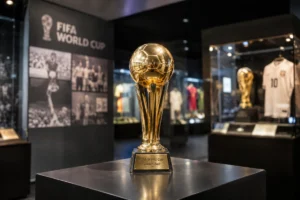
The World Cup Golden Boot is awarded to the player who scores the most goals at the FIFA World Cup. This guide explains how the winner is decided, what happens when players finish level, the tournament’s most notable scoring totals and the achievements of African players in World Cup history.
What Is the World Cup Golden Boot?
The Golden Boot recognises the leading goal scorer across the entire World Cup tournament. Goals scored in the group stage and knockout rounds count, including goals in extra time. However, goals scored during a penalty shoot-out do not count towards a player’s tournament total.
The award was known as the Golden Shoe when it was first formally presented in 1982. FIFA later adopted the name Golden Boot, which is now widely used by supporters, broadcasters and football statistics providers.
The award is based on individual goals rather than a player’s assists, team progress or number of appearances. A forward whose team is eliminated early can therefore win the prize if that player scores more goals than anyone else.
How the Golden Boot Winner Is Decided
The first and most important rule is simple: the player with the highest number of goals wins. At the 2026 World Cup, Kylian Mbappé finished as the leading scorer with 10 goals, while Lionel Messi scored eight.
If two or more players finish with the same number of goals, FIFA uses additional criteria to separate them:
- Assists: the player with more assists ranks higher.
- Minutes played: if the assist totals are also equal, the player who played fewer minutes wins the tie-break.
The minutes-played rule rewards greater efficiency. For example, a player who scores the same number of goals in fewer minutes has made a stronger scoring contribution per minute than a player who needed more time on the pitch.
Why the Tie-Break Rules Matter
World Cup scoring races can be extremely close because leading attackers often play a similar number of matches. Assists provide a way to recognise wider attacking influence, while minutes played help distinguish players who have been more productive when given opportunities.
Historical totals also show how demanding the award can be. Just Fontaine scored a record 13 goals for France at the 1958 World Cup. Brazil’s Ronaldo scored eight in 2002, while Germany’s Miroslav Klose won the 2006 award with five goals. Mbappé’s 10 goals in 2026 made him the first player since 1970 to reach double figures in a single World Cup.
African Players and World Cup Scoring Milestones
African football has produced several outstanding World Cup scorers. Ghana’s Asamoah Gyan is Africa’s leading scorer in the competition with six goals. Cameroon’s Roger Milla follows with five, including memorable goals at the 1990 tournament when he became one of the event’s most recognisable players.
It is also important to distinguish between African players representing African nations and African-born players who represented other countries. Just Fontaine was born in Marrakesh, Morocco, but won the Golden Boot with France in 1958. Eusébio, born in Mozambique, won the 1966 award while playing for Portugal.
The next section examines the full list of Golden Boot winners and the scoring records that have shaped World Cup history.
Golden Boot Winners and Notable Scoring Totals
The modern list of Golden Boot winners shows how unusual very high scoring totals are. Paolo Rossi won the 1982 award with six goals, while England’s Gary Lineker also scored six in 1986. Salvatore Schillaci matched that total for Italy in 1990, and the 1994 prize was shared by Russia’s Oleg Salenko and Bulgaria’s Hristo Stoichkov, who each finished with six.
Ronaldo won the 1998 award with four goals before producing a stronger campaign in 2002, when his eight goals helped Brazil lift the trophy. Germany’s Miroslav Klose scored five in 2006, while Thomas Müller won the 2010 award with the same total. Colombia’s James Rodríguez led the 2014 scoring chart with six goals, and England captain Harry Kane matched that figure in 2018.
The 2022 tournament produced another memorable contest. Kylian Mbappé scored eight goals for France, including a hat-trick in the final, but Argentina won the match on penalties. Mbappé then reached 10 goals at the 2026 World Cup, moving him into an exceptionally small group of players to score at least 10 times in one edition.
Records Behind the Biggest World Cup Totals
Just Fontaine’s 13 goals in 1958 remain the record for the most goals scored by a player at a single World Cup. His total is especially remarkable because France played only six matches in that tournament. Fontaine scored in every game, including four goals in the third-place play-off against West Germany.
Brazil’s Ronaldo holds the record for the most World Cup goals by a player from a winning team in one tournament, having scored eight in 2002. He also finished the competition as Brazil’s leading attacking figure, scoring twice in the final against Germany. His achievement formed part of a wider World Cup career in which he scored 15 goals, a record later surpassed by Klose.
Winning totals have varied considerably depending on the tournament format, the number of matches played and the style of football used. A total of four goals was enough to win in 1998, whereas six or more has often been required in other editions. This is why the number of goals should be considered alongside the era and the opportunities available to each player.
African Scorers Who Shaped World Cup History
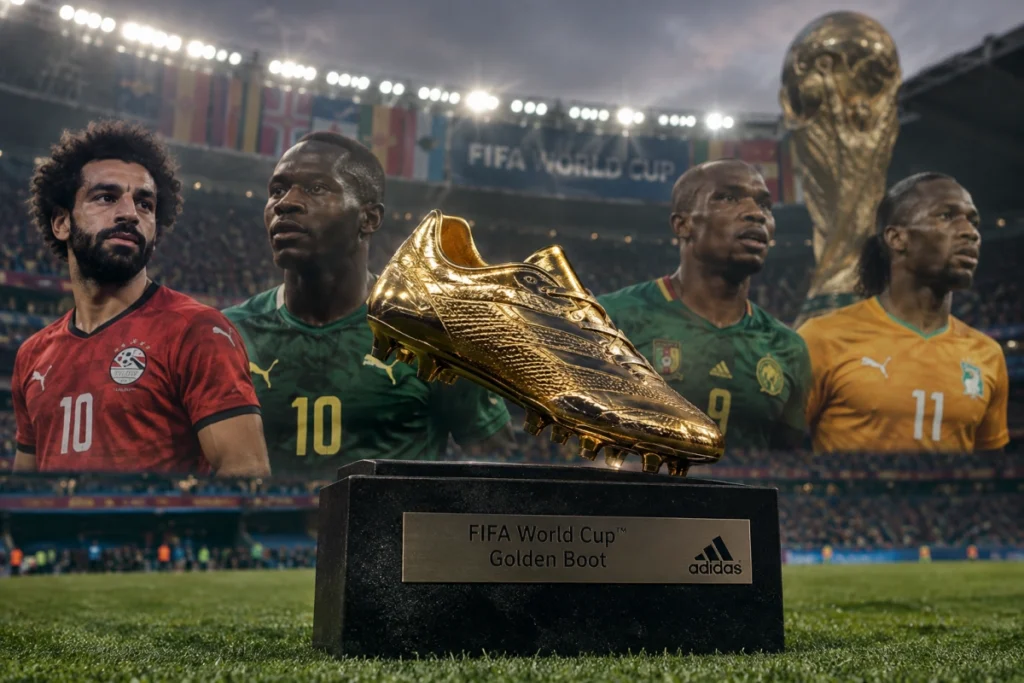
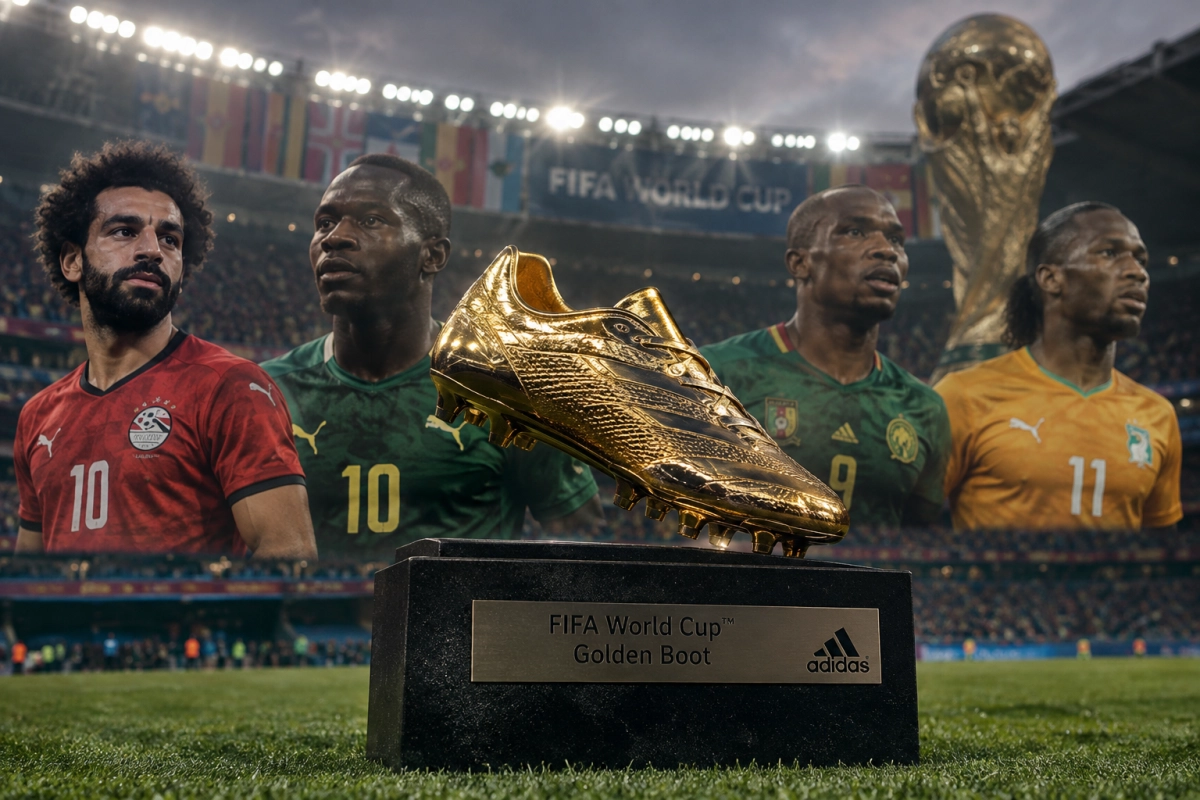
Although no player representing an African nation has yet won the Golden Boot, several have produced outstanding individual campaigns. Senegal’s Papa Bouba Diop, Ghana’s Asamoah Gyan and Cameroon’s Roger Milla are among the continent’s most memorable scorers, while Morocco’s progress to the semi-finals in 2022 demonstrated the growing competitive strength of African teams.
Gyan’s six goals came across three World Cups and included important finishes from open play and the penalty spot. He also became the first African player to score in three consecutive World Cup tournaments. Milla’s goals at Italia 90 helped Cameroon reach the quarter-finals, then the best-ever result by an African nation at the time.
The Golden Boot’s Place in World Cup History
The World Cup Golden Boot remains one of football’s most prestigious individual honours. Its winners are remembered not only for their final goal totals, but also for the moments, performances and lasting influence they create on the tournament’s biggest stage. As future World Cups bring new contenders and fresh records, the award will continue to connect individual brilliance with the enduring history of international football.