Modern Football Tactics Explained: Pressing, Possession and Transitions
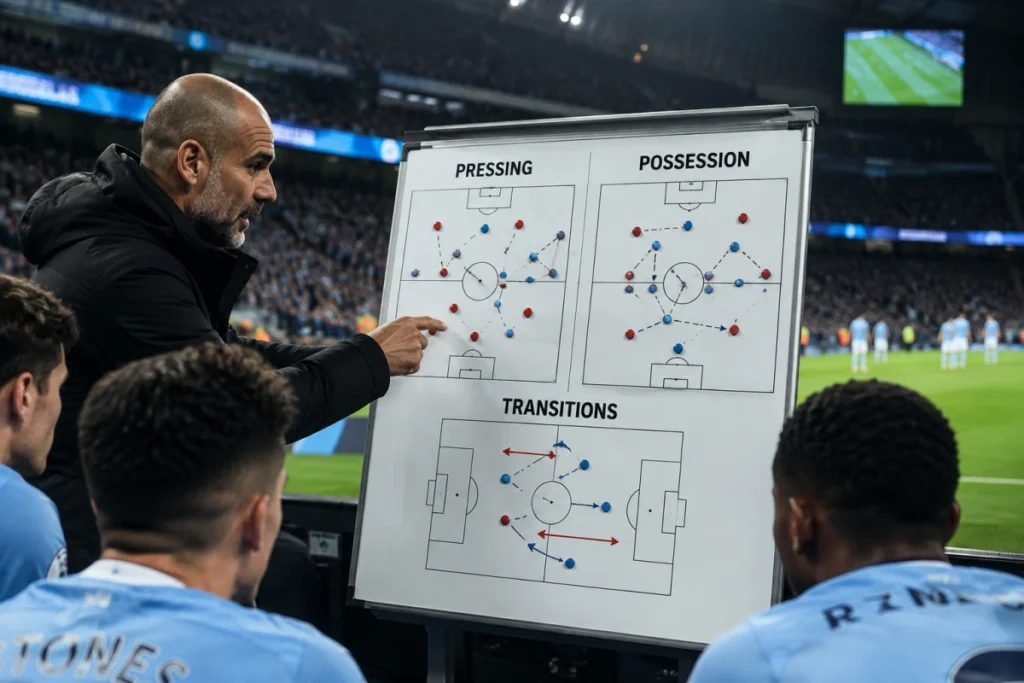
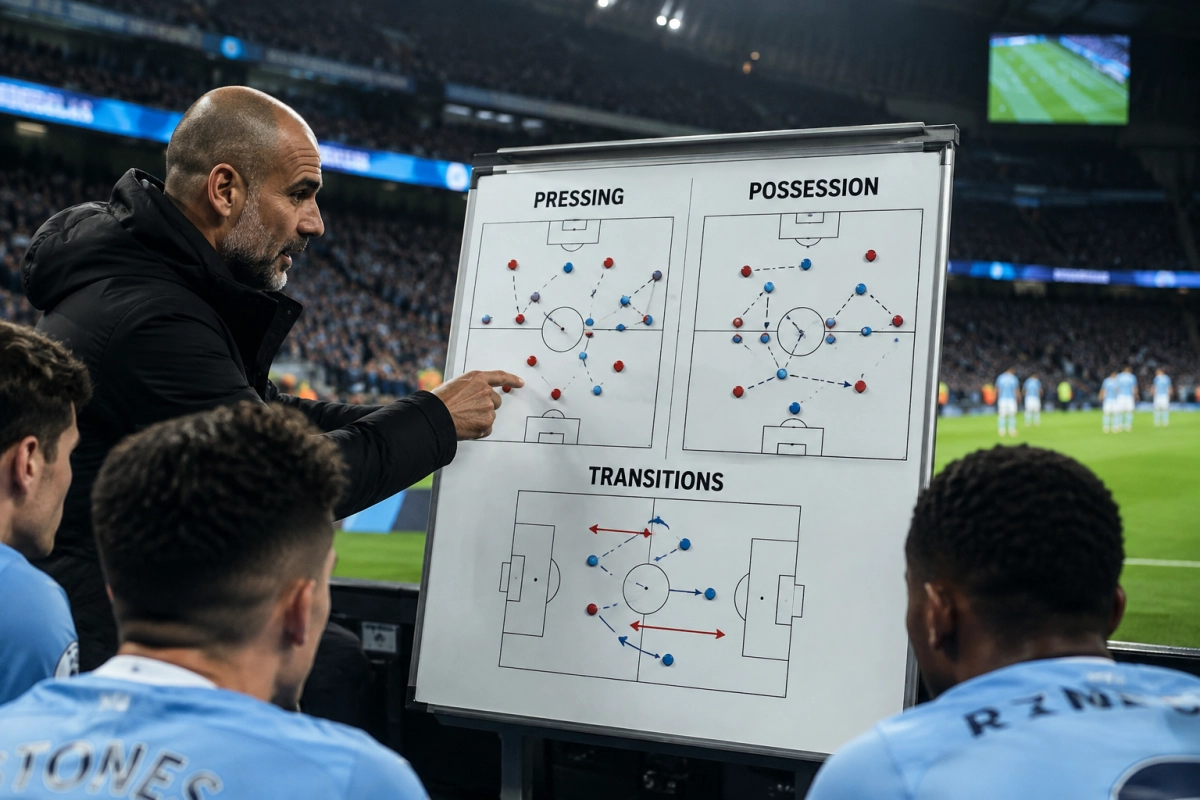
How Modern Football Tactics Shape Every Match
Modern football is shaped by tactical decisions that influence where teams defend, how they move the ball and how quickly they react after losing possession. This guide explains high pressing, possession-based build-up, inverted full-backs and defensive transitions in clear terms, while showing how these systems can affect football scores, match control and final results.
Football tactics are not fixed formations on a team sheet. A side listed as 4-3-3 may defend in a 4-1-4-1, build up in a 3-2-5 and attack with only two defenders behind the ball. The important question is often not where a player starts, but how the team changes shape during each phase of play.
Coaches generally organise their teams around four connected moments:
- Build-up: how a team begins an attack from the goalkeeper or defenders.
- Progression: how the ball moves through midfield and into dangerous areas.
- Chance creation: how attackers use space to produce shots and goals.
- Transition: what happens immediately after possession changes.
A team that controls these moments can create more chances and reduce pressure on its own defence. However, every tactical choice also creates space or risk that an opponent can exploit.
High Pressing: Winning the Ball Near the Opponent’s Goal
High pressing is an organised attempt to regain possession close to the opposition’s goal. Instead of allowing the opponent to pass calmly from defence, the pressing team moves forward as a unit and tries to force a rushed pass, poor touch or long clearance.
How the press is organised
The first attacker usually directs play towards one side of the pitch by closing a central passing lane. Other players then move closer to the likely receiver. This creates a “pressing trap”, where the opponent has fewer safe options.
Successful pressing depends on timing and distance. If the forwards press but the midfield remains too deep, the opponent can play through the gap. If the defensive line stays too far behind, the press loses its compactness. The goalkeeper may also play a higher position to cover passes behind the defence.
The main benefits include:
- Winning the ball in a position that can lead to an immediate shot.
- Reducing the time available for creative opponents to make decisions.
- Keeping the opponent away from midfield control.
The risk is equally clear. A team that presses with poor coordination can leave space behind its defensive line. Fast forwards can attack that space through direct passes or quick counter-attacks. This is why high pressing demands fitness, communication and a clear understanding of when to chase and when to retreat.
Possession-Based Build-Up and the Search for Space
Possession-based build-up is more than keeping the ball for long periods. It involves using passing angles, player movement and changes of position to draw opponents out of shape before attacking the space created.
Many teams build with three defenders and two supporting midfielders, forming a 3-2 structure. A full-back may move inside, while the other full-back remains wide. This creates central passing options and allows the team to form a 3-2-5 shape in the attacking half.
The next part of this guide will examine inverted full-backs, positional rotations and the defensive transitions that often decide modern football matches.
Inverted Full-Backs: Adding Numbers to Central Areas
Inverted full-backs move inside from their usual wide positions when their team has the ball. Rather than staying close to the touchline, they join the midfield and help create numerical advantages in central areas.
This movement can give the team an extra passing option during build-up. For example, a side using two central defenders and an inverted full-back may form a three-player base behind the ball. The full-back can then receive possession between the opponent’s forward and midfield lines, helping the team play through pressure.
Inverting a full-back also supports the team after losing possession. If the player is already near the centre of the pitch, they are better placed to challenge for a loose ball or block a forward pass. Meanwhile, a winger can remain wide and provide the attacking width that the full-back has left behind.
However, the system depends on careful positioning. If both full-backs move inside at the same time, the team may leave large spaces on the flanks. Opponents can target these areas with quick switches of play, especially if their wingers are fast enough to attack isolated defenders. The full-backs must therefore judge when to invert and when to stay wide.
Defensive Transitions: The Critical Seconds After Losing Possession
A defensive transition begins the moment a team loses the ball. Modern sides often have only a few seconds to decide whether to press immediately, delay the attack or retreat into a defensive shape.
The first response is frequently a counter-press. Nearby players close down the ball carrier, while teammates block forward passing lanes. The objective is either to win possession back quickly or to prevent the opponent from making a clean first pass. This can stop a dangerous counter-attack before it develops.
If the ball cannot be recovered, the team must reorganise quickly. Players may sprint towards their own goal, protect the central area and force the opponent towards the wing. The nearest defender may slow the attack rather than attempting an unrealistic tackle, giving teammates time to recover their positions.
Defensive transitions are especially important for teams that commit many players forward. A possession-based side may have five attackers occupying advanced positions, leaving only a small number of players behind the ball. If its rest defence is poorly organised, one misplaced pass can expose the entire back line.
How Tactical Choices Influence Match Results
These systems affect results by changing the quality and location of chances. A high press can produce shots close to goal, while controlled build-up can create repeated entries into the final third. Inverted full-backs may improve midfield control, but they can also leave vulnerable spaces if possession is lost.
The decisive factor is often the contest between a team’s strengths and the opponent’s response. A side that presses effectively may dominate a poor build-up, while an opponent with quick forwards can punish a high defensive line. Similarly, patient possession is valuable only when it leads to useful progress rather than harmless passing.
As a result, tactical success cannot be measured simply by possession percentage or formation. The more meaningful questions are whether a team creates better chances, protects itself during transitions and adapts when the original plan is challenged.
Why Adaptability Remains the Deciding Tactical Quality
Modern football rewards teams that can change their approach without losing their identity. A well-prepared tactical plan provides structure, but players and coaches must still recognise when to press, when to slow the game down and when to protect space rather than chase the ball.
The strongest systems combine clear principles with intelligent decisions. They give players reliable options while allowing them to respond to the opponent, the scoreline and the changing demands of the match. In that balance between organisation and adaptation, tactical ideas become practical advantages that can shape the final result.