FIFA World Cup Golden Ball: Selection, Meaning and Standout Winners
FIFA World Cup Golden Ball: Selection, Meaning and Standout Winners
What the World Cup Golden Ball recognises
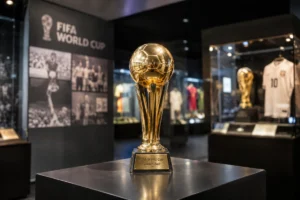
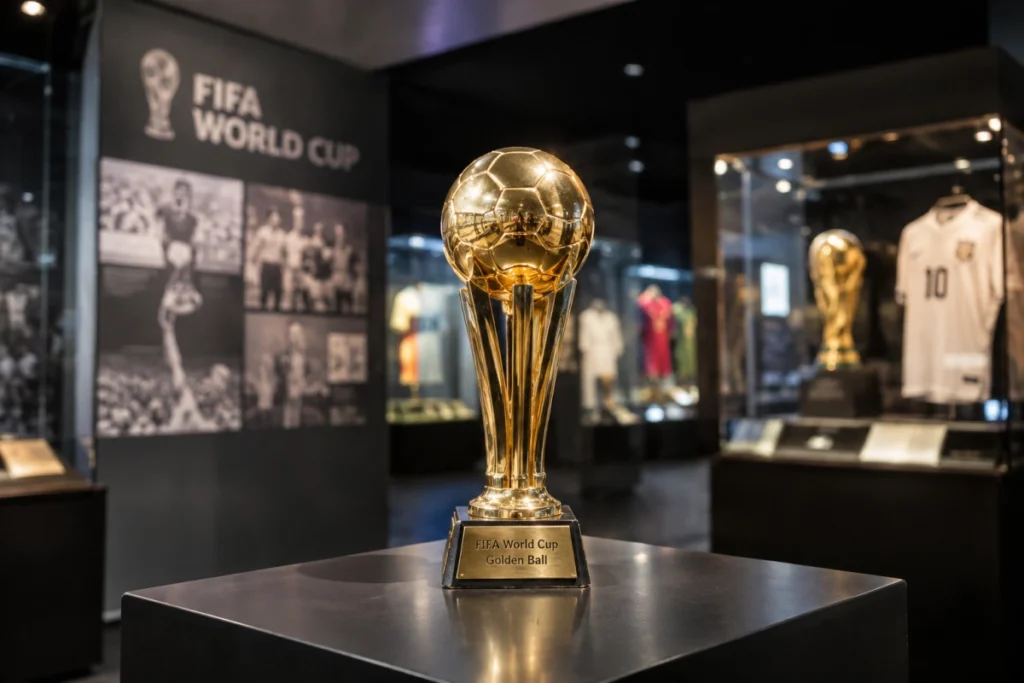
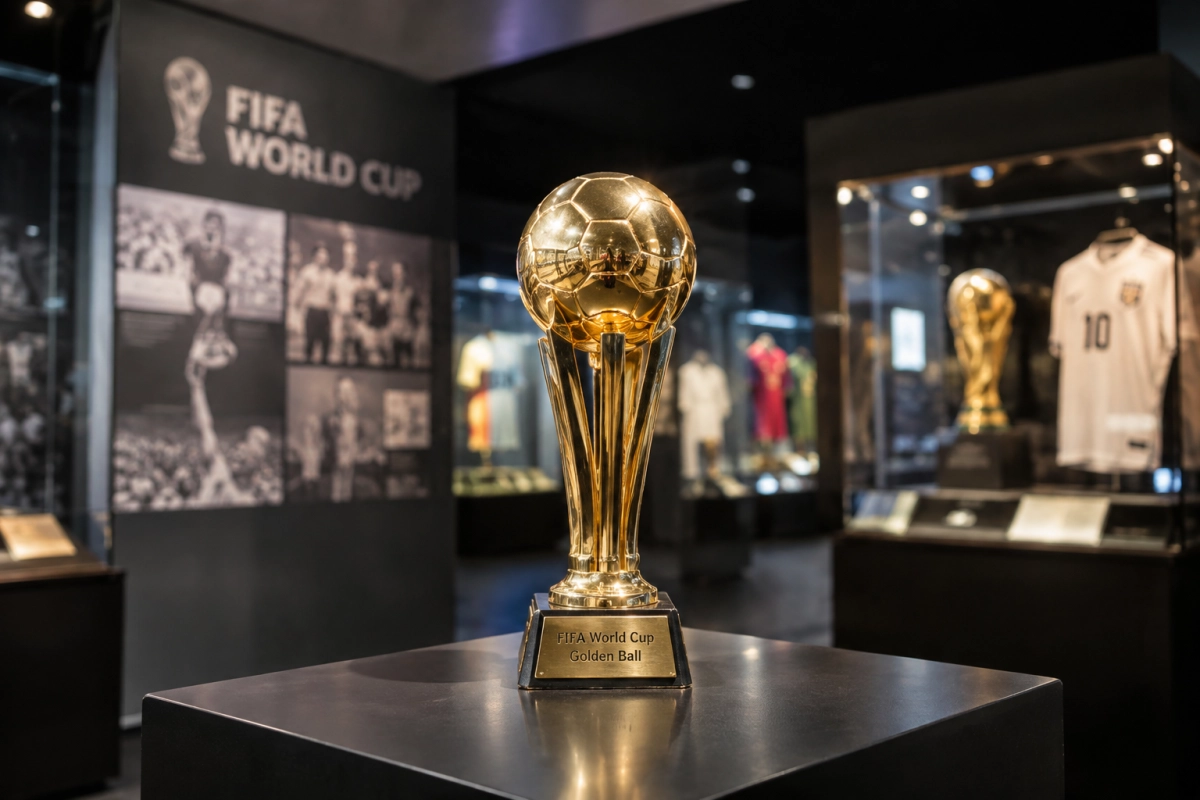
The FIFA World Cup Golden Ball recognises the player judged to have delivered the strongest overall performance at the tournament. It is not simply a prize for scoring the most goals. As you follow the matches, the award helps highlight players whose influence may come through goals, creativity, leadership, defending or consistent performances across several games.
The award is presented after the tournament, alongside the Silver Ball and Bronze Ball for the second- and third-ranked players. FIFA’s award records date the first Golden, Silver and Bronze Ball awards to 1978. Unlike a single-match prize, the Golden Ball takes a player’s contribution across the full World Cup into account.
A winner does not have to represent the team that lifts the trophy. That distinction matters: a player can stand out individually even if their country loses in the final or exits earlier. The award recognises individual impact, not just team success, although a deep tournament run can give a player more opportunities to shape important matches.
How the Golden Ball is selected—and how it differs from the Golden Boot
The selection process considers performances throughout the tournament rather than relying on one statistic. Under FIFA’s 2026 regulations, the FIFA Technical Study Group is responsible for selecting the Golden Ball. Its assessment can include a player’s influence in attack and defence, consistency, decision-making and contribution in high-pressure moments.
For fans, that means the award can recognise different kinds of excellence. A forward may be decisive through goals and assists, while a midfielder could control the pace of matches or a defender could help keep opponents from creating chances. There is no requirement that the winner lead their team in every statistical category.
The Golden Boot has a narrower measure: it goes to the tournament’s leading goal-scorer. If players finish level on goals, FIFA’s tie-breaking rules are applied. The Golden Ball, by contrast, is an award for all-round tournament performance. A player can win one, both awards or neither.
- Golden Ball: recognises the most outstanding overall individual performance.
- Golden Boot: recognises the tournament’s top goal-scorer.
The difference is clear in recent tournaments. At the 2018 World Cup, Luka Modrić won the Golden Ball, while Harry Kane took the Golden Boot with six goals. In 2022, Lionel Messi earned the Golden Ball and Kylian Mbappé won the Golden Boot with eight goals. Their awards reflected different achievements: Messi’s wider influence across Argentina’s campaign and Mbappé’s finishing output.
Golden Ball winners have also come from teams that did not become champions. Messi received the award in 2014, when Argentina finished as runner-up, while Diego Forlán won it in 2010 despite Uruguay placing fourth. These cases show why the prize is not simply a medal for the best player on the winning side. Next, we’ll look at landmark winners and the performances that defined their World Cup campaigns.
Maradona and Kempes turned individual brilliance into defining moments
Some Golden Ball campaigns are remembered through a handful of moments that came to represent an entire tournament. At Argentina 1978, Mario Kempes scored twice in the final against the Netherlands and finished as the competition’s leading scorer as Argentina claimed its first World Cup. His award reflected both his goals and his role in the team’s decisive run to the title.
Diego Maradona’s 1986 campaign with Argentina remains an even more vivid example of one player shaping a tournament. He scored five goals and created chances for teammates, including the pass that set up Jorge Burruchaga’s winner in the final. His two goals against England in the quarter-final—one infamous, one celebrated for its skill—became enduring parts of World Cup history. The Golden Ball recognised a performance that combined individual flair with influence on Argentina’s route to the trophy.
Brazil’s Romário made a different kind of decisive impact in 1994. He scored five goals, including the winner in the quarter-final against the Netherlands, and helped Brazil reach the final, where he also scored in the penalty shootout. His award captured the importance of timely contributions as well as his finishing.
Goalkeepers and midfielders have also defined Golden Ball campaigns
The award’s history shows that a standout tournament does not have to be built around a forward’s goal total. Germany goalkeeper Oliver Kahn became the first goalkeeper to win the Golden Ball in 2002. His saves helped carry Germany to the final, and he kept five clean sheets during the tournament. Although Brazil won the final, Kahn’s performances across the preceding matches had made him a central figure in Germany’s campaign.
In 2010, Uruguay’s Diego Forlán earned recognition through a blend of goals, long-range shooting and creative responsibility. He scored five times, including two memorable strikes against South Africa and a goal against the Netherlands in the semi-final. Uruguay finished fourth, but Forlán’s work helped take the team further than many expected and gave its attack a clear focal point.
Luka Modrić’s 2018 award likewise highlighted influence beyond scoring. As Croatia’s midfield organiser, he helped his team progress through three consecutive extra-time matches on the way to the final. His ability to set the tempo and keep possession under pressure made him important throughout the campaign, even though Croatia lost to France in the final.
Messi’s two awards bookend a remarkable World Cup story
Lionel Messi’s Golden Balls in 2014 and 2022 came in very different tournament circumstances. In Brazil, he scored four goals in Argentina’s group matches and helped the team reach the final, where it lost to Germany. The award recognised his sustained influence, even as Argentina fell just short of the title.
Eight years later, Messi led Argentina to victory in Qatar, scoring seven goals and contributing at key stages of the knockout rounds. He scored twice in the final against France, including in extra time, and converted his penalty in the shootout. The victory gave his tournament campaign a different ending from 2014 and made him the first player to win the men’s World Cup Golden Ball twice.
Together, these campaigns show why the award’s winners are remembered not only for their statistics, but for the way they shaped the story of a World Cup.
Why the Golden Ball remains part of World Cup history
The Golden Ball gives lasting recognition to performances that leave a mark on the tournament, whether through a decisive moment or influence sustained from the opening match to the final. Its winners remind us that football’s most memorable contributions can take many forms—and that a player’s impact can endure beyond the result of any one match.