Greatest Premier League Moments: A Chronological Guide from 1992
Greatest Premier League Moments: The Defining Early Years
The greatest Premier League moments have shaped English football through unforgettable title races, dramatic final-day results, historic comebacks and landmark performances. This chronological guide begins with the competition’s launch in 1992 and follows the matches that changed clubs, players and supporters forever, including exact dates, scores, key performers and lasting impact.
1992–1995: The Premier League Announces Its Arrival
Sheffield United 2-1 Manchester United — 22 August 1992
The Premier League era began at Bramall Lane on 22 August 1992, when Sheffield United defeated Manchester United 2-1. Brian Deane scored the competition’s first goal, heading past Peter Schmeichel before adding a second. United’s late response could not prevent a historic home victory.
The match mattered beyond the scoreline. It introduced a new commercial and broadcast era, while the early success of clubs such as Blackburn Rovers and Newcastle United showed that the league would quickly develop its own identity and worldwide audience.
Manchester United 2-1 Sheffield Wednesday — 10 April 1993
Manchester United’s first Premier League title was secured through one of the competition’s earliest dramatic finishes. On 10 April 1993, Steve Bruce scored twice against Sheffield Wednesday, including a 96th-minute winner, to complete a 2-1 comeback at Old Trafford.
Bruce’s late header became a defining image of Sir Alex Ferguson’s growing team. The result strengthened United’s position at the top of the table and helped end the club’s 26-year wait for an English league title. It also established a theme that would return repeatedly: important Premier League matches were often decided in the final minutes.
Everton 3-2 Wimbledon — 7 May 1994
On 7 May 1994, Everton produced one of the league’s earliest great escapes by recovering from 2-0 down to beat Wimbledon 3-2 at Goodison Park. Graham Stuart scored twice, while Barry Horne also found the net as Everton overturned a difficult position.
The victory kept Everton in the Premier League on the final day of the season. Its lasting impact was the clearest possible reminder that relegation battles can carry the same emotional weight as title races.
1995–2003: Title Races, Rivalries and Final-Day Pressure
Blackburn Rovers 1-2 Liverpool — 14 May 1995
Blackburn Rovers won their first Premier League title on 14 May 1995 despite losing 2-1 to Liverpool at Anfield. Alan Shearer’s goals throughout the season had driven Blackburn’s challenge, but the title was finally confirmed because Manchester United could only draw 1-1 with West Ham United.
That final day demonstrated how quickly the league table could change. Blackburn, managed by Kenny Dalglish, finished one point ahead of United and became the first club outside Manchester United to win the Premier League.
Manchester United 2-1 Tottenham Hotspur — 16 May 1999
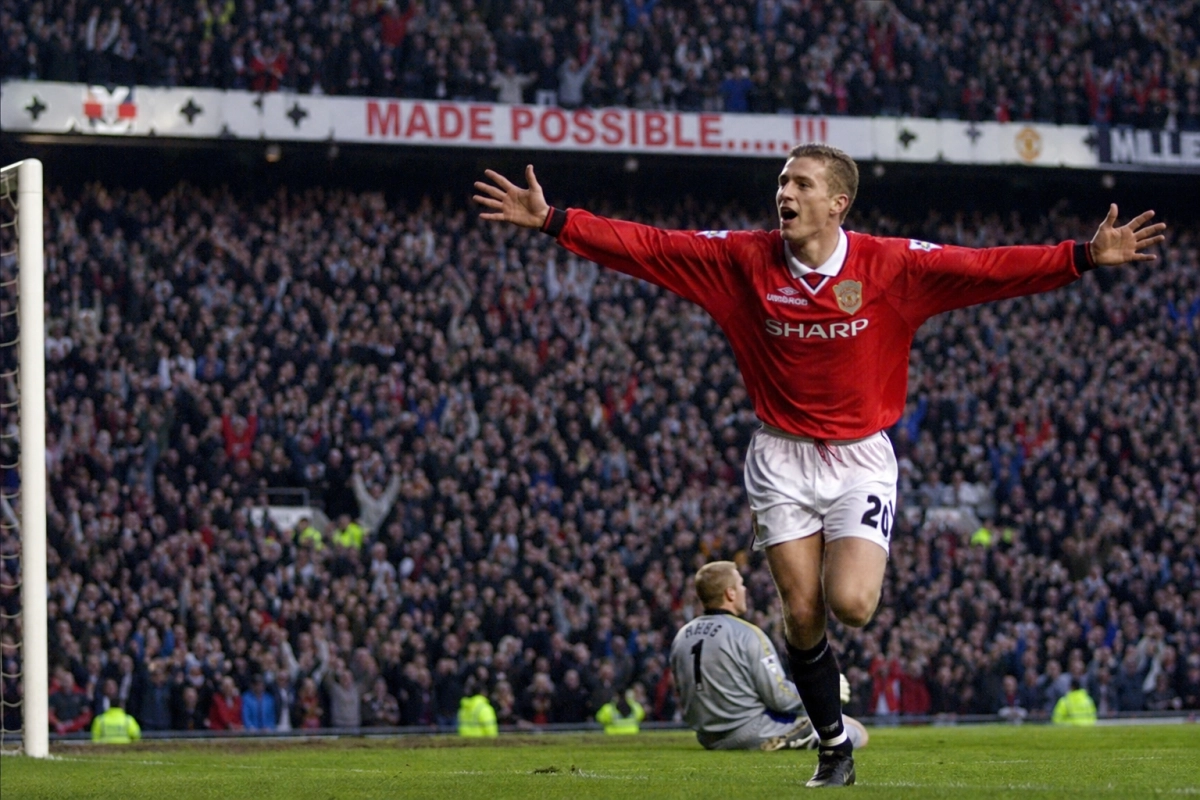
Manchester United completed the 1998–99 title race on 16 May 1999 by beating Tottenham Hotspur 2-1 at Old Trafford. Les Ferdinand gave Tottenham an early lead, but David Beckham equalised before Andy Cole scored the winner.
The result delivered United’s fifth Premier League title and completed the first part of a historic treble. Beckham’s equaliser and Cole’s decisive finish also showed the depth of a squad that could recover from pressure at crucial moments.
From early survival dramas to increasingly intense title contests, the Premier League’s biggest stories were becoming more unpredictable. The next era would bring extraordinary comebacks, record-breaking individual displays and a final-day finish that remains unmatched.
2001–2004: Comebacks and the Rise of the Invincibles
Tottenham Hotspur 3-5 Manchester United — 29 September 2001
Manchester United produced one of the Premier League’s most memorable comebacks at White Hart Lane on 29 September 2001. Tottenham led 3-0 at half-time, appearing to have overwhelmed the defending champions, but United transformed the match after the interval and won 5-3.
David Beckham helped drive the recovery, while Ole Gunnar Solskjaer and Andy Cole contributed to a remarkable second-half response. The result became an enduring example of United’s attacking quality and mental strength, proving that even a three-goal deficit could be overturned by a side with belief and experience.
Arsenal 2-2 Tottenham Hotspur — 25 April 2004
Arsenal secured the 2003–04 Premier League title at White Hart Lane on 25 April 2004, drawing 2-2 with Tottenham Hotspur. Patrick Vieira and Robert Pirès put Arsenal 2-0 ahead, and although Tottenham’s Jamie Redknapp and Robbie Keane restored parity, the point was enough to confirm Arsène Wenger’s team as champions.
The achievement was historic because Arsenal completed the league season unbeaten, earning the nickname “The Invincibles”. Thierry Henry was the leading attacking force, but the title also reflected the balance of a team built around Vieira, Pirès, Dennis Bergkamp and an outstanding defensive unit. The unbeaten campaign remains one of the Premier League’s greatest collective accomplishments.
2004–2007: Chelsea’s Challenge Changes the Landscape
Chelsea 3-0 Bolton Wanderers — 30 April 2005
Chelsea won their first Premier League title on 30 April 2005 by beating Bolton Wanderers 3-0 at Stamford Bridge. Two goals from Frank Lampard and another from John Terry completed a dominant afternoon for José Mourinho’s side, who had established an unassailable lead at the top of the table.
The title was Chelsea’s first English league championship since 1955 and marked a major shift in the balance of power. Mourinho’s team conceded only 15 goals across the campaign, setting a defensive record that highlighted the influence of Terry, Petr Čech and Claude Makélélé. Chelsea’s success began a new period of sustained competition at the top of the Premier League.
Manchester United 7-1 Roma — 10 April 2007
Although a European fixture, Manchester United’s 7-1 victory over Roma at Old Trafford on 10 April 2007 became a landmark performance for the Premier League. United overturned a first-leg deficit with an extraordinary attacking display, led by Cristiano Ronaldo and Michael Carrick, who scored twice each.
The result demonstrated the growing quality and ambition of English clubs on the continental stage. It also marked Ronaldo’s emergence as a world-class force and foreshadowed the Manchester United team that would dominate the Premier League again in the years that followed.
The Premier League’s Enduring Legacy
The Premier League’s greatest moments endure because they combine sporting excellence with uncertainty, emotion and consequence. A single goal can redefine a season, while an unexpected result can alter a club’s history for generations.
That sense of possibility remains central to the competition. Whether the stage is a title decider, a relegation battle or a landmark performance, the Premier League continues to create occasions that live far beyond the final whistle.