La Liga History and Records: From 1929 Foundations to Early Dominance
CONTENT:
La Liga History and Records Begin with a Ten-Team Championship
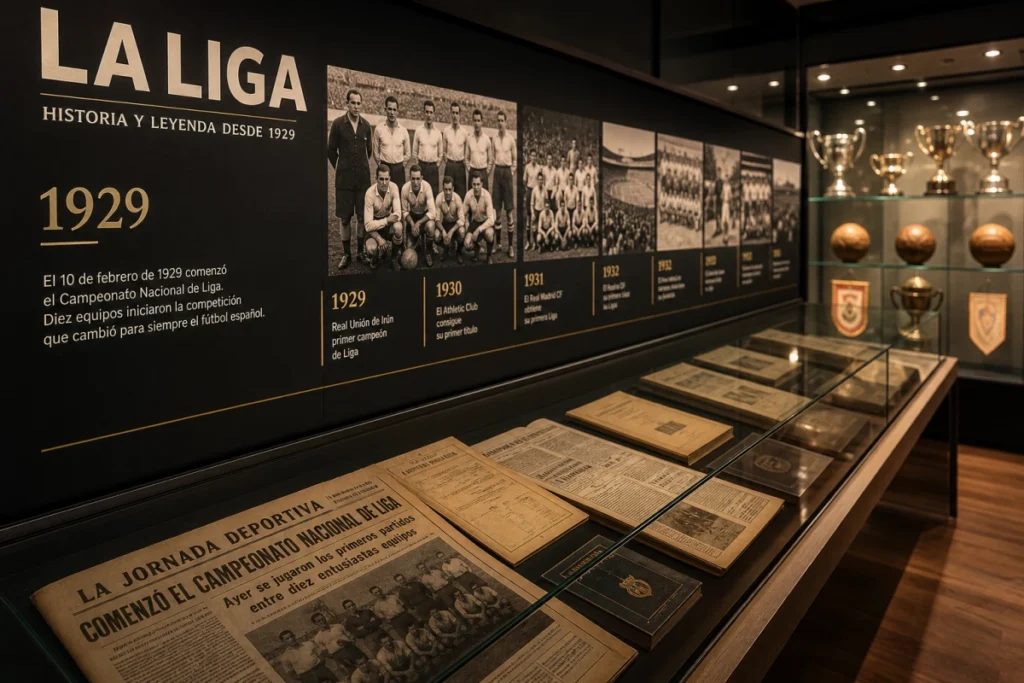
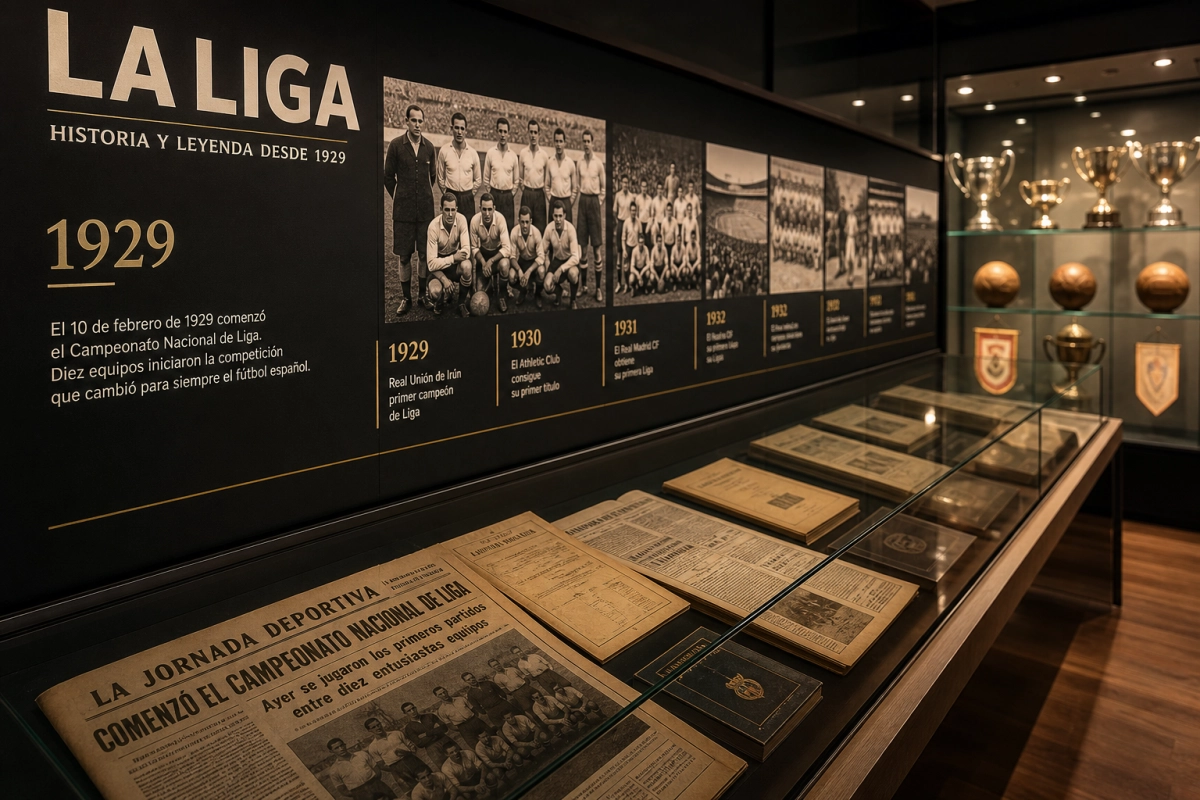
La Liga history and records trace back to 1929, when Spain created a national league to bring its strongest clubs into one organised competition. The first season featured 10 teams, including Barcelona, Real Madrid, Athletic Club, Espanyol and Atlético Madrid’s predecessor, Athletic Club Madrid. Barcelona became the inaugural champion after the first campaign, establishing a competition that would later become one of Europe’s most influential domestic leagues.
The opening La Liga match was played on 10 February 1929, when Espanyol defeated Real Unión 3–2. Barcelona eventually finished above Real Madrid in a closely contested title race. At this early stage, the league was still developing its identity, but it provided a regular national platform for clubs from different football regions, including Catalonia, Madrid and the Basque Country.
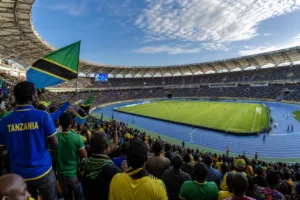
For football followers in Tanzania and across East Africa, this structure helps explain why La Liga remains more than a list of fixtures and results. The competition created long-term rivalries and gave clubs a stage to develop playing styles, famous academies and national identities.
The Early Champions and the Impact of the Civil War
Athletic Club quickly became one of the first major forces. The Bilbao side won the 1929–30 and 1930–31 championships, with its 12–1 victory over Barcelona in 1931 still recognised as La Liga’s biggest winning margin. Athletic’s success reflected the strength of the Basque football tradition, which valued technical ability, local development and a strong connection between club and community.
Real Madrid then won its first league title in the 1931–32 season and successfully defended it in 1932–33. Madrid’s rise marked the beginning of a competitive pattern that would later place the club at the centre of Spanish and European football. Athletic Club added further titles in 1933–34 and 1935–36, while Barcelona remained a regular challenger.
- 1929: Barcelona win the first La Liga championship.
- 1930 and 1931: Athletic Club claim consecutive titles.
- 1932 and 1933: Real Madrid win their first two championships.
- 1934 and 1936: Athletic Club return to the top of Spanish football.
The Spanish Civil War disrupted national football between 1936 and 1939. When the league resumed for the 1939–40 season, Atlético Aviación, the club that later became Atlético Madrid, won the championship. Athletic Club and Valencia also became important powers during the following decade, showing that the early competition was not yet controlled only by Barcelona and Real Madrid.
Postwar Growth Creates New Title Rivals
Valencia won La Liga in 1941 and 1944, adding a major regional presence to the competition. Barcelona also developed a successful postwar team, winning titles in 1945, 1948 and 1949. These campaigns helped increase the league’s national popularity and strengthened the importance of attacking football, creative midfielders and prolific goal scorers.
By the 1950s, improved stadiums, stronger club structures and emerging stars were raising La Liga’s standard. The competition was also beginning to influence European football more directly, setting the stage for the era of Real Madrid’s continental dominance and the historic title battles that followed.
Real Madrid’s Golden Age Transforms La Liga and Europe
Real Madrid became the defining force of Spanish football during the 1950s. The arrival of Alfredo Di Stéfano, supported by players such as Francisco Gento and Héctor Rial, helped Madrid win the 1953–54, 1954–55, 1956–57, 1957–58 and 1960–61 championships. The club’s attacking quality and tactical flexibility made it difficult for domestic rivals to contain, while its success translated directly to the European stage.
Madrid won five consecutive European Cups from 1956 to 1960, a landmark achievement that established La Liga as a major influence in continental football. The league’s strongest players were no longer competing only for national honours; they were shaping the tactics, standards and global reputation of European club football. Barcelona interrupted Madrid’s league sequence by winning in 1959 and 1960, but the balance of power had clearly shifted towards the capital.
The era also produced one of La Liga’s earliest legendary scorers. Athletic Club forward Telmo Zarra became the competition’s leading all-time scorer with 251 goals, a record that stood for decades. His finishing and consistency demonstrated how individual forwards could define an entire period of Spanish football.
Barcelona and Real Madrid Set the Pattern for Modern Title Rivalries
Real Madrid remained prominent during the 1960s, winning eight championships between 1961 and 1972. Barcelona, Atlético Madrid and Valencia occasionally challenged that dominance, while Atlético’s 1969–70 title showed that a disciplined defensive side could compete with Madrid’s greater attacking resources. Valencia then added championships in 1971 and 1974, confirming that the league still had important regional powers beyond its two most famous clubs.
Barcelona’s title in 1973–74 was especially significant. Led by Johan Cruyff, the Catalan club defeated Real Madrid 5–0 at the Santiago Bernabéu during the campaign, a result that became one of the most memorable statements in the rivalry’s history. Cruyff’s influence extended beyond his goals and creativity: his ideas about possession, movement and positional play later shaped Barcelona’s academy and first team for generations.
Real Madrid responded with a successful period in the 1980s. The club won five consecutive titles from 1985–86 through 1989–90, driven by the attacking “Quinta del Buitre” generation, including Emilio Butragueño, Manuel Sanchís and Martín Vázquez. Their achievements reinforced La Liga’s reputation for technically gifted forwards and helped create a domestic environment in which tactical identity became as important as physical strength.
Unbeaten Runs and Scoring Records Define a New Era
By the 1990s and 2000s, Barcelona and Real Madrid were competing with increasingly sophisticated squads, global audiences and influential managers. Barcelona’s 1990s “Dream Team” won four straight titles from 1990–91 to 1993–94 under Cruyff, while Madrid collected consecutive championships from 1994–95 and 1996–97. Later, Barcelona’s possession-based side won six trophies in 2009, linking domestic success with European dominance.
Individual records also entered a new era. Lionel Messi eventually surpassed Zarra to become La Liga’s leading scorer, finishing with 474 goals for Barcelona. His rivalry with Cristiano Ronaldo, who scored 311 league goals for Real Madrid, raised the standard for sustained elite performance. Barcelona also completed a record 43-match unbeaten league run across 2017 and 2018, illustrating how modern preparation, squad depth and tactical control could produce unprecedented consistency.
La Liga’s Continuing Place in Football History
La Liga’s importance continues to extend beyond its title table. Its clubs have helped develop distinctive football cultures, produced generations of elite players and influenced coaching ideas across Spain and Europe. Rivalries between historic institutions remain central to its appeal, while regional clubs continue to provide ambition, identity and pathways for emerging talent.
Records will continue to change as the competition evolves, but the achievements of its champions, scorers and unbeaten teams provide a lasting framework for understanding Spanish football. La Liga’s history is therefore not only a record of success; it is an ongoing story of innovation, rivalry and influence within the global game.