How World Cup performances open transfers, sponsorships and scout attention for Tanzanian players
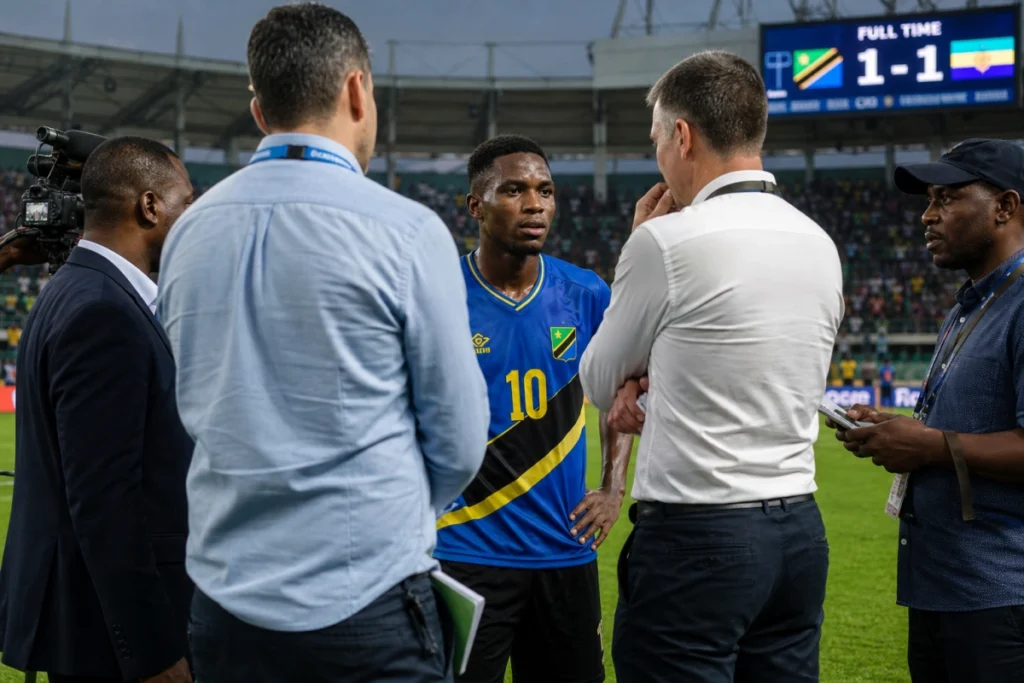
World Cup exposure: what this article teaches Tanzanian players, agents and clubs
This guide explains how strong World Cup (senior and youth) performances create transfer opportunities, sponsorship deals and scouting attention. It outlines measurable performance benchmarks scouts use, concrete steps to take before a World Cup window, and dated African examples showing how the process works in practice.
How strong World Cup showings translate into moves and deals
World Cups are concentrated talent markets: a standout tournament gives players visibility to many clubs and often leads directly to trials or transfers for youth players. Typical pathways are:
- Immediate scouting reports and contact (during tournament to 4 weeks after).
- Trial or loan offers (1–6 months after, usually in the next transfer window).
- Permanent transfers or sponsorship deals (6–18 months after, depending on paperwork and work permits).
Measurable performance benchmarks scouts look for at World Cup level
- Minutes: regular starters (≥60 minutes per match) draw more interest than isolated appearances.
- End product: attackers with ≥0.3 goals/90 across 3+ matches, plus assists/expected involvement.
- Chance creation: ≥2 key passes/90 or consistently high-quality crossing for wide players.
- Passing & tempo: midfielders with ≥80% completion and clear progressive passes per 90.
- Defensive metrics: defensive mids/center-backs with tackles+interceptions ≈4+/90 and aerial duel success ≥60%.
- Physical markers: ability to sustain 90 minutes, top-end sprint speed and recovery; scouts increasingly request GPS/HR data.
- Age & adaptability: younger players (U-17/U-20) with technical output and coachability are fast-tracked.
Dated African examples showing real outcomes
- El-Hadji Diouf (Senegal, 2002): standout World Cup performances preceded his summer 2002 move to a major European club.
- Dominic Adiyiah (Ghana, 2009 U-20): Golden Shoe and title at the U-20 World Cup led to a quick signing by AC Milan that August.
- Kelechi Iheanacho (Nigeria, 2013 U-17): youth-tournament honours resulted in a move into Manchester City’s setup within about a year.
Concrete preparatory actions to take before a World Cup window
Preparation increases conversion chances. Below are actionable steps for players, agents and Tanzanian clubs in the months before selection and tournament play.
Checklist for players
- Fitness & minutes: secure consistent club minutes for 6–12 months before the tournament.
- Media & footage: prepare a 5–7 minute highlight reel with clear timestamps and an up-to-date stats sheet (minutes, goals, assists, key defensive actions).
- Communications: basic English/target-market phrases and short media training to handle interviews professionally.
- Documentation: ensure passport, medical records, international clearance and agent contracts are checked and current.
Checklist for agents and clubs
- Proactively send dossiers to scout contacts and arrange live scout access during matches.
- Price players realistically using recent minutes and comparables; prepare loan-first proposals to reduce buyer risk.
- Prepare sponsorship pitch decks highlighting tournament calendar, expected media reach and player personality metrics.
Actions to take during World Cup windows (what to execute in the heat of the tournament)
- Real-time distribution: deliver full-match footage, plus a 2–3 minute highlight cut within 24–48 hours of standout performances, and updated stat sheets to identified scouts and clubs with a concise cover note.
- Scout hospitality: arrange viewing access with good camera angles and, where possible, schedule short one-on-one meetings with interested scouts/managers.
- Data sharing: have GPS/HR/sprint data and recent lab tests ready to share under NDA—top clubs increasingly request physical metrics.
- Media and narrative management: coach players to give concise interviews and maintain a professional social-media plan; coordinate sponsor reps to amplify coverage without overselling.
- Immediate negotiation posture: have loan-first and trial templates ready so talks can begin fast; scouts prefer low-risk 3–6 month loans or short trials with an option to buy.
- On-tournament benchmarks to highlight: consistent 60+ minutes across matches; attackers ≥0.3 goals/90; creators ≥2 key passes/90; defensive actions ≈4/90; strong sprint and recovery metrics.
- Typical timing: first scout contacts — during match to 4 weeks after; LOIs/trial requests — 1–3 months after; formal negotiations — in the next available window.
Post-tournament follow-up: exact transfer windows, paperwork and next-step timelines
- Transfer windows: most major leagues transact in summer (roughly June–September) and winter (January); summer tournaments often lead to moves in the immediately following window or the next winter.
- FIFA rules for minors: international moves under 18 are restricted; EU/EEA exceptions apply in specific cases—plan for post-18 moves or development partnerships if necessary.
- Work permits & clearance: systems vary (e.g., UK points-based); timeline from agreement to clearance typically 4–12 weeks. Agents should pre-screen eligibility.
- Post-tournament checklist (first 3 months): send full-match footage + GPS files; begin ITC steps when a move is agreed; arrange medicals and visa support; negotiate loan terms with minimum playing guarantees; update sponsor pitch with tournament metrics.
- Negotiation timeline: trials/loans often within 1–6 months; permanent deals commonly complete 6–18 months after the tournament due to permits, age or windows.
Dated African case timelines — how outcomes unfolded in practice
Past outcomes provide realistic models: Diouf’s 2002 senior World Cup exposure led to a same-summer transfer when offers and paperwork aligned. Adiyiah’s 2009 U-20 Golden Shoe accelerated contact and a rapid move into European football. Iheanacho’s 2013 U-17 success resulted in academy integration within about a year. The common pattern is immediate attention, formal interest within weeks to months, and completed moves most often in the next summer or following winter window, subject to work permits and age rules.
Post-tournament 90-day action plan (who does what, week-by-week)
- Week 0–2: players update full-match footage, GPS/HR files and a one-page stats summary; agents email prioritized scout/club contacts with the 2–3 minute highlight and tournament metrics; clubs prepare loan/availability templates.
- Week 3–6: arrange targeted trials or video meetings; agents present loan-first proposals and negotiate trial dates; clubs complete internal scouting reports and fitness reassessments.
- Month 2–3: if interest is formalised, schedule medicals, start ITC pre-clearance discussions and begin visa/work-permit pre-checks; sponsors are approached with tailored reach reports.
- Month 3+: align move timing with transfer windows—finalise agreements, complete medicals and paperwork, or set development plans for players staying another season (with review targets).
Timeline scenarios: realistic expectations by outcome
- Immediate senior-squad breakthrough: transfer within the same summer window—typically 4–12 weeks from first contact to signed contract, assuming permits are clear.
- Loan or trial-first pathway: LOIs and trial offers within 1–3 months; loan/short-term moves in the next transfer window (1–6 months).
- Youth signings (under-18): contact and development agreements in 1–6 months; permanent move or academy placement when eligible (6–24 months).
- Watchlist/long-term development: initial interest within weeks; concrete offers can take 6–18 months as clubs monitor season form.
Common pitfalls and quick fixes
- Pitfall: poor or delayed footage — Fix: pre-arrange a trusted filming and editing process so clips and full matches are ready within 48 hours.
- Pitfall: unrealistic asking price — Fix: price players based on recent minutes and comparable moves; propose loan-first deals where sensible.
- Pitfall: administrative delays (passports, ITC, work permits) — Fix: pre-clear documentation and maintain a legal/immigration checklist before accepting offers.
- Pitfall: media missteps — Fix: brief players on concise messaging and social-media dos/don’ts; keep statements professional and aligned with agent/club strategy.
Moving from exposure to lasting opportunity
World Cup windows are windows of possibility, not guarantees. For Tanzanian players, agents and clubs the work that follows a strong performance — immediate, organised outreach; transparent metrics; and realistic negotiation posture — determines whether attention becomes a contract, a sponsorship or a structured development pathway. Treat each tournament appearance as a milestone in a multi-year plan: prepare the documentation, control the narrative, and use clear benchmarks to show progress. With consistent club minutes, professional presentation, timely logistics and patient expectation-setting, World Cup exposure can convert into meaningful career steps for players and sustainable value for clubs and agents.