How VAR, Offside Law, Penalties and Goal‑Line Technology Are Applied at the World Cup
How VAR, Offside Law, Penalties and Goal‑Line Technology Work at the World Cup
This article explains how VAR (Video Assistant Referee), the offside law, penalty procedures, goal‑line technology and on-field referee routines are applied at the World Cup. Readers will learn what each system does, why officials review incidents, common controversies seen in recent World Cups (including Qatar 2022), and simple tips East African fans can use to interpret decisions while watching matches.
How VAR and goal-line tech are used in World Cup matches
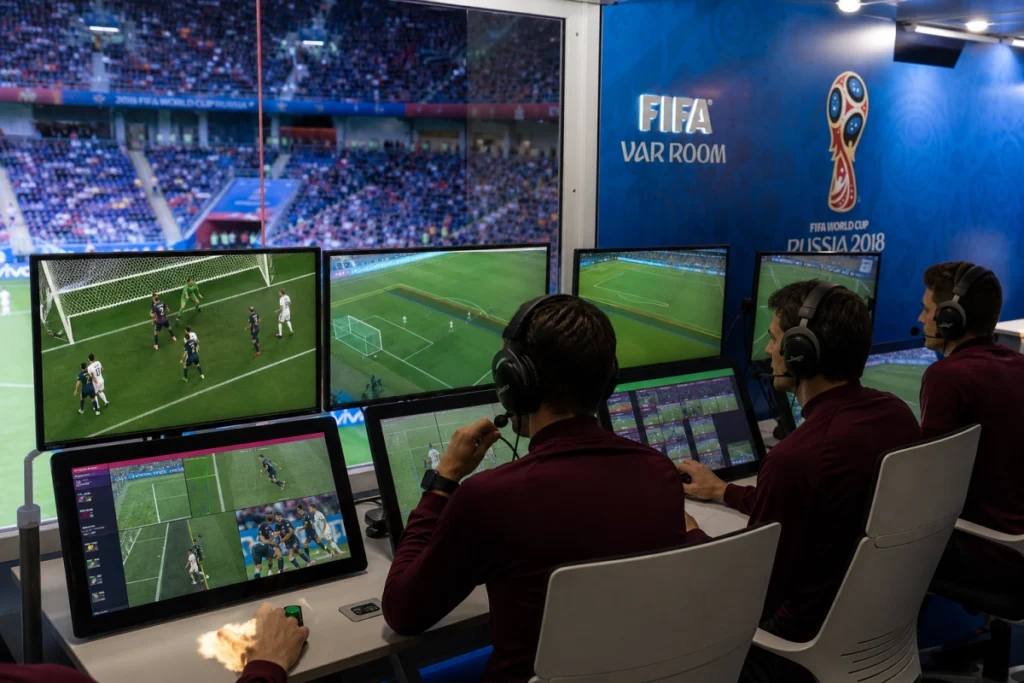
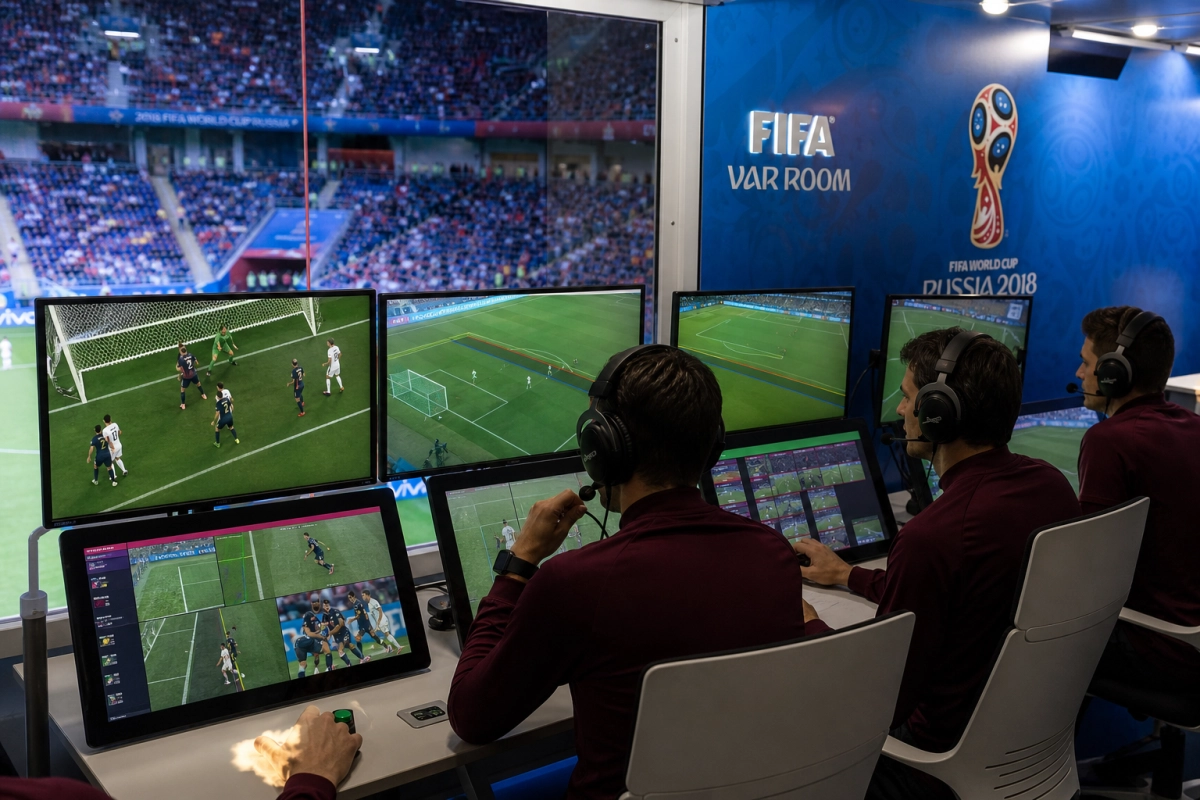
VAR: purpose, scope and practical workflow
VAR is limited to four match-changing categories: goals, penalty decisions, direct red cards and mistaken identity. A team or the on-field referee cannot request a VAR review; the VAR team monitors every incident and informs the referee if there is a “clear and obvious error” or a serious missed incident.
- Step 1 — VAR reviews footage in a hub during play.
- Step 2 — If needed, VAR recommends an on-field review (OFR) or tells the referee the correct decision.
- Step 3 — Referee either accepts VAR information or goes to the pitchside monitor to view replays before making the final call.
The 2018 World Cup marked VAR’s first full implementation at the tournament level, and refinements continued into Qatar 2022 with faster protocols and clearer graphics.
Goal‑line technology: absolute decisions in a split second
Goal‑line technology (GLT) only answers a single question: did the whole ball cross the goal line? Systems such as Hawk‑Eye produce an instant signal to the referee’s watch and stadium screen. GLT has been used at World Cups since 2014 and removes uncertainty for boundary calls that used to cause huge controversy.
Offside law, penalties and what causes disputes in World Cup matches
Offside basics and semi‑automated systems
The offside law is simple in wording but complex in application: a player is offside if any part of a playable body‑part nearer to the opponent’s goal than both the ball and the second‑last defender is involved in active play. In tight situations, semi‑automated offside technology (introduced at the 2022 World Cup) uses multiple cameras and player tracking to draw 3D lines and time the exact moment the ball is played.
- Why controversies happen: millimetres, obscured limbs, or whether a player is “actively involved” in play.
- What fans see: graphics showing precise lines and the fraction of a second that decides the call.
Penalty protocols and common areas of disagreement
VAR can intervene on penalty calls only to correct clear mistakes. Frequent sources of disagreement include handball interpretation, contact that looked minor in real time, and whether the attacking player exaggerated contact. Referees follow Laws of the Game and guidance from match refereeing supervisors — but subjective judgements remain.
Practical tips for interpreting decisions during live matches
- Watch for referee signals: a VAR check triangle, the referee pointing to the monitor, or the VAR logo on TV graphics.
- Listen to the commentator or stadium board for the category being reviewed (goal, penalty, red card, identity).
- Accept that marginal offsides and subjective fouls will still cause debate — VAR reduces clear errors but cannot remove opinion.
Next, Part 2 will examine recent World Cup examples in detail, break down controversial moments with timestamps, and give a step‑by‑step checklist fans can use to judge future decisions live.
Recent World Cup examples — step‑by‑step replays you can follow
Below are three concise, representative examples drawn from recent World Cups that show how VAR, offside tech and GLT look in practice. Each is written as a timed broadcast moment you can imagine watching live; the sequence and signals are the important learning points.
Example 1 — Marginal offside overturned (semi‑automated offside)
– Minute 57:10 — Attacking player slots the ball into the net. Stadium erupts; the referee raises their hand for a potential offside check.
– 57:12 — VAR flags a possible offside and runs a semi‑automated 3D reconstruction. Broadcasters show two white lines and the precise millisecond the pass was played.
– 57:25 — On the pitchside monitor the referee watches the freeze‑frame and the graphic showing that a toe or arm was ahead by a few centimetres. The referee signals “no goal” and points to the centre circle. Takeaway: in these scenarios the decision hinges on an exact body part and the exact moment the ball was played; expect long pauses and definitive graphics.
Example 2 — Penalty reviewed for potential handball
– Minute 34:05 — A shot is blocked; the ball brushes the defender’s raised arm and the attacker goes down. The referee awards a penalty on the pitch.
– 34:10 — VAR checks for a clear and obvious error: the angle, the defender’s arm position and whether the arm made the body unnaturally bigger.
– 34:22 — VAR recommends an on‑field review. The referee views multiple slow‑motion angles, including a zoom showing the arm tucked naturally. After a short review the referee overturns the penalty decision and restarts with a goal‑kick. Takeaway: handball decisions remain subjective; VAR intervenes only when the replay clearly contradicts the referee’s on‑field judgement.
Example 3 — Goal‑line tech confirms a goal despite controversy
– Minute 88:47 — A scramble in the box ends with the ball crossed near the line; players appeal wildly.
– 88:48 — GLT sends an instant signal confirming the whole ball crossed the line; the referee is informed by a watch vibration and a “GOAL” alert on their display.
– 88:50 — No OFR is necessary; the referee points to the centre circle and play restarts. Takeaway: GLT is binary and instantaneous — it removes debate over whether the ball fully crossed the line.
How to read VAR graphics, stadium messages and referee signals
– Offside graphics: expect two horizontal lines (defender vs attacker) plus a vertical timeline marker showing the exact kick instant. If the lines overlap, it’s a marginal call — broadcasters often show the millimetre measurement.
– VAR triangle/symbols: a small triangle on the TV screen signals VAR involvement; separate on‑screen messages will state the category (GOAL, PENALTY, RED, ID).
– Stadium boards: large replay messages like “VAR CHECK — GOAL” or “VAR CHECK — PENALTY” tell you what’s being reviewed; when the board reads “NO CHANGE” the on‑field decision stands.
– On‑field monitor behaviour: a referee going to the monitor usually indicates a subjective review; a quick hand signal and continuation means VAR communicated a clear correction without an OFR.
– Audio cues: modern broadcasts sometimes carry the stadium referee announcement or commentator guidance — these help but are not official evidence; the referee’s final hand signal is authoritative.
A concise checklist fans can use during matches
1. Note the category: goal, penalty, red card or identity. That sets expectations for what VAR can change.
2. Watch the broadcast graphic — lines and timing tell you whether it’s marginal or clear.
3. Look to the stadium board for the declared review type and outcome.
4. If the referee goes to the monitor, expect a subjective judgement; if not, VAR likely corrected the call without an OFR.
5. Consider match context: scoreline and time influence how much debate there will be, but not the rules.
6. Give officials the benefit of a short pause — replays and tech reduce clear errors even if they don’t remove all controversy.
Putting technology and referees in perspective
Technology at the World Cup — VAR, semi‑automated offside systems and goal‑line tech — has changed how decisions are made, but it has not removed the game’s human element. Officials still interpret fouls, assess intent and apply laws that were written for people, not pixels. That mix of precision and judgement is part of what makes each match compelling: clear answers when tech can provide them, and debate where judgement remains necessary.
When watching matches, the most useful stance is one of informed patience. Expect pauses, accept that some calls will divide opinion, and use the visible signals (graphics, stadium messages, referee behaviour) to understand what is being reviewed. Cheer for the improvements that reduce clear errors, and hold referees and governing bodies to account respectfully when processes or outcomes need better transparency.
Above all, enjoy the match. The systems described here are designed to protect the integrity of the result; knowing how they work will let you follow decisions with more confidence and appreciate both the drama on the field and the technology working behind the scenes.