How the World Cup Works: Group Stage, Standings and Tiebreakers — Practical Guide
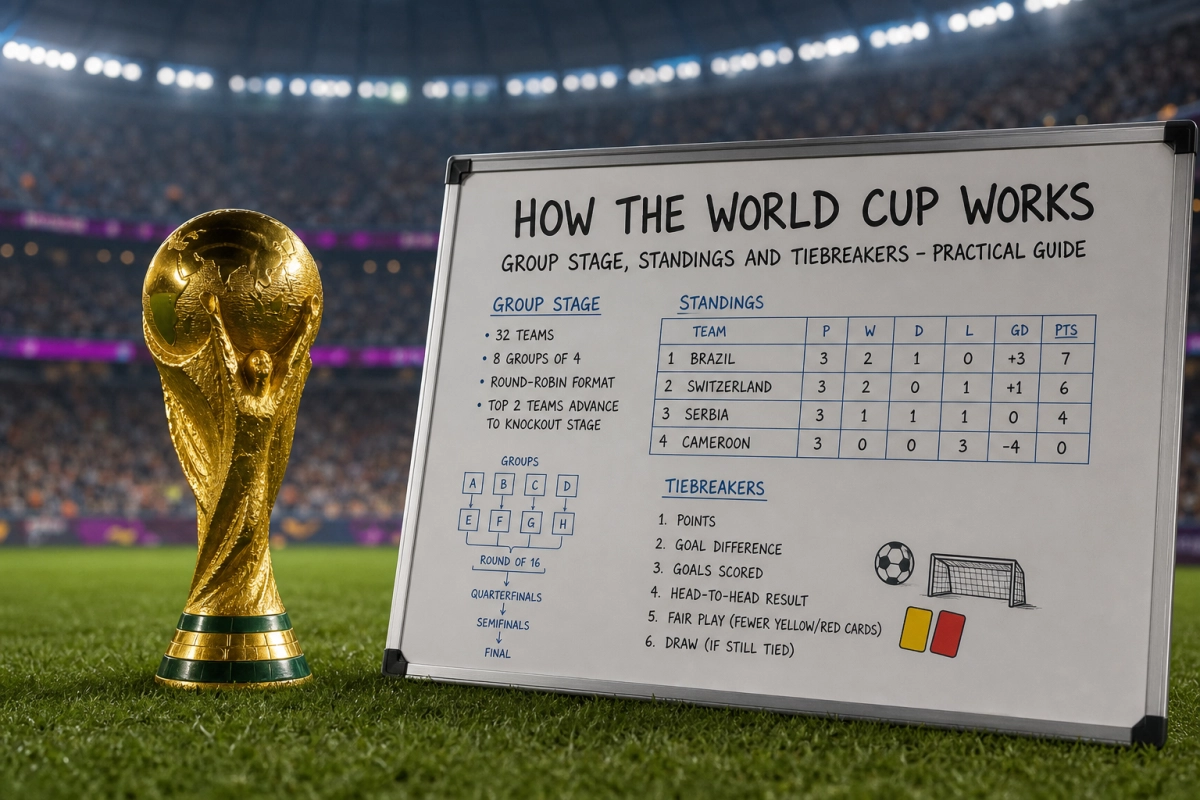
How the World Cup group stage works and what fans should watch
World Cup basics: format, groups and points
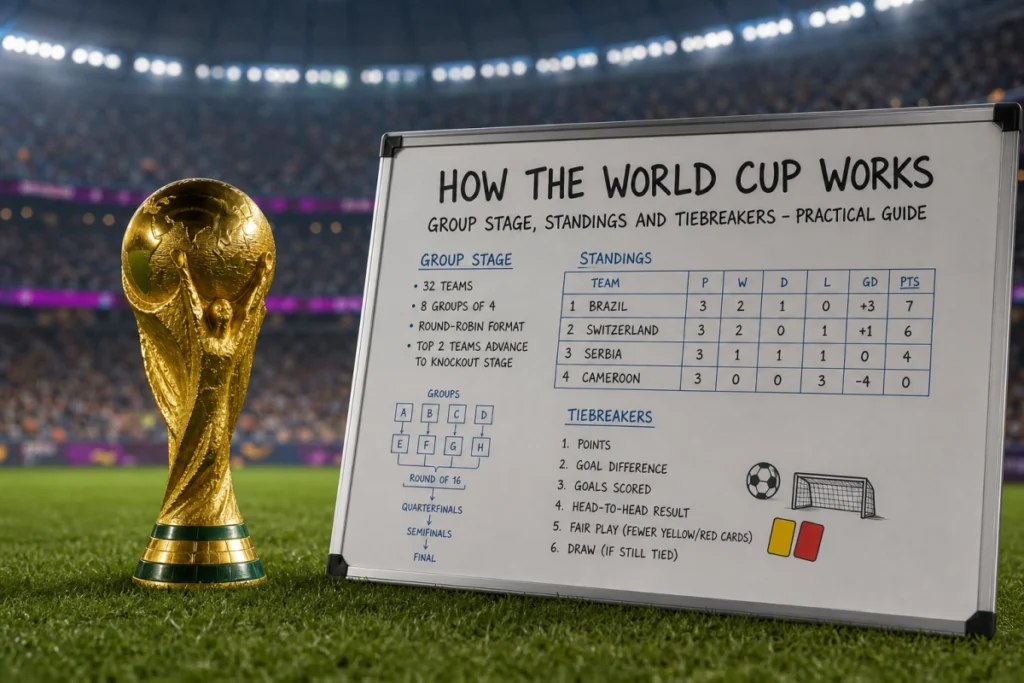
The World Cup starts with a group stage where 32 teams (expanded to 48 from 2026 onwards) are divided into groups. In the classic 32-team format, groups of four play a single round-robin: each team plays three matches. Teams earn:
- 3 points for a win
- 1 point for a draw
- 0 points for a loss
The top two teams from each group advance to the knockout rounds. For East African and Tanzanian followers, the group stage is where every goal counts — goal difference and goals scored frequently decide who goes through.
How standings are ordered and the main tiebreakers
After points, FIFA uses a clear order of tiebreakers to separate teams level on points. Knowing this order helps fans understand what each team must do on matchday three.
Standard tiebreaker order (applies in the group stage)
- Goal difference (total goals scored minus goals conceded across all group matches)
- Goals scored (total goals scored in all group matches)
- Points in head-to-head matches among tied teams
- Goal difference in head-to-head matches among tied teams
- Goals scored in head-to-head matches among tied teams
- Fair play points (disciplinary record)
- Drawing of lots (last resort)
Example: If two teams finish on 4 points and both have goal difference +1, but Team A scored 4 goals and Team B scored 3, Team A finishes higher. If goals scored are equal, organisers check head-to-head results next.
Fair play points explained — a practical detail
Fair play can be decisive. FIFA counts disciplinary points; the team with fewer points ranks higher. Typical scoring (lower is better):
- Yellow card = 1 point
- Indirect red (second yellow) = 3 points
- Direct red card = 4 points
- Yellow card plus direct red = 5 points
Tip for Tanzanian and East African fans: follow live disciplinary trackers on matchday three. A single unnecessary yellow can swing a tiebreaker — especially among closely matched African teams where defensive grit often equals few goals.
Practical tips for following group finishes
- Watch goal difference: a big win on matchday three can leapfrog a team into second place.
- Track head-to-head results: if teams are tied on GD and goals, earlier direct matches matter.
- Keep an eye on yellow/red cards late in games — fair play points are visible in FIFA listings.
- Check kickoff times: final group matches are played simultaneously to avoid match‑fixing; follow live scores to know what your team needs.
With the group rules and tiebreakers clear, the next part explains how VAR can change key decisions in these tight moments and what happens if knockout matches go to extra time and penalties.
How VAR changes big moments — what to expect and how it affects standings
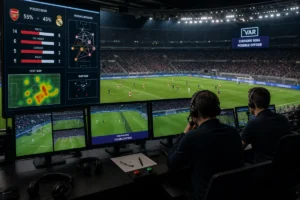
VAR (Video Assistant Referee) has become part of the modern World Cup script, and knowing how it works helps you follow momentum swings that can decide a group or a knockout match. FIFA limits VAR reviews to four clear categories: goals (including whether the scorer was offside or if a foul occurred in the buildup), penalty decisions, direct red cards, and cases of mistaken identity. The VAR team checks every major incident and can either recommend the referee look again or communicate a clear decision.
What this looks like in practice:
– The referee either accepts the VAR advice immediately or calls players over for an on-field review (OFR) at the pitchside monitor. These reviews can take from a few seconds to a couple of minutes depending on the angle needed.
– A goal can be ruled out for an offside margin of a few centimetres — which is especially painful for teams chasing goal difference in the groups.
– VAR can award or cancel a penalty late on, changing a draw to a win or vice versa — with immediate consequences for group standings and tiebreakers.
Example: imagine Tanzania is tied on points and goal difference going into the final group match. A last-minute winner is flagged for a possible offside and overturned after VAR: instead of jumping to second on goals scored, Tanzania remains behind. That single reversal can determine whether a team advances or goes home.
Tips for East African followers:
– Watch for the replay captions broadcasters show — they often explain the narrow reason for a decision (offside by X millimetres, handball rules applied, etc.).
– Keep calm during long reviews — many delays are routine and end up confirming the on-field call.
– If your team’s fate could be decided by a VAR-reviewed incident, follow official FIFA channels for the final decision rather than social media rumours.
Extra time and penalty shootouts — rules, strategy and what fans should look for
Knockout matches that are tied after 90 minutes go to extra time: two 15-minute halves (30 minutes total). There is a short interval before extra time and a brief break between the two halves of extra time. Stoppage time can be added to each extra-time half just like in normal time.
Key rules and tactical points:
– Substitutions: tournaments generally allow more substitution flexibility in extra time (check the competition rulebook), and teams often save a substitution to bring on a fresh striker or specialist penalty taker.
– No “golden goal” — play continues for the full 30 minutes regardless of scoring.
– Fatigue is decisive: teams that pace themselves in the second half are more likely to perform in extra time.
If still tied after extra time, the match goes straight to a penalty shootout:
– Each team takes five kicks alternately. If scores are level after five each, it moves to sudden death.
– A coin toss before the shootout decides who kicks first; that order can affect momentum.
– Goalkeepers can be switched in for psychological or saving advantages (if substitutions remain).
Practical tips for fans:
– Make a list of likely penalty takers for your team early — shooters are often chosen by experience and confidence, not just goals scored.
– Expect longer broadcast breaks — broadcasters will show warmups, player interviews, and analysis before the shootout.
– Respect the tension: if watching in a group or at a venue, plan snacks and drinks in advance — you don’t want to miss a kick because you stepped away.
For Tanzanian and East African supporters, being prepared for the timing (match times often in the late evening local time) and knowing the names likely to take penalties or be subbed in can make extra time and shootouts much more gripping to follow.
What changes from 2026: the expanded 48-team format (brief)
From 2026 the World Cup expands to 48 teams, which brings a new group layout and a different dynamic for qualification and group-stage tension.
- Format: 16 groups of three teams each; the top two in every group advance to a round of 32.
- Fewer group matches per team (two instead of three) means each game carries more weight — one late goal or a single card can be decisive.
- Tiebreakers and fair play matter even more: with only two matches, head-to-head results and disciplinary points can decide who progresses, and drawing of lots becomes a slightly more plausible last resort.
- Tip for East African followers: because margins shrink, track live scores from all groups closely on matchdays and prioritise knowing goal margins and cards — they can flip positions quickly.
Enjoy the World Cup — final notes for East African supporters
Watch with friends, follow the official match updates, and enjoy the drama. Understanding the rules — how standings are decided, how VAR works, and what to expect in extra time and shootouts — makes every match more exciting. A few practical reminders for fans across Tanzania and East Africa:
- Set live alerts for your team and for the matches that affect their group — simultaneous final-round kickoffs mean outcomes change minute by minute.
- Follow official FIFA or tournament channels for VAR and disciplinary decisions to avoid misinformation during long reviews.
- Plan for late finishes: power outages and travel can interfere with viewing, so choose a reliable venue or stream and arrive early if watching in a crowd.
- Know the likely penalty takers and substitutes for your team — having names in mind makes extra time and shootouts far more engaging.
- Celebrate fair play and local achievements: even if Tanzania or an East African team isn’t in the tournament, supporting African players and referees enriches the experience and builds community interest.
Above all, enjoy the football—the World Cup is as much about unexpected moments and shared excitement as it is about rules. Knowing how the competition works helps you savour every crucial second.