Greatest Premier League Moments: A Date-Stamped Roundup (2010–2025)
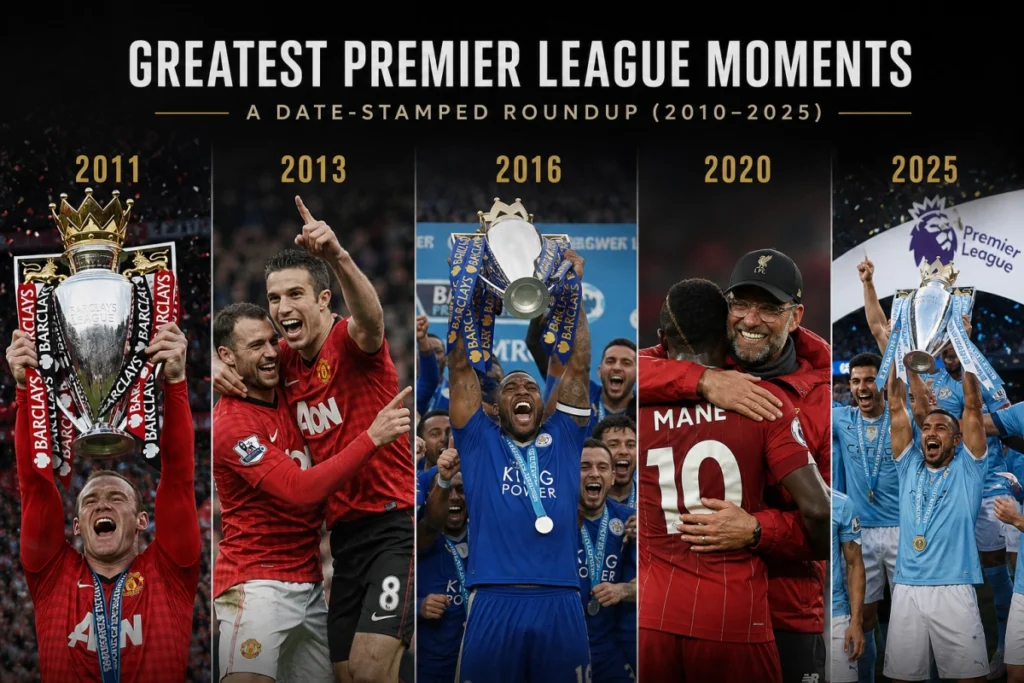
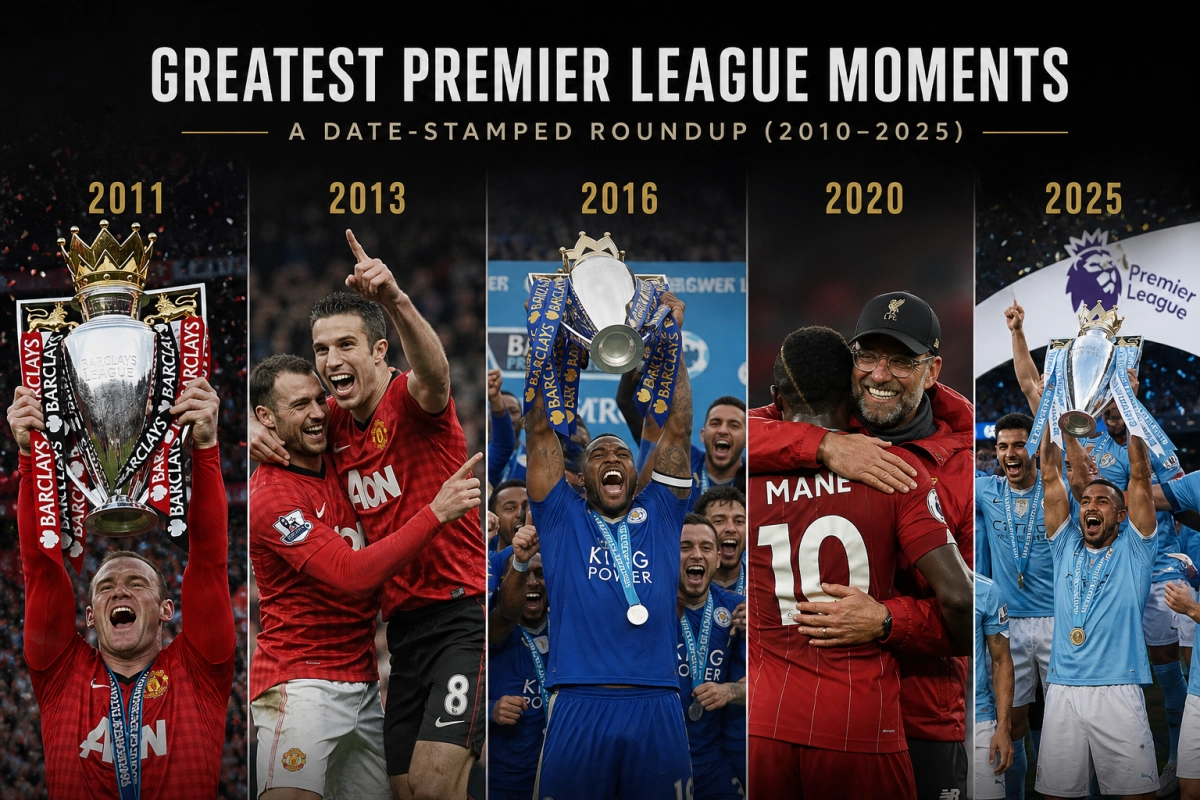
greatest Premier League moments: key turning points from 2010–2016
Why these moments matter and what you’ll learn
This article selects date-stamped, influential Premier League moments from the 2010s and early 2020s and explains why they mattered. Part 1 highlights events that changed titles, reputations and club strategies: Manchester City’s 2012 winner, Sir Alex Ferguson’s 2013 exit and Leicester City’s 2015–16 miracle, followed by later structural shifts such as VAR, standout individual seasons and dramatic title deciders. Readers will get short match summaries, key contributors and the immediate effects on the competition — framed for fans in Tanzania and East Africa.
13 May 2012 — Manchester City’s stoppage-time winner: a modern classic
Match snapshot and key facts
- Date: 13 May 2012
- Fixture: Manchester City 3–2 Queens Park Rangers
- Moment: Sergio Agüero’s 94th-minute goal that clinched City’s first Premier League title
Summary: Trailing late, City produced a dramatic injury-time turnaround culminating in Agüero’s instantly iconic strike. The moment ended a 44-year top-flight drought, accelerated heavy investment and altered rival recruitment and tactical planning across the league by proving that single moments can change club trajectories.
May 2013 — End of an era: Sir Alex Ferguson retires after 2012–13 title
Context and consequences
- Date of retirement announcement: 8 May 2013
- Season outcome: Manchester United won the 2012–13 Premier League
- Notable player: Robin van Persie (top scorer and decisive contributor)
Summary: Ferguson’s departure after United’s 20th title closed a defining chapter. His exit created a leadership vacuum, triggered instability in management and transfer strategy, and encouraged rivals to step up investment and long-term planning to exploit Old Trafford’s transition.
2 May 2016 — Leicester City: the 5000–1 story becomes reality
How the title was clinched and why it rocked football
- Date confirmed as champions: 2 May 2016
- Season: 2015–16 Premier League champions — Leicester City’s first top-flight title
- Key contributors: Jamie Vardy, Riyad Mahrez, N’Golo Kanté
Summary: Leicester transformed from relegation candidates to champions through cohesion, intelligent scouting and tactics that maximised mid-sized resources. Their success forced clubs to reassess the value of data-led recruitment, collective organisation and coaching over sheer spending, inspiring smaller clubs worldwide.
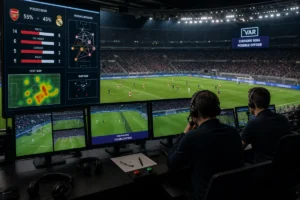
2019–20 season — VAR arrives and rewrites refereeing, moments and match outcomes
Implementation and defining features
- Date: 2019–20 Premier League season (VAR introduced August 2019)
- Change: Video Assistant Referee used across all top-flight fixtures for the first time
- Moment type: offside millimetres, handball reinterpretations and overturned on-field decisions
Summary: VAR was a season-long tectonic shift rather than a single incident, correcting clear errors but creating new debates over consistency and interpretation. It altered game rhythm, tactical choices and recruitment (striker movement, risk of marginal offside calls) and directly affected tight title and relegation battles.
12 May 2018 — Mohamed Salah’s 32-goal season sets a new attacking benchmark
Season snapshot and why it mattered
- Date: 2017–18 season (concluded May 2018)
- Achievement: Mohamed Salah scored 32 Premier League goals — a modern-era record for a 38-game campaign
- Team context: Salah’s output powered Liverpool into a renewed title challenge
Summary: Salah redefined the inverted winger role with pace, movement and finishing, forcing tactical shifts in opposition defences and recruitment priorities. His consistency in key moments emphasised the premium on high-output wide attackers and influenced how clubs evaluated attacking returns in recruitment and coaching.
21 January 2017 — Wayne Rooney becomes Manchester United’s all-time top scorer
Moment and short-term consequences
- Date: 21 January 2017
- Milestone: Rooney surpassed Sir Bobby Charlton to become Manchester United’s all-time leading goalscorer
- Snapshot: a penalty that capped a long, trophy-laden Old Trafford career
Summary: Rooney’s record was symbolic, underlining United’s illustrious past amid a difficult post-Ferguson rebuild. It highlighted the need for squad renewal and strengthened the narrative that United required strategic overhaul to return to their previous dominance.
25 June 2020 — Liverpool finally crowned after a season of disruption
Match snapshot and key facts
- Date: 25 June 2020 (title confirmed following Manchester City’s defeat to Chelsea)
- Season: 2019–20 Premier League
- Moment: Liverpool secured the club’s first top-flight title in 30 years amid COVID-19 disruption
Summary: Liverpool’s triumph after a patient rebuild under Jürgen Klopp validated long-term planning, recruitment and coaching identity. Achieved in unusual pandemic conditions, the title showed that stability and coherent squad-building can outmatch short-term spending, prompting rivals to emulate model-driven rebuilds.
22 May 2022 — Title race drama settled on the final day
Match snapshot and key facts
- Date: 22 May 2022
- Fixture: Aston Villa 2–3 Manchester City
- Moment: Manchester City secured the 2021–22 Premier League title with a final-day winner
Summary: A last-day winner encapsulated a season-long duel where marginal decisions and depth mattered as much as star performances. The finish reinforced the league’s global appeal and pushed clubs to invest in squad depth, tactical flexibility and in-game management to compete across multiple fronts.
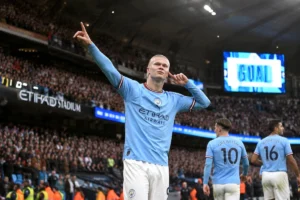
2022–23 season — Haaland, records and a historic treble
Season snapshot and why it mattered
- Date: 2022–23 season
- Achievements: Erling Haaland’s record-breaking Premier League goalscoring season and Manchester City’s treble
- Moment type: individual scoring benchmark and historic club achievement
Summary: Haaland’s remarkable efficiency and City’s treble emphasised the value of elite finishing, squad planning and managerial continuity. The campaign raised the bar for attacking expectations and reinforced multi-competition squad-building as the blueprint for continental ambition.
Where these moments leave the Premier League next
Across 2010–2025 the Premier League’s defining events have combined theatrical match moments, evolving technology and shifting financial realities. Those threads — late winners and comebacks, VAR’s influence on fairness and frustration, record-breaking individual campaigns and the occasional, improbable fairy-tale season — have together made the competition both more technical and more unpredictable.
For fans, coaches and clubs in Tanzania and East Africa, the practical lessons are clear: smart scouting and player development can change a club’s trajectory; tactical clarity and organisational stability often outperform headline spending; and technology will continue to alter how football is played, coached and watched. The league’s storylines also emphasise resilience — the capacity to respond when a single moment swings a season is as vital at grassroots levels as it is in the elite game.
Those who follow the Premier League should expect more change: marginal gains in analytics, further refinements to officiating technology, and new stars emerging from diverse scouting networks. The next decisive moment is inevitable — and when it comes, it will be watched and debated across continents, including by the growing communities of supporters and aspiring players in East Africa.