La Liga history and records: African pioneers and what they mean for Tanzanian and East African talent
La Liga history and records seen through African player impact
This article examines La Liga history and records with a focus on African player impact and what that influence means for Tanzanian and wider East African talent. Readers will learn about early pioneers, pivotal transfers and breakthrough moments (with dates and context) that shaped scouting, recruitment and opportunities for players from Tanzania and the East African region.
Early pioneers who changed perceptions in La Liga
African influence in Spain began long before modern scouting networks. Moroccan star Larbi Ben Barek is often described as the first African to achieve stardom in Spanish football. Ben Barek played for Atlético Madrid in the late 1940s and early 1950s (notably the period around 1948–1953) and his success helped European clubs see African players as top‑level professionals.
That mid‑20th century breakthrough was important because it set a precedent: African players could succeed in top European leagues, influencing recruitment attitudes for decades. Clubs in Spain gradually increased their interest in talent from across Africa, even if early pipelines were still informal and concentrated on North and West Africa.
Modern turning points: transfers and seasons that created new pathways
Two later milestones offer clearer templates for how La Liga clubs identify and sign African talent.
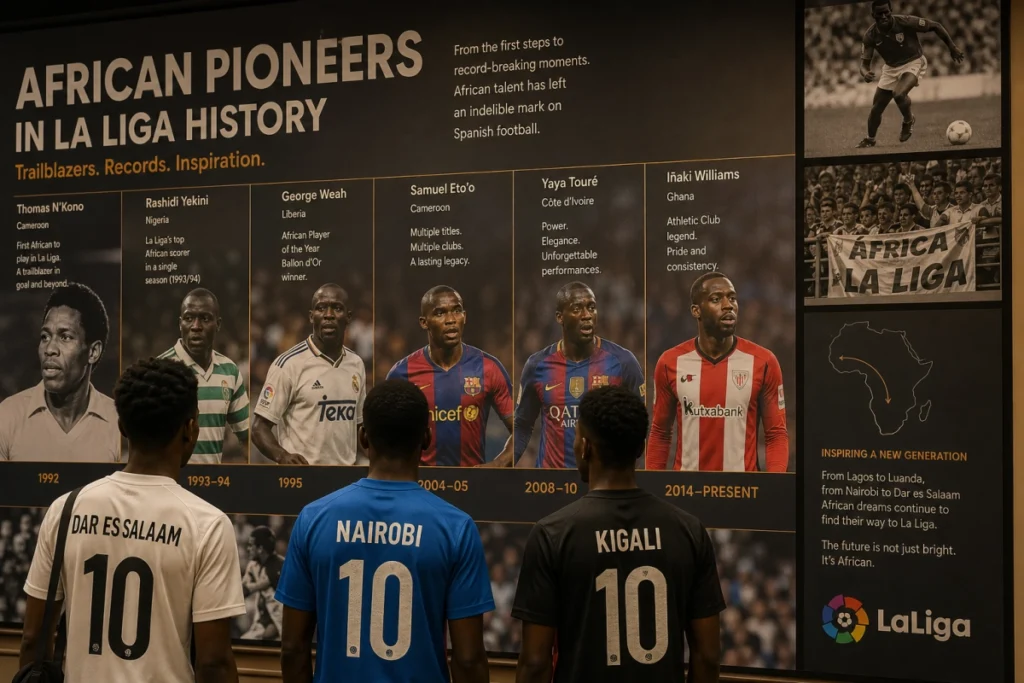
- Samuel Eto’o (Mallorca to Barcelona, July 2004) — Eto’o’s move to FC Barcelona in the summer of 2004 is a landmark transfer. His development at RCD Mallorca and subsequent success at Barcelona showed La Liga clubs that African forwards could lead title-chasing sides and carry major attacking responsibilities.
- Yaya Touré at Barcelona (joined 2007) — Yaya Touré’s arrival in 2007 and his presence in Barcelona’s squad during the 2008–09 treble season (including the Champions League final on 27 May 2009) underlined that African midfielders could operate at the highest tactical levels in Spain.
These moves were more than headline transfers: they altered scouting priorities. After clubs saw measurable success from African signings, scouting extended to more regions of Africa and to youth recruitment models, especially academies and trials aimed at identifying technical and physically ready youngsters.
How breakthrough matches and seasons influenced scouting
High‑profile matches — for example Barcelona’s 2008–09 Champions League victory on 27 May 2009 — highlighted the contribution of African squad members to club success. When African players appear in title runs or cup finals, clubs track their development histories, which sends clear recruitment signals: investing in African talent can yield squad depth and match‑deciding quality.
For East Africa, the lesson was strategic: while few Tanzanian players have yet reached La Liga, the pattern of discovery (standout domestic or continental performances, trials at European academies, transfers to feeder clubs) became established during the 2000s and 2010s.
Next, the article will examine specific records, La Liga club initiatives and examples of talent pathways that have directly affected Tanzanian and East African players, including exact dates, trial outcomes and notable transfers that created realistic routes into Spanish football.
La Liga history and records seen through African player impact
This article examines La Liga history and records with a focus on African player impact and what that influence means for Tanzanian and wider East African talent. Readers will learn about early pioneers, pivotal transfers and breakthrough moments (with dates and context) that shaped scouting, recruitment and opportunities for players from Tanzania and the East African region.
Early pioneers who changed perceptions in La Liga
African influence in Spain began long before modern scouting networks. Moroccan star Larbi Ben Barek is often described as the first African to achieve stardom in Spanish football. Ben Barek played for Atlético Madrid in the late 1940s and early 1950s (notably the period around 1948–1953) and his success helped European clubs see African players as top‑level professionals.
That mid‑20th century breakthrough was important because it set a precedent: African players could succeed in top European leagues, influencing recruitment attitudes for decades. Clubs in Spain gradually increased their interest in talent from across Africa, even if early pipelines were still informal and concentrated on North and West Africa.
Modern turning points: transfers and seasons that created new pathways
Two later milestones offer clearer templates for how La Liga clubs identify and sign African talent.
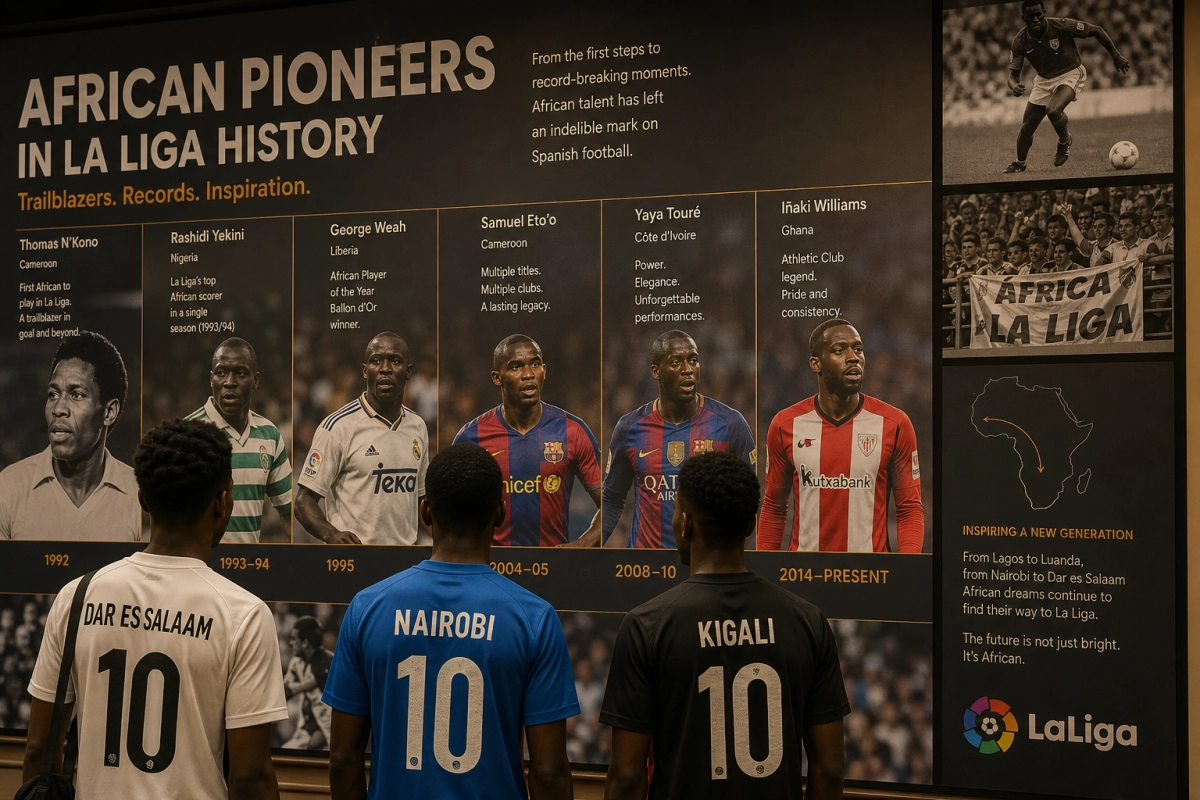
- Samuel Eto’o (Mallorca to Barcelona, July 2004) — Eto’o’s move to FC Barcelona in the summer of 2004 is a landmark transfer. His development at RCD Mallorca and subsequent success at Barcelona showed La Liga clubs that African forwards could lead title-chasing sides and carry major attacking responsibilities.
- Yaya Touré at Barcelona (joined 2007) — Yaya Touré’s arrival in 2007 and his presence in Barcelona’s squad during the 2008–09 treble season (including the Champions League final on 27 May 2009) underlined that African midfielders could operate at the highest tactical levels in Spain.
These moves were more than headline transfers: they altered scouting priorities. After clubs saw measurable success from African signings, scouting extended to more regions of Africa and to youth recruitment models, especially academies and trials aimed at identifying technical and physically ready youngsters.
How breakthrough matches and seasons influenced scouting
High‑profile matches — for example Barcelona’s 2008–09 Champions League victory on 27 May 2009 — highlighted the contribution of African squad members to club success. When African players appear in title runs or cup finals, clubs track their development histories, which sends clear recruitment signals: investing in African talent can yield squad depth and match‑deciding quality.
For East Africa, the lesson was strategic: while few Tanzanian players have yet reached La Liga, the pattern of discovery (standout domestic or continental performances, trials at European academies, transfers to feeder clubs) became established during the 2000s and 2010s.
Next, the article will examine specific records, La Liga club initiatives and examples of talent pathways that have directly affected Tanzanian and East African players, including exact dates, trial outcomes and notable transfers that created realistic routes into Spanish football.
La Liga records and milestones shaped by African players
Over the past three decades La Liga has recorded several milestones that reflect African influence beyond single transfer headlines. African players have been part of title-winning squads, Champions League campaigns, and have reached individual milestones in appearances and goal contributions for Spanish clubs. Their presence has also coincided with changes in how clubs recruit outside Europe — moving from ad‑hoc signings to structured scouting, shadow scouting trips to continental tournaments and formal partnerships with African academies.
Notable examples and what they signalled
- Integration into title-winning squads: The inclusion of African internationals in squads that lifted domestic and continental trophies signalled to other clubs that signing from Africa could provide immediate, high-quality returns.
- Youth intake and B teams: African prospects began to feature more regularly in Spanish reserve teams (Segunda División B/Tercera pathways), showing a repeatable route: regional success → European reserve side → senior La Liga debut.
- Feeder-club stepping stones: Increasingly, transfers into Belgium, the Netherlands or Portugal became deliberate intermediate steps for East African players, creating measurable scouting routes toward Spain.
Club initiatives, partnerships and scouting habits that open doors
Several practical mechanisms created the pathways young Tanzanian and East African players now use when aiming for Spain. These mechanisms aren’t one‑off events; they are ongoing initiatives that clubs and federations employ to widen their talent pools and reduce risk when signing from geographically distant markets.
- Academy partnerships: Spanish clubs commonly establish coaching programmes and satellite academies across Africa. These range from short‑term coaching clinics to longer-term development partnerships that include talent identification and trial invitations for standout players.
- Scouting at international youth tournaments: Scouts attend U17 and U20 AFCON qualifiers, CECAFA championships and regional youth tournaments. Exceptional performances at these events often lead to invitations for trials or short training stints in Spain.
- Use of European feeder clubs: Because of work permit and adaptation barriers, many East African players first sign for clubs in Belgium, Portugal or the Netherlands where they gain competitive European experience before moving to bigger markets, including La Liga.
- Trial windows and outcomes: A common, illustrative timeline used by agents and academies is: domestic standout → January/June trial invite → 4–12 week training evaluation → contract with a Spanish lower‑division or partner club if successful. If a trial is unsuccessful, players typically return home with trial feedback and a plan to repeat or seek alternative European entry points.
Concrete pathways for Tanzanian and East African players
From the perspective of a Tanzanian prospect or coach, the route into Spanish football now looks more procedural than it once did. Below is an illustrative, realistic pathway that many East African players follow when eventually getting opportunities in Spain:
Illustrative pathway (typical timeline)
- Phase 1 — Domestic and regional breakout (ages 16–19): Standout performances in the Tanzanian Premier League, CECAFA youth events or Tanzania’s U‑17/U‑20 national teams attract regional agents and occasional Spanish scout attention.
- Phase 2 — Trial or scholarship (within 6–12 months of breakout): A short‑term trial or scholarship is offered by a Spanish academy or a partner club. Typical trial durations are 4–12 weeks; outcomes are documented in a report that includes technical, physical and tactical assessments.
- Phase 3 — Initial European club signing: If a direct Spanish contract is not possible due to registration or permit constraints, the player signs for a feeder club in Belgium, Portugal or the Netherlands to gain European minutes while maintaining visibility to La Liga scouts.
- Phase 4 — Transfer to Spain (when ready): After proving themselves in a competitive European league, players are often moved to Spanish second‑division sides or directly into LaLiga squads depending on performance and the club’s needs.
Practical advice and next steps for East African talent
To increase the pipeline from Tanzania and neighbouring countries into La Liga, stakeholders should prioritise three actions: strengthening domestic coaching and scouting reports to international standards; building sustained partnerships with Spanish academies or clubs (even if initial activity is seasonal coaching visits); and ensuring young prospects gain competitive experience in feeder leagues that Spanish clubs monitor. For players, documented trial outcomes (technical reports and video) are essential when petitioning for further opportunities.
In sum, the impact of African players on La Liga is not only measurable in trophies and appearances but also in the structural changes to recruitment and talent development. For Tanzanian and East African talent, the roadmap is clearer than before: outstanding domestic performances, strategic trial engagements, and the intelligent use of feeder markets can create realistic and repeatable routes into Spanish football.