Modern football marginal gains: a practical guide for Tanzanian and East African clubs
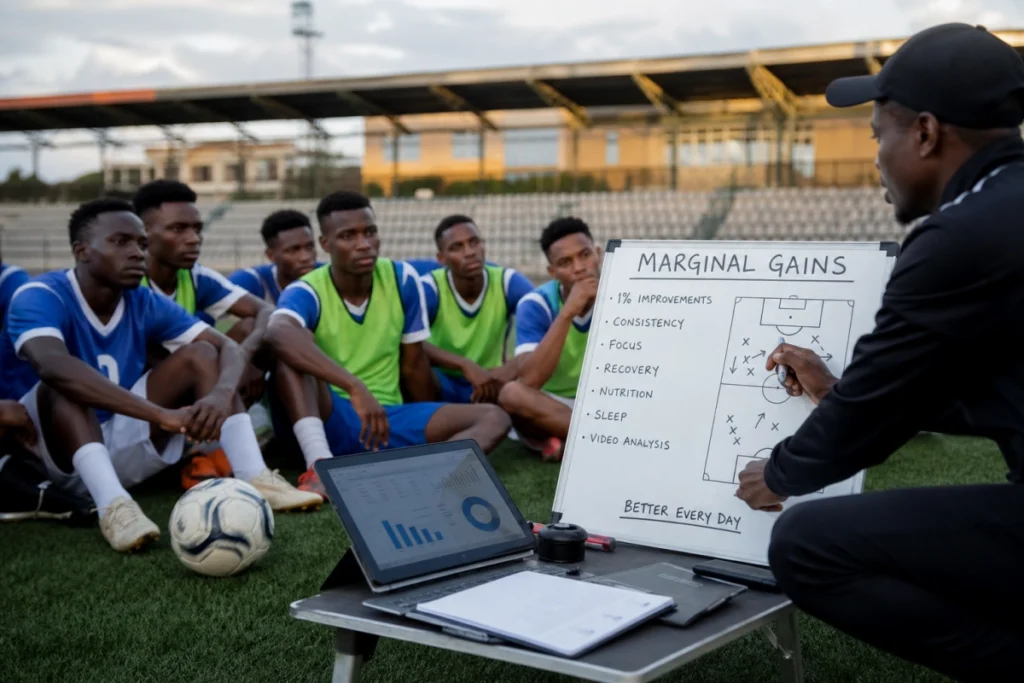
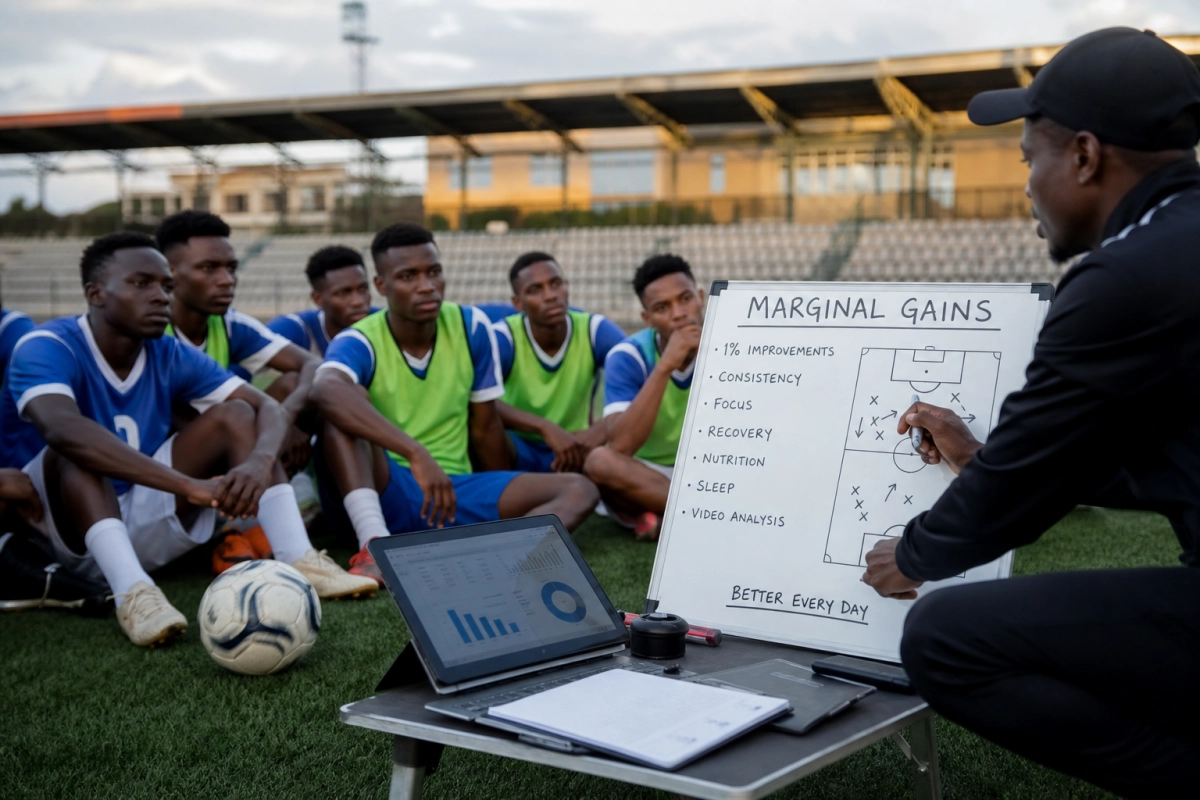
Modern football marginal gains that clubs in Tanzania can start using this season
The phrase modern football describes small, organised improvements that together create big results. This guide shows coaches and managers in Tanzania and East Africa how to apply marginal gains now: disciplined set-piece routines, low-cost video scouting, focused opponent analysis and simple data tracking. Readers get step-by-step drills, clear staff roles, match-day routines and measurable KPIs to use this season.
Why marginal gains matter for Tanzanian and East African clubs
Top budgets are rare in the region, so teams must win by reducing errors and exploiting repeatable advantages. Marginal gains focus on low-cost, high-impact changes: extra goals from set-pieces, better substitution timing from quick analysis, or a concise match report that prevents repeat mistakes. These wins are measurable and quick to implement.
- Immediate impact: routines and basic scouting often change match outcomes within weeks.
- Low cost: use smartphones, free apps and spreadsheets instead of expensive software.
- Scalable: start with one match-day process and expand to reserves and youth.
Set-piece routines and simple drills coaches can teach in two weekly sessions
Set-pieces are the most accessible marginal gain: they require repetition and clear roles. The drills below fit into two 25–30 minute weekly sessions and can raise set-piece returns quickly.
Basic corner routines (3 drills, step-by-step)
- Drill 1 — Zone blocking (10 minutes): two defenders hold zonal positions while three attackers make timed runs. Focus on timing and body position; repeat from both sides.
- Drill 2 — Near-post flick (10 minutes): winger crosses low, striker redirects. Start without a goalkeeper, then add one; repeat until timing is consistent.
- Drill 3 — Short corner then overload (10 minutes): short pass to full-back, cross to a pre-assigned overload side. Emphasise first touch and shot readiness.
Free-kick and throw-in routines (practical rules)
- Assign a primary taker and one backup; rehearse alternatives for wind and distance.
- Designate blockers and attack positions for common wall scenarios.
- Practice quick throw-ins with a stopwatch to encourage sub-5-second restarts.
Staffing roles, responsibilities and quick case examples
Marginal gains succeed when roles are clear. A four-person core is enough for most clubs:
- Head coach — final decisions and session sign-off.
- Set-piece coach (assistant) — plans routines, runs rehearsals, logs outcomes.
- Video analyst/scout — records matches on smartphones, clips set-piece moments and opponent patterns.
- Data officer (volunteer/admin) — maintains simple spreadsheets and KPIs.
Case example: a Tanzania Premier League club made an assistant the set-piece coach and tracked set-piece shots. Within six matches set-piece goals rose from 0 to 3 and points per game improved — a measurable marginal gain without extra budget.
Below are low-cost video workflows, an opponent template and the KPI fields clubs should use to measure progress.
Low-cost video scouting workflow (step-by-step)
Video scouting does not require expensive kit. Use smartphones, free apps and a repeatable file system to make analysis fast and useful.
- Equipment: smartphone at 1080p (60fps if possible), tripod at half-line height; a second phone for close-up clips.
- Record consistently: start 5 minutes before kick-off and stop 5 minutes after full-time. Label raw files with date_opponent_H/A.
- Clip within 24–36 hours: select key moments (set-pieces, build-ups, errors). Keep clips 20–60 seconds to retain context.
- Tagging: use short tags in filenames or a shared sheet—SET_ATTACK, SET_DEFENSE, COUNTER, PRESS_TRIGGER, GK_DISTRIBUTION.
- Editing: use free apps (CapCut, InShot) or VLC/OpenShot to trim and compress clips (5–15 MB). Add short slow-motion for finishing or set-pieces.
- Distribution: central Google Drive or WhatsApp group. Include a one-page clip-sheet summarising 6 key clips and 3 coaching points. Share within 36 hours.
- Deadlines: analyst clips match-day; coaches annotate within 48 hours; data officer updates KPIs within 72 hours.
Opponent analysis template and match-day briefing routine
A simple template focuses on the few opponent traits that change matches. Use it to build a 30–45 minute pre-match briefing with 4–6 clips that illustrate the plan.
- Basic profile (one paragraph): formation, tempo, build style, left/right strength, set-piece threat.
- Key players (top 3): one-line strengths, weaknesses and substitution cues.
- Transitions and pressing triggers: list 2–3 triggers and how to exploit them (quick switches, overloads).
- Set-piece tendencies: preferred corner targets, free-kick routines and weak marking moments.
- Match-day briefing structure:
- T −45–30 min: 10-minute tactical overview (formation, three priorities).
- T −30–15 min: show 4–6 clips (max 60s each) visualising priorities.
- T −15–5 min: final set-piece roles, substitution plan and first-10-minute emphasis.
Simple KPI spreadsheet: fields, formulas and review targets
A basic spreadsheet tracks progress and keeps marginal gains measurable. Use Google Sheets so the data officer and coaches update in real time.
- Essential fields per match: Date, Opponent, Venue, Result, Goals For/Against, Set-piece Shots/Goals, Shots on Target, Turnovers in Own Half, Corners For/Against, Sub Impact.
- Key formulas:
- Points per Game = TotalPoints / Matches
- Set-piece Conversion = Set-piece Goals / Set-piece Shots
- Goals Conceded from Set-pieces % = Set-piece Goals Against / Goals Against
- Substitution Impact = (Goals For After Subs − Goals Against After Subs) / Number of Subs
- Targets and review cadence:
- Short-term (6 matches): increase set-piece conversion by ~30% or add ~+0.4 points per game.
- Medium-term (12 matches): cut set-piece goals conceded by ~25% and lower turnovers in own half by ~15%.
- Review weekly for tactical fixes; monthly for training or personnel changes.
These systems—fast video workflows, a focused opponent template and a compact KPI sheet—turn marginal ideas into measurable action.
Six-week roll-out plan for immediate impact
- Week 1 — Foundations: assign core roles, create shared Google Sheet and WhatsApp group, introduce three set-piece routines and rehearse once.
- Week 2 — Record and clip: record a competitive match, analyst clips set-pieces and opponent moments, data officer enters match fields.
- Week 3 — Apply template: run the 30–45 minute pre-match briefing; reinforce set-piece rehearsals and test a short-corner routine in-game.
- Week 4 — Measure: review KPI trends after three matches and adjust set-piece and substitution cues based on data.
- Week 5 — Expand: add one new set-piece routine and train a reserve staff member on clipping and KPI updates.
- Week 6 — Consolidate: hold a formal review (45–60 min), compare targets and set the next 6-match plan.
Typical match-week schedule (home match example)
- Monday: recovery; set-piece coach logs outcomes; data officer updates KPIs.
- Tuesday: video review with squad — show up to 6 concise clips; technical training.
- Wednesday: tactical drills and substitution rehearsals; individual work for key targets.
- Thursday: 25–30 minute set-piece rehearsal and finishing practice; analyst finalises clips.
- Friday: walk-through and mental prep; captain-led concentration cues.
- Match-day: T −45–30 min tactical overview; T −30–15 show 4 clips; T −15–5 final roles. Post-match: clips within 24–36 hours; KPI update within 72 hours.
Quick implementation checklist for your first match
- Smartphone + tripod for recording and a second phone for close clips.
- Shared Google Drive folder and WhatsApp coaching group.
- Set-piece coach assigned and two routines practised twice that week.
- Analyst ready to clip and tag; data officer with KPI sheet prepared.
- Pre-match briefing scheduled (30–45 min) with 4–6 illustrative clips.
- Post-match deadlines agreed: clips within 36 hours, KPI update within 72 hours, coaching review within one week.
Make marginal gains stick
Start small, be consistent, and let measurable small wins build confidence across the squad and staff. The practices here are lightweight so they fit into existing schedules and budgets; their value comes from repetition, accountability and timely feedback. Pick one priority this week — a set-piece routine, a clip workflow, or the KPI sheet — and commit to the deadlines. With disciplined routines, clear roles and regular short reviews, marginal gains become a sustained competitive advantage the whole club can own.