Greatest Premier League Moments That Changed Football: From 1992’s First Goal to Cultural Turning Points
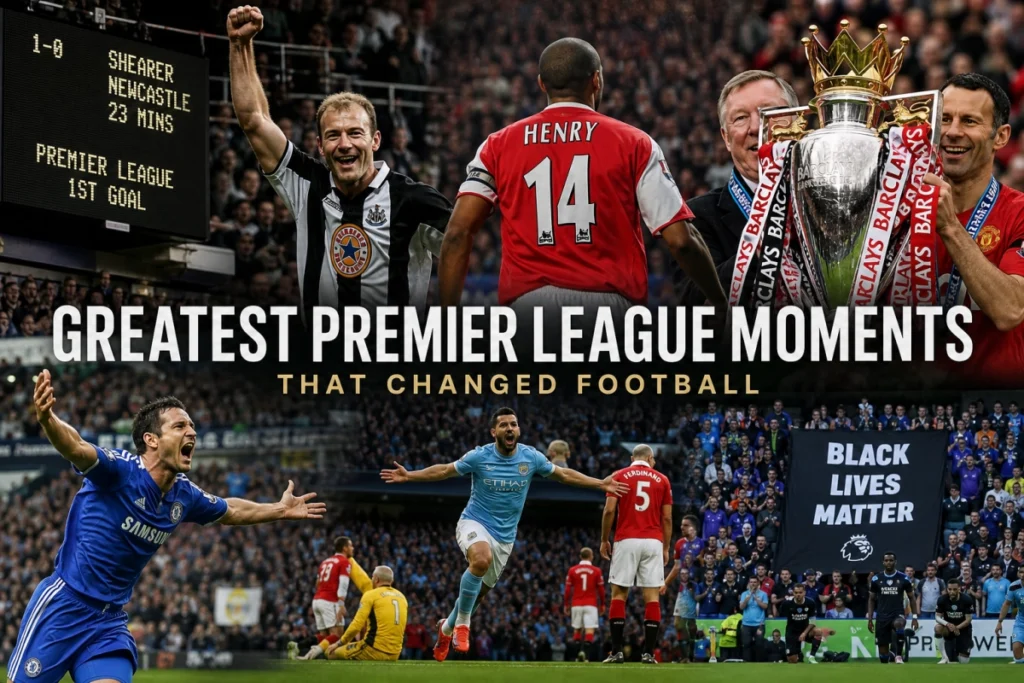
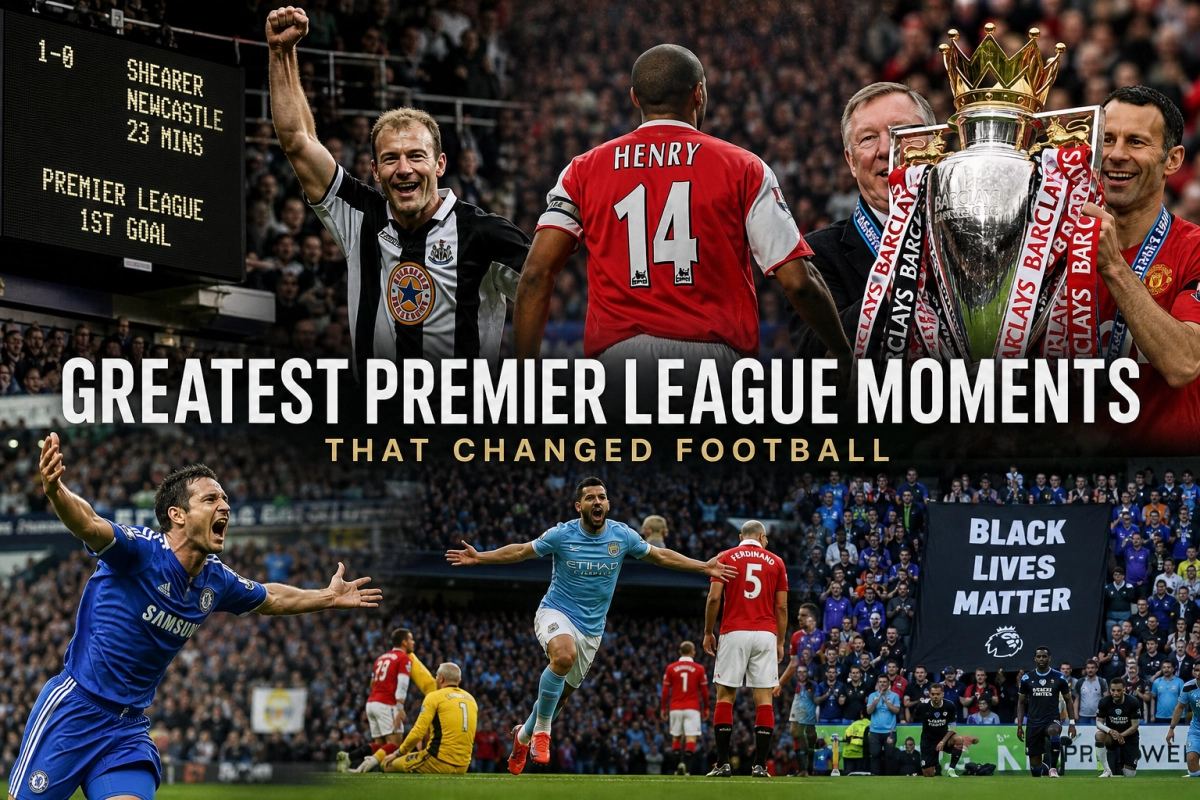
Greatest Premier League moments and why they still matter to East African fans
The phrase “greatest Premier League moments” captures games, goals, debuts and decisions that changed how the league is played, watched and valued worldwide. This part highlights early, defining moments with exact dates, participants and context, and explains why Tanzanian and East African supporters should care — from kickstarting TV interest to shaping player behaviour and modern club rivalries.
How the Premier League began its modern era: first weekend and the first goal
Date: 15 August 1992 — Event: Brian Deane scores the first-ever Premier League goal
Match and participants: Sheffield United vs. Manchester United, Bramall Lane. Brian Deane opened the scoring for Sheffield United in the opening minutes of the new competition’s first weekend.
Context and immediate impact: The 1992–93 season marked the breakaway of England’s top clubs into the FA Premier League, driven by a new broadcast and commercial model. Brian Deane’s goal is symbolic: it represents the very first moment of a league designed for global TV audiences and sponsorship growth.
Why this matters for Tanzanian and East African fans:
- Broadcast transformation — The Premier League’s early TV deals expanded live international coverage. For viewers in Tanzania and East Africa, that era meant more regular, high-quality broadcasts of weekend fixtures and the chance to follow clubs in near real-time.
- Commercial influence — The Premier League model influenced how African leagues and clubs think about sponsorship, TV rights and marketing. Local administrators and club owners studied the league’s commercialisation to modernise local competitions.
- Fan culture — The arrival of weekend fixtures as TV events helped build dedicated followings in Tanzania, where fans adopted televised match rituals (gathering in bars, arranging viewing times, following fixtures and fantasy formats).
Player conduct and cultural fallout: Eric Cantona’s assault and its wider lesson
Date: 25 January 1995 — Event: Eric Cantona’s assault on a spectator at Selhurst Park
Match and participants: Crystal Palace vs. Manchester United, Selhurst Park. After being sent off, Manchester United forward Eric Cantona launched a kick at a Crystal Palace supporter, leading to an extended suspension and legal consequences.
Context and immediate impact: Cantona’s on-field brilliance was matched by off-field controversy. The incident exposed gaps in player discipline rules, media handling and club responsibility. The Football Association issued a lengthy suspension and community service sentence, and clubs tightened codes of conduct.
Why this matters for Tanzanian and East African fans:
- Player behaviour standards — The response set a precedent for how leagues, clubs and federations discipline players. East African administrators reference such high-profile cases when drafting conduct policies and sanction frameworks.
- Media and fandom — The incident underlined how player actions generate global headlines. For Tanzanian fans, it showed that big moments travel beyond results: image, reputation and club PR matter to how players are perceived locally.
- Education for youth coaches — Coaches in Tanzania and the region use examples like Cantona’s to teach young players about emotional control, media scrutiny and professional responsibility.
These early episodes — the first Premier League goal on 15 August 1992 and the Cantona incident on 25 January 1995 — illustrate how single moments can reshape broadcasting, discipline and fan culture. In the next section, the feature will move forward chronologically to tactical shifts, debut performances and title-deciding goals that defined the 2000s and 2010s.
The moment of stoppage‑time drama that rewired how fans watch: Sergio Agüero’s title winner
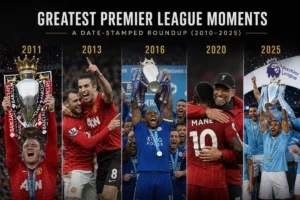
Date: 13 May 2012 — Event: Sergio Agüero scores in the 94th minute to win the Premier League
Match and participants: Manchester City vs Queens Park Rangers, Etihad Stadium. Key figures: Sergio Agüero (goal), Edin Džeko and Mario Balotelli (City goals), Djibril Cissé and Joey Barton (QPR scorers and incidents).
Context and immediate impact: Entering the final day, Manchester City needed a win to leapfrog Manchester United. The game swung wildly — City led, then trailed after QPR fought back, including a red card for QPR — and, with the title seemingly slipping away, Agüero struck in the fourth minute of stoppage time to make it 3–2 and seal City’s first top‑flight title in 44 years. The live commentary, the single‑camera shots of delirious fans and the instant replay of Agüero’s run became defining images of modern football broadcasting.
Why this matters for Tanzanian and East African fans:
- Live event value — The Agüero moment crystallised the Premier League as “appointment viewing.” For Tanzanian broadcasters and bars, it proved that live matches — not highlights packages — drive subscriptions and evening trade.
- Social and digital culture — The goal exploded across social media within seconds. East African fans learned to follow minute‑by‑minute updates, adopt highlights clipping and use platforms like YouTube and Twitter to share iconic moments with friends who could not watch live.
- Youth inspiration and coaching — The image of a single decisive run and finish is used in coaching sessions and youth development messages across the region: tactical awareness, timing and composure under pressure became teachable moments drawn from Agüero’s strike.
When the impossible happened: Leicester City’s title and the underdog narrative
Date: 2 May 2016 — Event: Leicester City confirmed as Premier League champions after Tottenham Hotspur fail to beat Chelsea
Match and participants: Tottenham Hotspur vs Chelsea, Stamford Bridge (the result mathematically secured Leicester’s title). Key Leicester figures: Claudio Ranieri (manager), Jamie Vardy, Riyad Mahrez, Wes Morgan and Kasper Schmeichel.
Context and immediate impact: Leicester’s 2015–16 season began with relegation odds and modest resources. By May 2016, their consistency, counter‑attacking style and collective spirit made them champions against all odds. The achievement rewrote expectations about where success could come from in an era dominated by big spenders.
Why this matters for Tanzanian and East African fans:
- Belief for smaller clubs — Leicester’s title fed the imagination of fans of clubs such as Simba SC and Young Africans. It became proof that shrewd scouting, coaching and team cohesion can compete with financial muscle.
- African player pathways and scouting — Riyad Mahrez’s rise highlighted alternative routes for African and diaspora players to reach the top. Scouts and agents in East Africa used Leicester’s model when advising players and structuring trials abroad.
- Commercial and fandom shifts — Leicester’s success boosted international interest in the league’s competitiveness, increasing viewer engagement in Tanzania and prompting local broadcasters to market narratives about surprises and long‑shot success — a selling point that drove subscriptions, match‑day discussions and fantasy football uptake.
Recent turning points: Salah’s arrival and VAR’s arrival
Date: 22 June 2017 — Event: Mohamed Salah signs for Liverpool
Match and participants: Transfer signing — Mohamed Salah (from AS Roma) to Liverpool FC; manager Jürgen Klopp and the Liverpool recruitment team were central figures.
Context and immediate impact: Salah’s transfer fee and role under Klopp signalled a shift in how elite clubs scouted and integrated wide attackers with direct pace and finishing. His 2017–18 season produced a historic goals tally that reshaped expectations of what a winger can deliver in the Premier League.
Why this matters for Tanzanian and East African fans:
- African representation — Salah’s success reinforced the visibility and marketability of African talent in Europe, encouraging young players in Tanzania and the region to aim for top leagues and creating role models to emulate.
- Commercial spillover — Merchandise, viewership and social media engagement from East Africa rose with Salah’s profile; clubs and broadcasters targeted the region more deliberately as a result.
- Playing style influence — Coaches and academies in East Africa adapted training to emphasise speed, one‑on‑one skills and finishing inspired by Salah’s game, changing youth development priorities.
Date: 9 August 2019 (start of 2019–20 season) — Event: VAR introduced across the Premier League
Match and participants: System rollout across all Premier League fixtures beginning with the 2019–20 season; referees, the Professional Game Match Officials Limited (PGMOL) and broadcast partners were key implementers.
Context and immediate impact: Video Assistant Referee (VAR) fundamentally altered decision‑making, overturning or confirming on‑field calls for goals, penalties, red cards and mistaken identity. It changed the rhythm of matches and how broadcasters explained and presented controversial incidents.
Why this matters for Tanzanian and East African fans:
- Understanding officiating — VAR sparked conversations about fairness, technology in sport and referee education; fans in Tanzania engaged more deeply with laws of the game and dispute resolution in football.
- Broadcast and viewing habits — The need for clearer replays, expert punditry and multi‑angle analysis increased demand for higher‑quality streams, pushing broadcasters in the region to improve delivery and on‑screen explanations.
- Local governance lessons — Football administrators in East Africa observed VAR’s rollout and its challenges when considering adoption of technology (goal‑line tech, streaming review) for domestic competitions, weighing cost against integrity gains.
How to keep these moments relevant for fans and football in East Africa
Moments like signings, decisive goals and rule changes do more than decorate highlight reels: they offer practical lessons for fans, coaches, administrators and commercial stakeholders. For supporters in Tanzania and across East Africa, the value lies in turning inspiration into action — promoting better youth coaching, advocating for improved broadcast access, demanding transparent governance and using global narratives to grow local interest and investment.
Whether you watch at a local bar, coach a youth team or work in club administration, these Premier League moments are tools: study them, debate them and adapt their lessons to the realities of East African football. That is how global flashes of brilliance become lasting local progress.