How Tanzania can reach the World Cup: early steps and the CAF road map
How Tanzania can reach the World Cup — what this guide covers
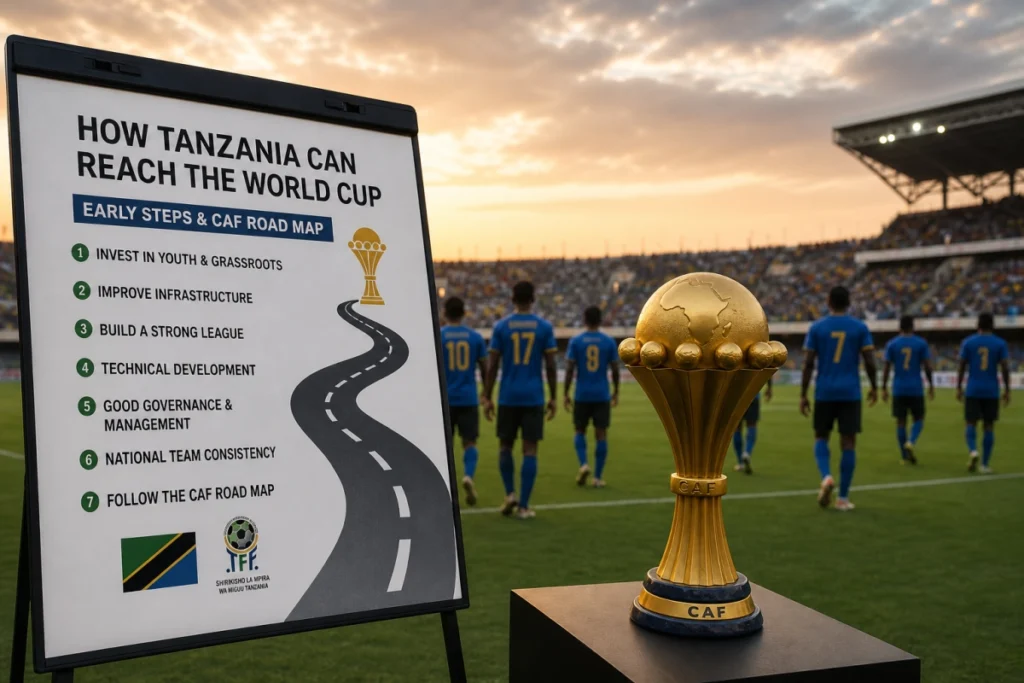
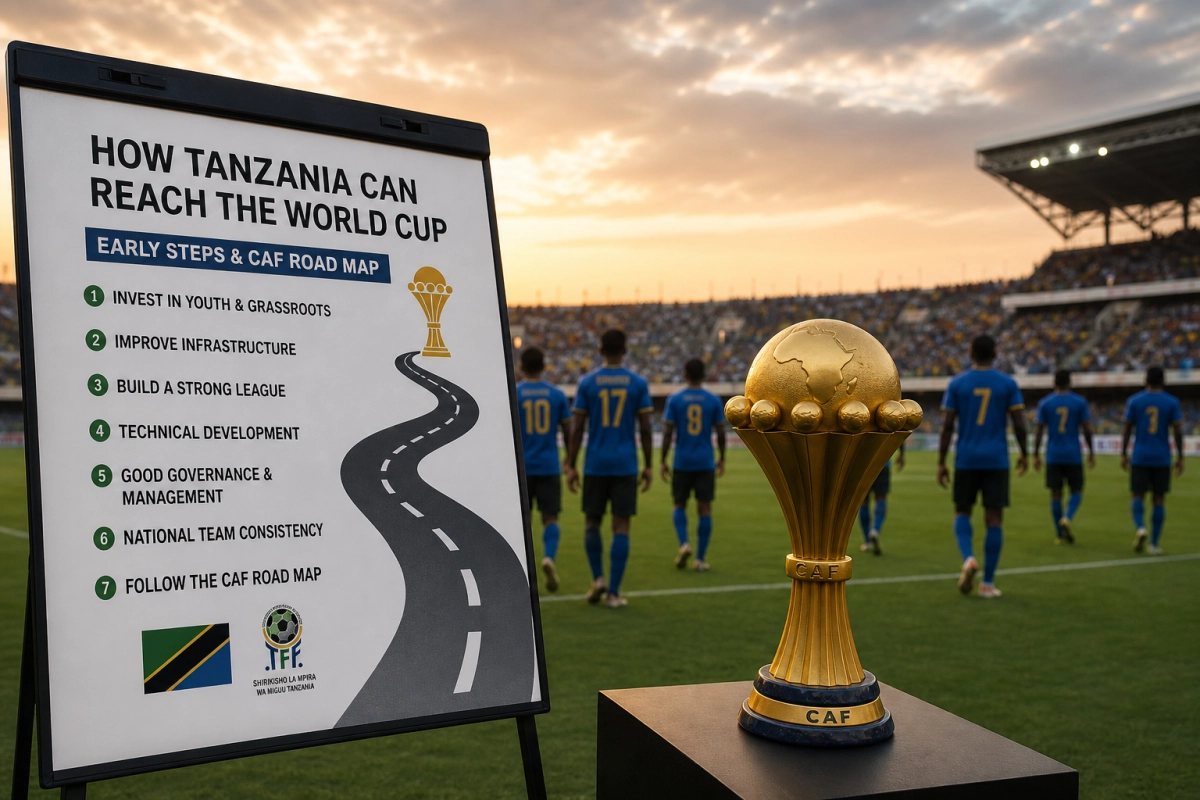
This roadmap explains what the Taifa Stars and Tanzanian football must change over the next four to eight years to qualify for a future FIFA World Cup. It outlines the national team’s recent context, how CAF qualification operates, immediate priorities (match scheduling, scouting, venues) and a practical multi-year plan with measurable benchmarks for coaches, clubs and the federation.
Where the Taifa Stars stand: history, recent form and realistic baseline
Tanzania’s Taifa Stars have never reached a FIFA World Cup and their continental record is modest and inconsistent. Progress has been visible in individual players who gained experience abroad and in emerging domestic talent, but inconsistent coaching, limited scouting and too-few international fixtures have constrained development.
Key practical implications:
- Manage expectations: qualification requires sustained, multi-year programmes rather than a single campaign.
- Build depth: a reliable pool beyond a starting XI is essential to withstand injuries and form dips across long qualifiers.
- Link domestic and international standards: stable, well-coached clubs that develop players raise the national team’s ceiling.
CAF World Cup qualification explained and what Tanzania must prioritise
How CAF qualification typically works
CAF qualification uses group stages and later rounds to allocate slots; the 2026 expansion increases opportunities but also competition. Campaigns run across multiple FIFA windows (commonly March, June, September, October, November), so planning must begin early and provide consistent home and away competitiveness.
Immediate, actionable priorities tied to the qualifying calendar
- Use FIFA windows for at least two high-quality friendlies per year against contrasting styles and stronger opponents to build cohesion.
- Secure and upgrade home venues and pitches to maximise home advantage and meet CAF standards.
- Fast-track and cap-tie eligible diaspora talent early—start scouting and clearing paperwork well before qualifiers.
- Create a stable core selection with a clear rotation plan to build depth while avoiding wholesale squad overhauls between windows.
Player development pathways and youth infrastructure: build depth from the ground up
World Cup qualification depends on a dependable flow of players aged 15–23. Move from ad-hoc discovery to structured regional pathways that produce technically and physically ready professionals.
- Open regional elite centres (one per zone) linked to the FA, each running U15–U19 teams with unified curricula, conditioning and education support. Target three centres operational in 24 months.
- Mandate club-academy certification for top-tier clubs with clear benchmarks (coaching hours, youth teams) and an 18-month compliance timeline.
- Run an annual national talent ID calendar—school championships, trials and scout leagues—and publish a central database to capture players across regions and the diaspora.
- Professionalise age-group national teams with regular camps, competitive friendlies and participation in CECAFA/AFCON youth qualifiers; budget accordingly.
- Introduce a structured reserve or U23 competition to give fringe senior players competitive minutes and link performances to first-team promotion.
Domestic league reforms to raise standards and professionalism
The Tanzanian Premier League must reliably develop players by improving match intensity, tactical education and club stability.
- Enforce club licensing with financial audits, youth development expenditure and minimum stadium/pitch standards as conditions for participation.
- Align the domestic calendar with FIFA windows and reduce fixture congestion to protect player welfare and training time.
- Introduce squad-development incentives—U21 minutes requirements or homegrown quotas—and publish compliance data to encourage youth opportunities.
- Invest in match officials through regional referee academies and pilot VAR in high-attendance fixtures to raise match quality and standards.
- Grow commercial and broadcast revenue and require a portion to be reinvested into youth programmes and club licensing; set clear reinvestment targets.
Coaching, scouting and federation governance: systems that find and refine talent
Professional coaching, centralised scouting and transparent governance multiply the impact of player development and club reforms.
- Implement a national coach-education plan with scholarships for advanced licences and targets to double A-license holders within 36 months.
- Create a central scouting and analytics unit to consolidate reports from clubs, regional centres and diaspora scouts into a searchable system used for selections.
- Appoint a Technical Director on a multi-year mandate to coordinate youth-to-senior transitions, coach pathways and scouting priorities with public KPIs.
- Publish a multi-year budget allocating set percentages to youth, coaching and sports science; pursue matched public-private partnerships and development grants.
- Standardise medical and welfare minimums at club level, centralise injury and anti-doping systems, and provide mental-health resources for youth players.
Multi-year roadmap and measurable benchmarks fans can follow
Year 1 (foundations — months 0–12)
- Appoint a Technical Director and establish a clear national coaching structure; advertise and fill roles within six months.
- Open at least one regional elite centre, run talent-ID events and launch a national player database.
- Require top-tier clubs to submit academy plans and align the domestic calendar to FIFA windows; publish the calendar for the next season.
- Play four quality international friendlies across varied styles and publish match reports.
Years 2–3 (build depth and professionalise — months 12–36)
- Reach 60% of Premiership clubs with certified youth programmes and double A-license coaches; publish certification and licence registers.
- Regularly contest U17/U20 qualifiers and regional tournaments with a target of at least one U20 AFCON qualification by year 3.
- Launch a U23/reserve competition and increase league commercial revenue; publish operational and revenue figures.
- Use a central scouting database and integrate at least 3–5 diaspora players into senior camps after clearance.
Years 4–6 (competitive consolidation — months 36–72)
- Secure a steady pipeline supplying 40–60% of national-team minutes from 22–26-year-olds developed domestically; publish minutes data per window.
- Operate a nationwide referee academy and run a VAR pilot in top fixtures to improve match standards.
- Aim for latter stages of CAF qualifying or an intercontinental play-off spot; publish campaign points and position targets before the cycle.
- Publish a multi-year budget with audited allocations for youth, coaching and infrastructure.
Years 7–8 (targeted push for World Cup qualification)
- Have a fully operational programme—regional centres producing professionals, compliant clubs and a deep senior squad (≥25 players) with international minutes.
- Target advancement to final CAF qualifying rounds or a play-off place and measurable parity with comparable successful African nations.
- Ensure 3–6 home-developed players are established in competitive foreign leagues as evidence of export pathways.
Benchmarks fans can check each year
- Number of certified academies and regional centres operational.
- Count of licensed coaches and published Technical Director reports.
- Youth-team results in regional and continental qualifiers.
- Domestic league revenue and reinvestment into youth/coaching.
- Friendlies and qualifiers played per FIFA window and points-per-window trends.
- FIFA/CAF ranking movement over rolling 24- and 48-month periods.
- Player exports and diaspora integration numbers.
What comes next and how supporters can help
Reaching the World Cup is a long project that depends on consistent decisions, transparent leadership and daily work across many organisations. Fans have real influence: attend matches, hold clubs and the federation accountable for transparent plans, support youth programmes financially or as volunteers, and celebrate incremental progress as loudly as headline wins. Every youth centre opened, coach accredited, and certified club is a concrete step toward changing Tanzania’s football trajectory.
When federation leaders publish targets and data, follow them. Demand evidence of reinvestment into academies, clear timetables for stadium and pitch improvements, and regular public updates on the technical plan. That scrutiny focuses resources where they matter and turns good intentions into measurable progress.
Qualification will not be a single moment but the result of dozens of coordinated wins: better coaching sessions, smarter scouting, healthier players, improved stadiums and trustworthy governance. Fans, clubs, coaches, businesses and government all have roles. If each group meets its annual benchmarks, the dream of a Tanzanian team at a future World Cup becomes a realistic project, not just hope.