VAR Decisions Explained: Offside, Handball and Goal Decisions
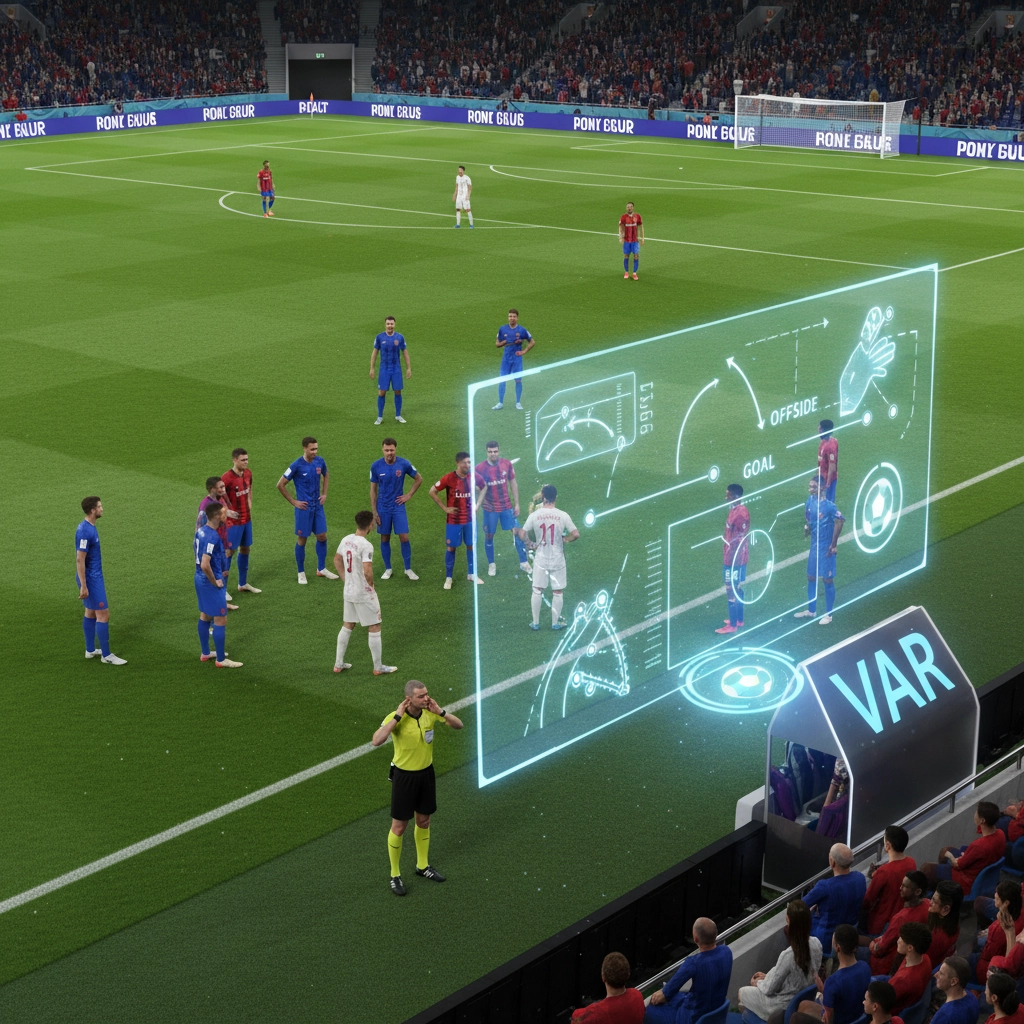
Why VAR exists and how it changes what you see on the pitch
When you watch a match today, VAR is the safety net that aims to reduce clear and obvious errors in key moments. It doesn’t replace the referee; instead, VAR supports on-field officials by reviewing specific incidents using live video feeds, replays and, in some cases, calibrated lines for offside checks. Understanding VAR’s role helps you interpret stoppages, the on-pitch review (OPR), and why some decisions are overturned while others stand.
VAR interventions are focused, not continual. You’ll notice VAR steps in only for match-defining events — goals, penalty decisions, direct red cards, and cases of mistaken identity. This targeted approach balances the desire for accuracy with the need to keep the game flowing.
How the VAR team and on-field referee interact
- VAR watches multiple camera angles and communicates with the on-field referee via headset.
- VAR can recommend a review if they see a potential clear and obvious error.
- The on-field referee makes the final decision, either accepting VAR’s information or conducting an on-pitch review at the referee review area.
What VAR can and cannot review: clear boundaries you should know
Not every foul, handball or marginal offside will be checked. VAR is limited to “match-changing” situations, and the degree of certainty required is high: the video evidence must clearly show an error. You should expect VAR to intervene when the impact on the match result is significant, such as when a goal is scored following a contested build-up.
- Can review: Goals (and incidents leading to a goal), penalty decisions, direct red cards, and cases of mistaken identity.
- Cannot review: Second yellow cards leading to send-offs, most fouls away from a scoring situation, or judgments that are subjective unless there is indisputable visual evidence.
Offside, handball and goal review: the basics you need to follow decisions
These three categories are the ones you’ll see most often linked to VAR reviews. For offside, VAR uses synchronized camera angles and sometimes semi-automated offside technology to determine the position of players at the moment the ball is played. For handball, VAR looks for deliberate handling or clear examples where the hand/arm position makes the body unnaturally bigger and directly affects the play. For goals, VAR checks the entire attacking sequence for offside, fouls, handballs and other infringements.
When a review happens, you’ll usually see a stoppage, a short delay as VAR checks the footage, and then either an immediate announcement or an on-pitch review by the referee. That process explains why some reviews feel rapid and others take longer — the VAR team must confirm whether the evidence meets the threshold of clear and obvious error.
Next, you’ll get a detailed, step-by-step look at how VAR applies specifically to offside decisions, including how the moment of the pass is identified and how modern technology draws the lines that determine onside or offside.

How VAR decides offside: the moment of the pass, the lines and what “active” really means
Offside reviews look precise because you see crisp lines on screen, but several judgment calls go into placing those lines and deciding whether a player influenced play. VAR always starts by identifying the exact frame when the ball is played — not when it moves a fraction later. That “moment of the pass” is the reference frame used to freeze the image and draw the digital lines that measure each relevant body part (feet, head, chest) that can legally score or play the ball.
- Frame selection: VAR operators locate the single frame in which the passer’s foot or hand (for throw-ins) makes purposeful contact with the ball. This is the anchor for all measurements.
- Which body parts count: Only parts of the body that can legally play the ball are measured — feet, head, chest. Arms and hands are excluded for the line-drawing but are relevant for handball checks.
- Semi-automated offside systems: Many competitions now use technology that tracks player skeletons and the ball to speed up the process and increase objectivity. The system proposes the lines; VAR vets and, if needed, adjusts them.
Being marginally ahead of the second-last defender is often decisive, but VAR also assesses whether the attacker was “active.” An offside position only becomes an offence if the player interferes with play (touches the ball), interferes with an opponent (blocks vision or movement), or gains an advantage from the position (e.g., collecting a rebound). If the player is in an offside position but not influencing the phase, VAR will normally leave the goal or action standing.
Handball decisions under VAR: deliberate action, unnatural arm position and the scoring context
Handball remains one of the most discussed VAR topics because the line between accidental contact and an offence can be fine. VAR reviews focus on whether the hand or arm made the body unnaturally bigger, whether the player deliberately moved the hand towards the ball, and whether the handball directly affected a goal or created a clear goalscoring opportunity.
- Deliberate vs accidental: Deliberate handling (movement of the hand towards the ball) is penalised. If the ball strikes a stationary hand that is in a natural position, VAR is unlikely to intervene unless the contact directly leads to a goal or penalty.
- Unnatural position: If the arm is away from the body and increases the player’s surface area — especially in the build-up to a goal — VAR treats that as a strong indicator of an offence.
- Scope of review: Remember VAR only reviews handball in match-changing situations: goals and penalties (or incidents leading to them). Most handball calls elsewhere in the pitch won’t be checked.
Goal reviews: the sequence check and why sometimes the referee must review on the pitch
When a goal is scored, VAR runs a quick, ordered checklist: was there an offside in the build-up, any foul (including shirt pulls or trips), a handball, or a goalkeeper infraction? Goal-line technology settles whether the ball fully crossed the line; VAR handles everything else. Because multiple incidents can interact, the review may examine several moments in the sequence rather than a single freeze-frame.
If the video evidence is clear and conclusive, VAR informs the referee and the goal is either confirmed or overturned. If the footage is close or evidence is inconclusive — for example, when marginal offside lines are within an acceptable margin of error or the moment of contact is ambiguous — the referee may conduct an on-pitch review at the pitch-side monitor to make the final call. That balance — speed where possible, careful review where necessary — is why some goal checks are instantaneous while others take longer.
Final thoughts and the road ahead
VAR has changed how matches are decided, but it is not a finished product — it is a process of continual improvement. Expect gradual refinements: faster semi-automated systems, clearer on-screen explanations for fans, and tighter protocols that balance accuracy with the flow of the game. The aim is the same as when VAR was introduced: reduce clear and obvious errors while preserving the human element of refereeing.
If you want to read the official guidance that shapes these reviews, consult IFAB’s VAR protocol for the latest rules and interpretations.
Frequently Asked Questions
When will VAR check an offside?
VAR checks offside when it is potentially match-changing, most commonly in the build-up to a goal or an immediate goalscoring opportunity. The review centers on the exact frame the ball was played and whether an attacker was in an offside position and actively involved in the play.
Does VAR intervene on every handball?
No. VAR reviews handball only in match-changing situations (goals and penalties or incidents directly leading to them). The officials assess deliberate movement toward the ball, whether the arm made the body unnaturally bigger, and whether the contact directly affected the outcome.
Why do some goal checks go to an on-pitch review?
If the video evidence is not clear and conclusive—for example when the exact moment of contact is ambiguous or margins are extremely tight—the referee may conduct an on-pitch review using the pitch-side monitor to make the final decision. This ensures the referee, not just the VAR team, has the last say when certainty is lacking.