How VAR Changed Football: VAR Decisions Explained and Analyzed
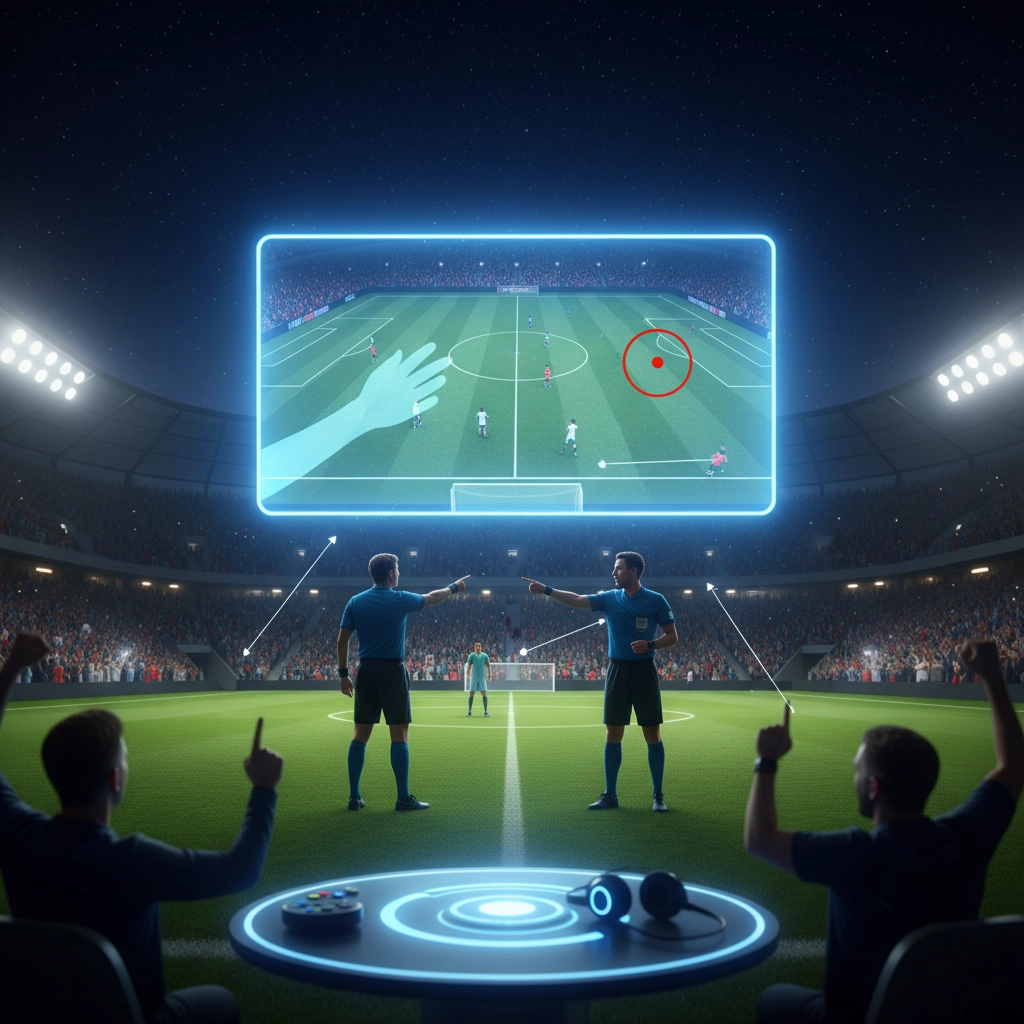
When VAR arrived: how the game you watch started to change
You probably noticed that over the last decade the match you watch no longer ends when the ref whistles. VAR (Video Assistant Referee) was introduced to reduce clear and obvious errors in key match-defining moments, and its presence altered more than just final scores. You now experience pauses for reviews, camera overlays explaining decisions, and moments where players and fans hold their breath while officials consult footage.
The system was trialed by IFAB in 2016 and rolled into professional competitions from about 2017–2018 onward. Leagues and tournaments adopted VAR at different speeds, but the core aim stayed the same: correct obvious mistakes in four specific categories. The effect has been immediate and broad—you face fewer blatant injustices, but you also grapple with slower stoppages, debate over marginal calls, and a shifted tactical landscape as teams and players adjust behavior to a new enforcement reality.
What VAR is allowed to change and the review process you see on screen
To understand VAR decisions, you need to know both the limited scope of review and the practical steps taken when something is challenged. VAR does not rewrite the Laws of the Game; it focuses on correcting “clear and obvious” errors in certain play types. Recognizing that scope helps you judge whether a review felt appropriate or excessive.
Four decision types VAR can intervene on
- Goals: VAR checks whether the build-up involved an offside, handball, foul, or other infringement that would nullify a scored goal.
- Penalties: VAR reviews whether an incident inside the penalty area should result in, or should have cancelled, a penalty kick.
- Direct red cards: VAR can recommend review for incidents that may deserve a straight red (violent conduct, serious foul play) but not for second yellow cards.
- Mistaken identity: If the referee books or sends off the wrong player, VAR can correct the record.
The step-by-step review you watch unfold
- Incident occurs and VAR team reviews multiple angles in the VAR room.
- VAR decides if there is a “clear and obvious error.” If yes, they communicate a recommendation to the on-field referee.
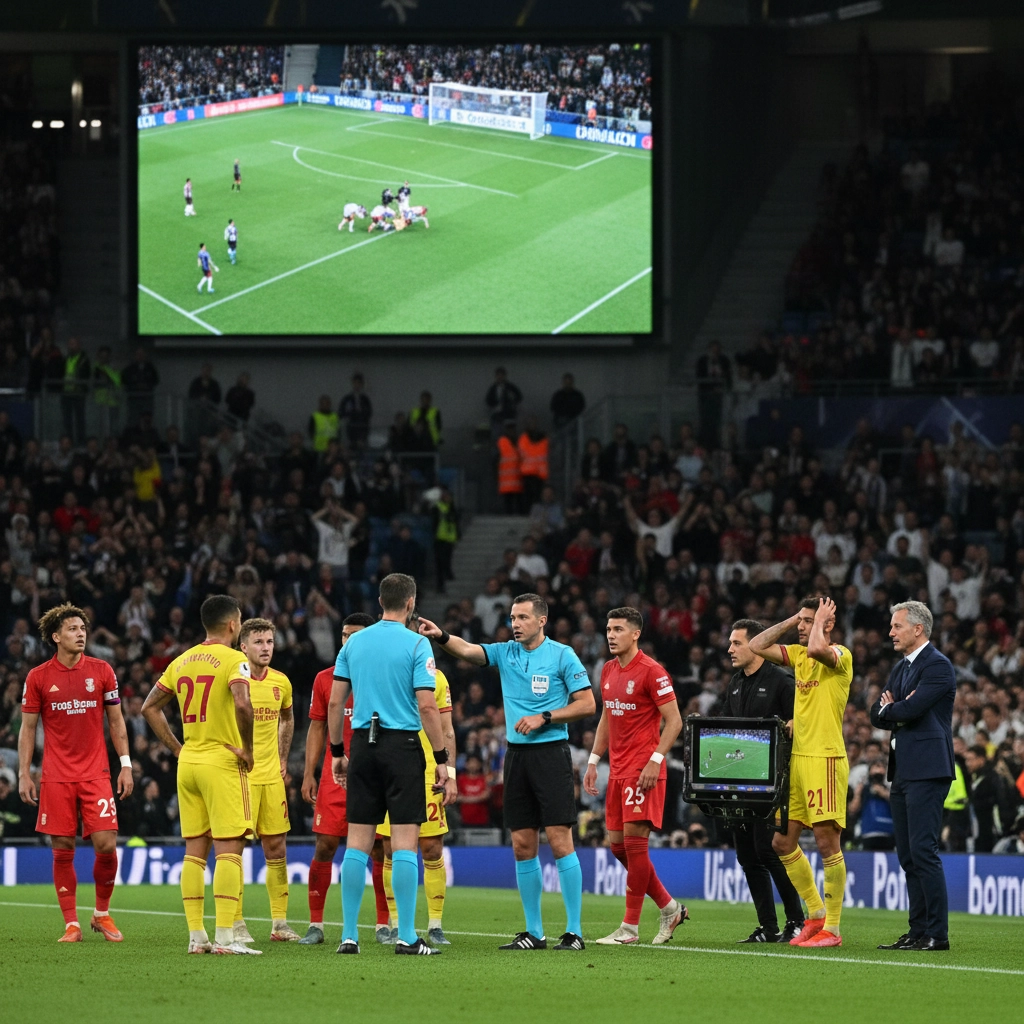
- The referee either accepts the VAR recommendation or conducts an on-field review (OFR) at the pitchside monitor.
- After the review, the referee signals the decision to players and spectators, often with a short explanation shown on the broadcast.
Technology such as calibrated offside lines, slow motion, and multiple camera angles improved accuracy, but also created new debates about margins—especially for offside calls decided by millimetres. You might find some decisions satisfying because obvious mistakes are corrected, while others feel unsatisfying because the increased precision exposes subjective gray areas.
With this foundation—how VAR is limited to certain incidents and how reviews are conducted—you’re ready to look at concrete VAR decisions, notable controversies, and what they reveal about the system’s strengths and weaknesses. In the next section we’ll analyze landmark VAR calls to show how these rules play out in real matches and what they mean for fairness and game flow.
Landmark VAR decisions and what they taught us
Since its rollout, VAR’s most instructive moments have rarely been about the technology itself and much more about how human judgment and the Laws interact when slow motion and multiple angles enter the picture. A few types of landmark decisions keep coming up in debates because they expose the system’s trade-offs.
– The marginal offside that overturns a goal by millimetres. These incidents—where a striker’s toe or shoulder is nudged offside by a fraction and a calibrated line cancels a celebrated finish—highlight the tension between absolute precision and the spirit of the game. The lesson: VAR gives greater accuracy, but accuracy doesn’t always equal fairness in fans’ eyes when it removes a dramatic moment over imperceptible margins.
– The late penalty awarded after a VAR handball check. In several high-profile knockout ties, VAR has spotted a contact inside the box that the referee missed in real time, altering match outcomes in stoppage time. These reversals show the system’s corrective power but also underline how the interpretation of “handball” matters: not all contacts are intentional, and slow motion can make trivial touches look egregious. The lesson: clearer definitions of what constitutes a punishable handball remain central.
– A red card recommendation that is downgraded after an on-field review. In some widely discussed cases, players expecting dismissal have been spared after the referee views the footage at the pitchside monitor. These moments demonstrate VAR’s role in preventing wrongful sendings-off and protecting player careers, but they also prolong uncertainty and change atmospheric energy. The lesson: VAR reduces catastrophic human errors but introduces procedural delays that stakeholders must accept.
Across these examples a few common themes emerge: technology corrects obvious mistakes, it magnifies marginal ones, and it relies on human interpretation of ambiguous incidents. The most controversial calls teach us that improving accuracy alone doesn’t eliminate debate—it often shifts it from “who made the error” to “which interpretation of the footage is correct.”
How VAR reshaped tactics, player behaviour and refereeing
VAR didn’t just change decisions — it changed how football is played and officiated.
– Player behaviour: Defenders and attackers quickly adapted. Defenders who once risked borderline fouls inside the box have become more cautious; attackers have learned to adjust body positions to avoid fractional offside calls; and some players exploit the system by forcing VAR reviews through theatrical reactions or persistent appeals. The net effect: fewer egregious fouls, but more gamesmanship aimed at drawing reviews.
– Tactical adjustments: Coaches now plan for the possibility of late VAR interventions. Teams preserve composure in the dying minutes differently—either protecting leads knowing a goal can be overturned, or hunting an extra-margin attempt expecting an offside review. Managers also time set-piece routines and substitutions with the awareness that VAR can replay and dissect them.
– Refereeing practice: Match officials have grown more collaborative with VAR teams; many referees defer to the VAR on close visual incidents but still use the pitchside monitor when nuanced context matters. VAR has also changed training priorities: match officials must understand video angles, the limits of slow motion, and how to communicate decisions clearly to players and fans.
VAR’s influence is broad and ongoing. It has reduced clear injustices and introduced new gray areas—forcing players, coaches and referees to adapt in ways that will continue to shape the sport’s tactics, culture and laws.
Where VAR Goes From Here
VAR is no longer an experiment: it is an operational part of elite football that will continue to evolve. The next phase should focus less on raw precision and more on proportionality — refining when and how ultra-fine margins should decide outcomes, improving consistency in interpreting subjective laws (especially handball), and speeding up processes that currently stretch player and fan patience. Better broadcast presentation, clearer on-field explanations and ongoing referee education will help normalize VAR’s place in the game rather than letting it remain a flashpoint.
Technology upgrades — from more synchronized camera systems to clearer protocols for when to use slow motion — can reduce controversies, but meaningful progress also depends on stakeholders agreeing where the line should be drawn between correcting obvious errors and preserving the flow and drama of matches. For the most authoritative updates on protocol and law changes, see the standards published by IFAB.
Frequently Asked Questions
Why do marginal offside decisions still cause controversy?
Marginal offsides are controversial because VAR’s frame-by-frame precision can detect a player being offside by millimetres, which many feel undermines the game’s natural margins. The controversy stems from the difference between technological accuracy and perceived sporting fairness; even perfectly measured calls can feel unjust when they erase dramatic moments.
Has VAR actually reduced refereeing mistakes?
Yes, VAR has reduced clear, match-defining errors (missed red cards, overlooked penalties, and clear offsides) by providing corrective reviews. However, it has also introduced new debates around interpretation, timing and the use of slow motion, so while objective mistakes are fewer, subjective disagreements remain.
How has VAR changed how teams play and prepare?
Teams and players have adapted tactically and behaviorally: defenders act more cautiously inside the box, attackers position themselves to avoid fractional offside rulings, and coaches plan for possible late-game reviews. There is also increased gamesmanship aimed at triggering reviews or influencing officials, so managers now train players in subtle behavioral adjustments as part of match preparation.