History of Football: From Folk Games to Global Phenomenon

Where football’s story begins: ancient and folk ball play across cultures
You may think football sprang fully formed from Victorian pitches, but its roots reach deep into human history. Across continents and eras, people kicked, carried, or struck balls as part of ritual, leisure, or warfare training. These early activities share a basic logic: a spherical object, a goal or target, teams or competing groups, and rules—formal or improvised—that shaped play.
When you look at the archaeological and literary record, patterns emerge rather than a single origin point. In China, the Han dynasty game cuju involved kicking a ball through an opening; in Mesoamerica, rubber balls featured in ceremonial and competitive contexts; in medieval Europe, village games combined elements of chaos and community rivalry. Each instance reveals how ball play satisfied social needs: physical training, seasonal celebration, local identity, or simply entertainment.
Common features that link early ball games
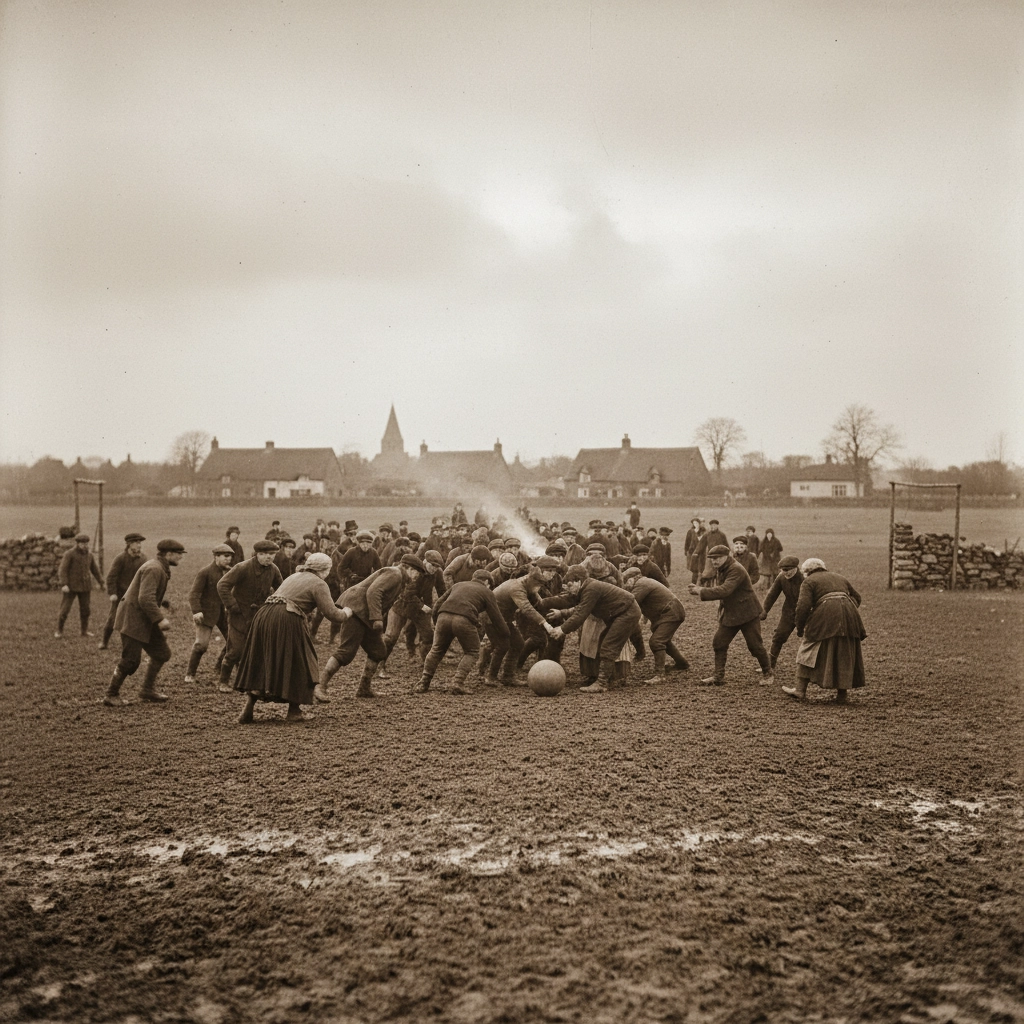
- Mob-style play: large numbers, few formal boundaries, and shifting team sizes that favored strength and endurance.
- Seasonal or ritual timing: matches tied to harvests, festivals, or religious observances.
- Local variation: rules, objectives, and equipment differed from village to village, reflecting local customs.
- Community enforcement: local leaders, elders, or custom regulated play rather than a written rulebook.
From medieval chaos to organized contests: how early Europe shaped modern football
In Europe, particularly from the Middle Ages onward, you can trace a clearer line toward the game you know. Medieval “mob football” was noisy, often violent, and typically played between neighboring hamlets. The ball might be carried, thrown, or kicked toward a distant marker; there were few limits on how players could interact. Authorities periodically banned these matches because of the damage and disorder they caused, which tells you how widespread and disruptive they could be.
At the same time, more restrained ball games developed in towns and schools. Elite institutions and urban guilds often preferred rules that limited physicality and emphasized skill. By the 18th and early 19th centuries, public schools in Britain began to adapt games to the needs of institutional life—introducing regular teams, fixed playing areas, and disciplinary mechanisms that made matches predictable and teachable.
Why local rules mattered for later codification
You should notice that the enormous variety of local customs created both a challenge and an opportunity. When players from different places met—at fairs, in the military, or in emerging industrial towns—they had to negotiate which version of play to follow. Those negotiations, combined with the desire of schools and clubs to control roughness and ensure repeatable contests, sowed the seeds for formal rules.
Next, you’ll see how the 19th century’s social changes—industrialization, transportation, and schooling—accelerated the push toward standardized rules and the formation of clubs and associations that turned folk games into organized football.
Codifying the game: schools, associations, and the 19th-century rulebook
As industrial-era Britain restructured daily life, the patchwork of local rules began to converge. Public schools and universities were crucial: institutions like Eton, Harrow, and Cambridge formalized play to fit timetables, discipline, and pedagogy. These settings produced written codes—most famously the Cambridge Rules of 1848—which insisted on fixed pitches, timed halves, and limits on handling the ball. At the same time, local bodies such as Sheffield and the London clubs produced alternative rule sets. Those competing rulebooks created a practical problem whenever teams from different places met: which code would be used?
The solution was institutional. In 1863 representatives from London clubs and schools met to form the Football Association (FA), aiming to standardize rules across clubs. The FA’s decisions—banning carrying the ball and establishing catch-and-kick exceptions, defining goal dimensions, and clarifying fouls—began to make matches repeatable and fair. Parallel developments refined equipment: vulcanized rubber made more durable balls, and standardized kits and goalposts produced recognizable playing conditions. You should notice that codification did more than curb violence; it turned a loose social pastime into an agreed-upon contest with measurable outcomes.
Professionalism and the rise of leagues: football as organized competition
Standard rules invited formal competition—and competition invited money. Urbanization and factory schedules created large urban working classes with leisure time and collective identities. Clubs moved from amateur gentlemanly pursuits to community institutions. The FA Cup, inaugurated in 1871, created national knockout competition that captured public imagination. By the 1880s the pressure to compensate players for lost workdays led the FA to legalize professionalism (1885), opening the door to paid squads and transfer practices.
Professionalism reshaped the sport’s structure. The English Football League, established in 1888, introduced regular seasons, point tables, and a business logic to club management. Tactics evolved too: the earlier dribbling game gave way to a “combination game”—short passing, coordinated movement—pioneered by Scottish teams and adopted widely. Meanwhile, improved railways and municipal stadia meant supporters could travel and gather in ever larger numbers; working-class terraces and club loyalties became fixtures of urban life. You should note how these changes turned football into both a spectator spectacle and an economic enterprise.
Exporting the game: empire, migration, and the making of an international sport
Once standardized and professionalized, football spread rapidly beyond Britain. The British Empire proved an efficient conduit: soldiers, sailors, merchants, and teachers carried the rules to Europe, Latin America, Africa, and Asia. Clubs sprouted in port cities and industrial hubs; local adaptations emerged, but the basic structure—11-a-side teams, goalposts, a referee—travelled widely. The first official international match, England v. Scotland in 1872, foreshadowed broader transnational contests.
Internationalization also created governance needs. National associations multiplied, and in 1904 several countries formed FIFA to coordinate matches and rules across borders. Through travel, migration, and the slow spread of print and telegraph coverage, football transformed from a regional pastime into a shared global language. By the eve of the First World War the sport had evolved from a scattered set of folk games into an organized, codified, and international phenomenon—ready for the dramatic cultural and technological shifts the 20th century would bring.
Twentieth century and beyond: tournaments, media, and social change
The 20th century accelerated football’s transformation from a codified pastime into a global cultural force. International tournaments such as the FIFA World Cup (first held in 1930) created shared moments that transcended borders, while continental club competitions fostered new rivalries and commercial opportunities. Radio and then television massively expanded football’s audience, reshaping how matches were consumed and monetized. Tactics and training professionalized further—think the WM, total football, and modern pressing systems—while technological and organizational innovations continued to alter the playing and spectator experience. Concurrently, the history of exclusion and resurgence in women’s football, and the sport’s role in politics, migration, and identity, showed how football both mirrors and influences wider social change.
The game’s ongoing journey
Football’s story is not a closed chapter but an active conversation between past practices and future possibilities. Its endurance comes from a unique combination: simple rules that invite wide participation, layered traditions that anchor communities, and constant reinvention through tactics, technology, and governance. As the sport navigates pressures—commercialization, integrity concerns, technological disruption, and the need for inclusivity—those who care about the game face choices about what to preserve and what to change. Thoughtful stewardship can ensure football remains accessible, meaningful, and resilient for generations to come. For a snapshot of one of football’s defining global stages, see the official FIFA World Cup site: FIFA World Cup.
Frequently Asked Questions
When were the modern rules of football first standardized?
The modern rules began to coalesce in the mid-19th century, with influential texts like the Cambridge Rules (1848) and, crucially, the formation of the Football Association in 1863, which established a widely adopted code that banned carrying the ball and clarified many aspects of play.
How did football spread from Britain to become a global sport?
Football spread through the movement of people—soldiers, sailors, merchants, teachers—and through colonial and trade links. Clubs formed in port cities and industrial centers abroad, national associations emerged, and by 1904 several countries had joined to create FIFA, which helped coordinate international matches and competitions.
When did football become professional and organized into leagues?
Pressure to compensate players led the English FA to legalize professionalism in 1885. Soon after, the English Football League was founded in 1888, introducing regular seasons, standings, and a business framework that influenced league structures worldwide.