World Cup 2026: Players And Nations To Watch On The Road To Glory
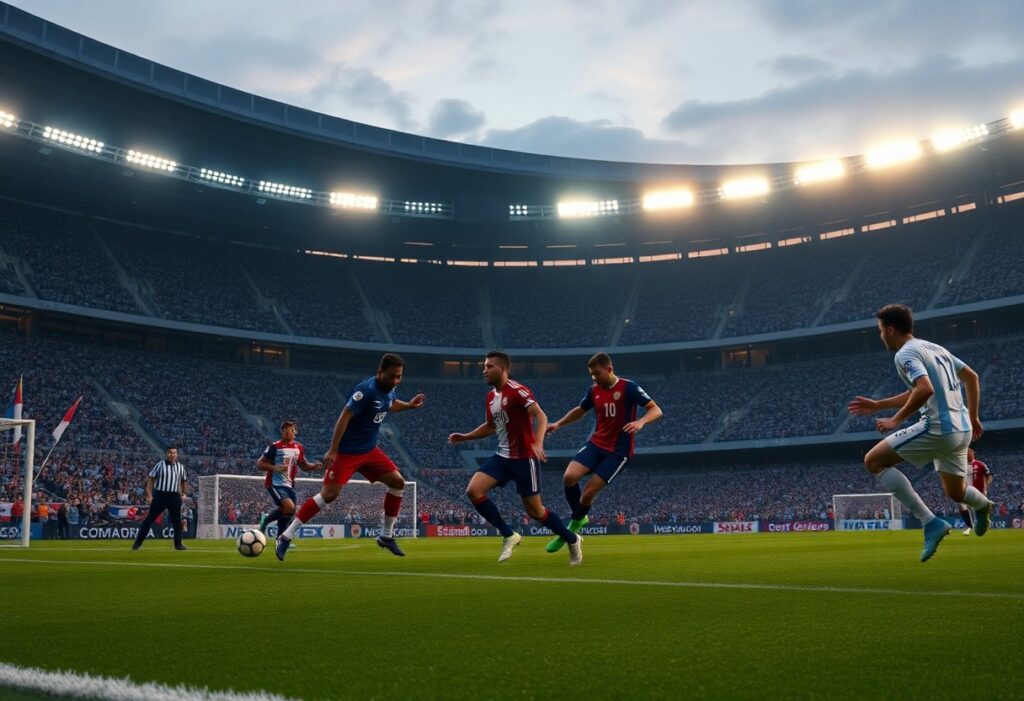
Over the road to 2026, analysts are tracking a blend of established superstars and emerging talents; Erling Haaland, Kylian Mbappé, and Vinícius Jr. lead the attacking threats while Brazil, France, and England are favorites, with Argentina and Senegal as dangerous dark horses; tactical shifts and squad depth will decide outcomes, and injuries or form dips can swing groups-this preview identifies the most impactful players and nations shaping the tournament’s narrative.
Overview of World Cup 2026
With 48 teams and the first-ever tri-nation hosting by USA, Canada and Mexico, the 2026 World Cup reshapes competitive balance and logistics: expanded slots mean more African and Asian representation, tournament length increases, and powerhouse squads must navigate deeper rosters while rookies seize rare opportunities to make headlines.
Key Dates and Locations
Expect the tournament across mid‑June to mid‑July 2026, staged in North American hubs such as MetLife (New Jersey), AT&T (Arlington), Estadio Azteca (Mexico City), BMO Field (Toronto) and BC Place (Vancouver); dispersed venues create long travel distances and multiple time‑zone shifts, forcing squad rotation strategies and demanding precise logistics planning.
Tournament Format
The competition uses a 48‑team layout with 16 groups of three, each side playing two group matches and the top two advancing to a round of 32, producing a total of 104 matches from group play through the final and dramatically increasing knockout-stage opportunities compared to past editions.
Short group phases mean margin for error is slim: teams get only two group games, so goal difference and game management matter more than ever; matched with the extended knockout ladder, squad depth, recovery protocols and tactical flexibility become decisive factors for teams aiming to progress deep into the tournament.
Rising Stars to Watch
Among the next wave are players whose club form already signals World Cup influence: Jude Bellingham (Real Madrid) and Jamal Musiala (Bayern) drive midfield creativity, while Rasmus Hojlund‘s Premier League adaptation and young forwards from Spain and the Netherlands supply finishing edge; expect 18-24-year-olds to redefine pressing and transition phases across several groups.
Emerging Players from Top Nations
England, Spain, Germany and France supply tournament-ready youngsters: Bellingham and Musiala combine high-intensity pressing with chance creation, Barcelona’s Pedri controls tempo, and these players logged more than 1,500 combined minutes in 2023-24 at elite level, accelerating their international responsibilities.
Under-the-Radar Talents
Outside the marquee clubs, scouts target Eredivisie, Belgian Pro League, MLS and Liga MX standouts-players posting >10 league goals or 8+ assists, earning first senior caps in qualifiers, and defenders from Africa and CONCACAF who add physicality and a set-piece threat that upends group-stage expectations.
Deeper analysis uses thresholds: attackers with >0.30 xG/90 or >6 progressive carries/90 are flagged for step-ups, while defensive prospects showing >3 interceptions/90 and aerial win rates >55% translate well to tournament intensity; clubs converting those metrics into transfers offer clear case studies of reliable breakout predictors.
Established Legends
Several veterans will still shape tournament dynamics by 2026: Lionel Messi (39) brings the 2022 World Cup-winning pedigree and creative finish, Cristiano Ronaldo (41) remains a towering goal threat with over 120 international goals, Luka Modrić (41) offers midfield control after his 2018 Ballon d’Or, and Robert Lewandowski (38) still leads Poland’s frontline. Their experience alters manager selections, late-game tactics, and set-piece planning-expect managers to lean on these figures in pressure moments.
Veteran Stars to Watch
Messi provided 7 goals and 3 assists en route to the 2022 title and will dictate Argentina’s attack if selected; Ronaldo already exceeds 120 goals for Portugal and remains the primary penalty option; Modrić still controls tempo from deep after a Ballon d’Or season; Kevin De Bruyne (35) will likely remain Belgium’s chief creator, supplying long-range passes and set-piece variations.
Impact Players in Critical Roles
Specialists who occupy single-match-defining roles matter most: sweeping goalkeepers like Manuel Neuer reorganize high defensive lines, holding midfielders such as Casemiro break transitions, and set-piece experts (for example James Ward-Prowse) turn dead-ball opportunities into scoring chances. Managers will often build formations to maximize these players’ strengths in knockout ties.
Delving deeper, metrics often underline their value: managers prize sweepers for their ability to clear counterattacks behind a high line, defensive mids for interception and shielding numbers that reduce opposition chances, and elite set-piece takers for direct free-kick goals or delivery accuracy. Expect teams to track and exploit these match-up statistics when planning late substitutions and penalty strategies.
Nations Poised for Success
Home turf and expanded slots combine to reshape contenders: the 48-team format increases knockout volatility while the co-host nations inject structural advantages-larger squads, familiar climates and travel ease. Teams with deep talent pools and adaptable systems will thrive: expect strategic rotations from nations that can call on 5-6 Euro-based starters, and watch how home-field advantage (packed stadia in the USA, Mexico’s high-altitude venues, Canada’s developing fanbases) amplifies margins in tight group finishes.
Traditional Powerhouses
Brazil (5 titles), Germany (4), Italy (4), Argentina (3), France (2), Spain and England each carry pedigree, deep scouting networks and youth pipelines that refill squads every cycle. France’s recent record-2018 winners and 2022 finalists-plus Brazil’s relentless attacking depth make both automatic threats, while Germany and Italy will rely on tactical discipline and regeneration from their academies to regain dominance.
Dark Horses of the Tournament
Morocco, Japan and Canada look primed to upset seedings: Morocco’s 2022 semi-final run proved African teams can navigate late-stage pressure, Japan’s technical squads routinely outplay higher-ranked sides in group phases, and Canada’s co-host status plus a young, Europe-based core gives them momentum to push past a Round of 16 ceiling.
Digging deeper, Morocco’s defensive record in 2022-tight backlines and disciplined counters-translates well to tournament football, Japan’s scouting and ball-circulation patterns create chances without possession, and Canada benefits from growing MLS infrastructure plus stars like Alphonso Davies to stretch defenses; matchup-wise these sides can exploit tired favorites in congested schedules and benefit from favorable group draws to reach quarterfinal contention.
Fan Engagement and Support
Fan engagement will be amplified by the 48-team, 104-match format: official FIFA Fan Festivals, city-sponsored watch parties and expanded digital coverage on FIFA+ and broadcasters will create continuous touchpoints. National federations are planning supporter travel hubs and coordinated viewing sites, while clubs and sponsors will run local activations and youth clinics to sustain momentum between matches. Expect layered communication-apps, verified social channels and localized fan zones-to manage crowds and maximize atmosphere.
How Fans Can Get Involved
Registering for FIFA ticketing alerts and national supporter club memberships gives the best access to match tickets, hospitality and fan travel packages across the 16 host cities. Volunteer programs will recruit tens of thousands for stadia and fan zones; apply early. Fans should also join accredited supporter groups for coordinated travel, book refundable accommodations in advance, and use official apps for updates, seat upgrades and last‑minute public-transit guidance.
Hosting Nations’ Preparation
Host authorities across the United States, Canada and Mexico are running full-scale test events, upgrading transit links and refurbishing stadiums to handle the tournament’s scale; priority areas include ticketing integration, emergency response and crowd management. Coordination between federal, state and municipal agencies focuses on seamless fan journeys and robust security measures to protect fans and teams.
Major venue examples-MetLife, SoFi, AT&T, Estadio Azteca and BMO Field-are undergoing targeted upgrades and legacy planning, while organizing committees are synchronizing visa facilitation, cross-border travel advisories and volunteer training pipelines. Stadium scheduling, local policing plans and digital wayfinding pilots will be validated through 2024-2025 events to ensure scalable operations and a safe fan experience.
Predictions and Expectations
With the expanded 48-team format and 104 matches, forecasts split between established powers and dark horses: models favor Brazil, France, Argentina, England, and Spain, each often quoted around an 8-12% title probability, while host nations (USA/Mexico/Canada) gain a measurable boost from home support and travel familiarity. Squad depth, goalkeeper form, and knockout experience will determine who survives a longer tournament packed with high-intensity fixtures.
Expert Opinions and Analysis
Data-driven analysts from Opta and FiveThirtyEight emphasize squad depth and turnover rates: teams with 5-8 quality starters beyond the XI fare better across group and sudden-death rounds. Tactical analysts point to set-piece conversion and goalkeeper save percentages as decisive metrics; managers with proven tournament records increase a side’s odds, while injuries to top scorers can reduce title chances by double digits in model projections.
Potential Upsets and Surprises
Past tournaments show outliers matter-Morocco’s 2022 semi run and Croatia’s 2018/2022 consistency prove organized underdogs can topple favorites. The 48-team expand increases variance: more group-stage permutations and extra travel produce fatigue spikes, making early exits possible for big names and opening slots for nations like Senegal, Mexico, or Japan to go deep.
From a tactical view, high-press systems that force turnovers and teams with elite set-piece records frequently cause shocks; penalty shootout history and coach adaptability are underrated predictors. Additionally, travel across North America and congested club calendars can erode elite margins-teams that manage rotation and recovery (sports science, rotation of 3-5 starters) will be best placed to convert a surprise run into knockout success.
Summing up
So World Cup 2026 – Players And Nations To Watch On The Road To Glory will hinge on tactical innovation, the rise of young talents, and national programs delivering depth and cohesion; experienced leaders and emerging stars will shape storylines, while preparation, squad balance, and adaptability to varied conditions will determine which teams progress to vie for glory.
FAQ
Q: Which young players are most likely to break out and shape World Cup 2026?
A: Several rising talents combine form, club minutes and national-team opportunity to make 2026 a turning point. Lamine Yamal (Spain) – elite dribbling, crossing and creativity on the flank; Endrick (Brazil) – powerful, direct striker with finishing instincts and rapid development at Palmeiras/Europe; Jude Bellingham (England) – already a midfield engine whose box-to-box influence will deepen with experience; Pedri and Gavi (Spain) – complementary playmakers who control tempo and unlock defenses; Jamal Musiala (Germany) – unpredictable dribbling and attacking midfield versatility; Alejandro Garnacho (Argentina) and other dual-nation youngsters – pacey wide attackers able to change games. Watch for players who arrive having established club roles and who can handle tournament intensity and rotation demands.
Q: Which nations are under-the-radar threats or poised to exceed expectations in 2026?
A: Hosts and regional powerhouses gain advantages, but several teams combine depth, development systems and recent momentum to threaten the traditional hierarchy. United States – home support, improving academy-to-pro pathways and growing European-based talent; Canada and Mexico – improved generation depth and familiarity with CONCACAF opponents; Morocco and Senegal – African teams with strong physicality, tactical discipline and key European-based stars; Japan and South Korea – organized, energetic pressing sides with tactical flexibility; Belgium, Netherlands and Croatia – smaller talent pools but high tactical IQ and tournament experience. Brazil, France, Argentina and England remain favorites, but the wide geographic slate of venues and fixture congestion could level the field for disciplined, well-coached nations with squad depth.
Q: What player matchups and tactical trends should fans watch en route to the title?
A: Midfield control will often decide knockout ties: dynamos like Bellingham, Pedri or Rodri against disruptive presences from pressing teams determine possession and transitions. Speed on the wings versus compact full-back systems will define many attacking plans – look for how teams try to isolate or overload flanks. Elite finishers (Mbappé, Haaland or emergent strikers) force tactical shifts: opponents may sit deeper, create counterpressing traps or pack the box to force set-piece reliance. Goalkeeper form and distribution increasingly swing outcomes, especially with VAR and tight margins. Squad rotation and travel management across North America will reward teams with deeper benches and versatile players who can switch formations mid-tournament.