What Makes The 2026 World Cup Different? A Look At The Expanded Format?
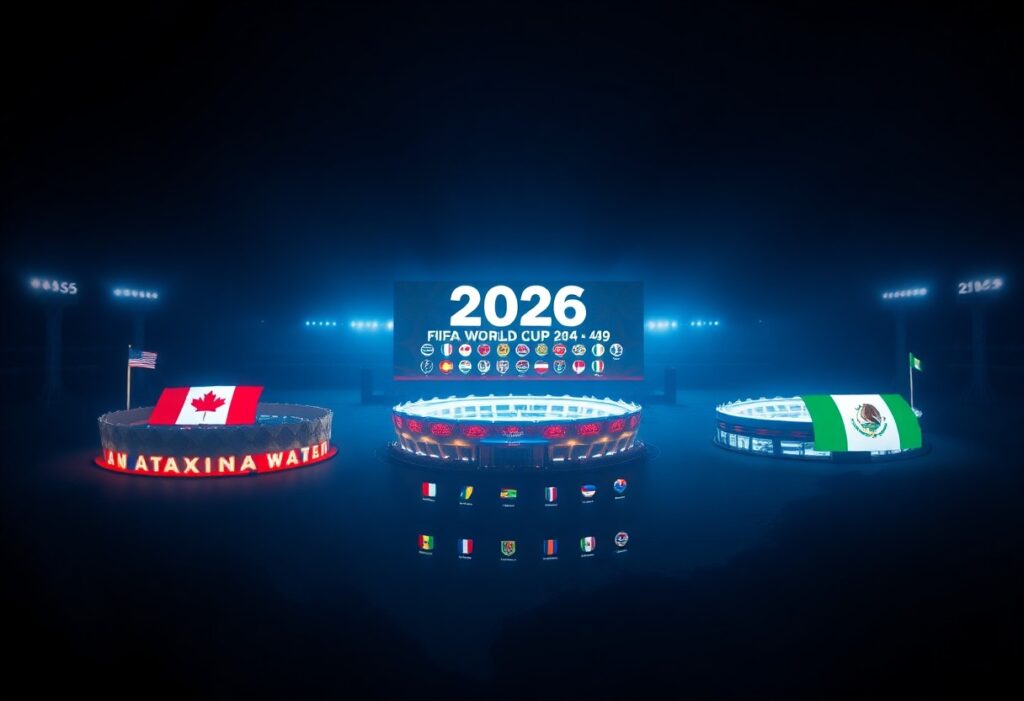
It’s the first World Cup to feature 48 teams, restructured into smaller groups and an enlarged knockout phase, delivering more matches and broader global representation; the tournament spans three host nations-USA, Canada and Mexico-boosting capacity and logistics while raising concerns about increased fixture congestion and player fatigue, uneven group balance, and the challenge of coordinating venues across vast distances.
The Expanded Format
The shift to 48 teams transforms competition flow and tournament scale: the group stage uses 16 groups of three, with the top two advancing into a newly formed round of 32, and the overall match count rises from 64 to 104 matches. Greater representation brings fresh narratives and scheduling strain across three hosts, forcing managers to prioritize rotation, travel planning, and squad depth more than in past editions.
Number of Teams
FIFA increased slots by 50%, allocating berths as: UEFA 16, CAF 9, AFC 8, CONMEBOL 6, CONCACAF 6, OFC 1, plus 2 decided by an intercontinental playoff. This rebalancing gives regions like Africa and Asia more direct representation, raising the likelihood of debutant nations and changing continental qualifying stakes.
Qualification Process
Qualification keeps confederation-run formats but expands direct spots, so many qualifiers become less binary; automatic berths go to hosts, and a six-team intercontinental playoff will determine the final two World Cup places. Confederations will adapt group sizes and playoff structures to fit their new allocations, increasing the number of competitive matches for mid-tier nations.
For example, CONMEBOL’s traditional 10-team home-and-away round-robin still yields the most consistent metrics-now with 6 direct qualifying spots-so each of the 18 matchdays matters differently. UEFA’s path tightens around 16 direct slots, prompting more intense group-stage battles and playoff permutations. CAF and AFC both gain additional group winners and runners-up slots, which should reduce single-match elimination risk and reward sustained campaign form.
Impact on Hosting Nations
Hosting nations must coordinate across three countries and 22 host cities to stage 104 matches, shifting the burden from a single organizer to a multinational network. Shared hosting reduces per-city capital outlays but raises logistical complexity-ticketing, border control, and broadcast coordination demand unified protocols. Fiscal planning now emphasizes regional partnerships and contingency funds to manage spikes in short-term demand while protecting long-term budgets.
Economic Benefits
Local economies can expect surges in visitor spending, with hotels, restaurants, and transport seeing pronounced spikes; individual host cities often record hundreds of millions in incremental tourism revenue. Tax receipts and sponsorship inflows add to the upside, while temporary employment-stadium staff, security, hospitality-creates thousands of short-term jobs. Effective legacy planning turns event revenue into sustainable tourism and business growth.
Infrastructure Developments
Stadium renovations, enhanced training facilities, and upgraded broadcast centers are widespread, paired with investments in digital connectivity like 5G and stadium security systems. Cities use FIFA requirements as a catalyst to modernize transport links-rail, airport terminals, and last-mile shuttles-to handle matchday peaks and improve long-term mobility for residents.
Beyond visible stadium work, many hosts prioritize sustainability and legacy: modular seating to scale capacity, improved accessibility standards, and energy-efficient lighting reduce operating costs post-tournament. Municipalities often finance incremental upgrades via public-private partnerships to limit debt exposure, while planning multipurpose uses for venues to avoid the white-elephant outcome seen in past tournaments.
Changes in Tournament Structure
Scheduling and match-count changes reshape competitive flow: the tournament expands to 48 teams arranged in 16 groups of three, producing shorter group windows where each team plays two matches and the top two progress into a newly formed Round of 32, contributing to a total of 104 matches and driving tighter rotation, greater travel logistics, and denser broadcast scheduling across the three hosts.
Group Stage Adjustments
With 16 three-team groups, the margin for error narrows-each nation plays just two matches, so early upsets dramatically shift qualification probabilities; goal difference, head-to-head rules and disciplinary tiebreakers gain weight, while match sequencing creates strategic finales where teams often know exactly what result advances them, rewarding squads with depth and tactical flexibility.
Knockout Phase Dynamics
The introduction of a Round of 32 adds 16 knockout matches, effectively doubling single-elimination fixtures versus previous 32-team tournaments and giving more lower-ranked sides a realistic path deeper into the event, forcing managers to plan for longer knockout runs and increasing the physical and tactical demands from an earlier stage.
The expanded bracket means knockout play now comprises 32 matches (R32→R16→QF→SF→Final), so organizers must schedule many high-stakes games within a compressed post-group window; that raises concerns about recovery, substitution patterns, and squad rotation. Travel across multiple countries intensifies wear-and-tear, while broadcasters and refereeing teams face heavier loads-VAR reviews and officiating consistency become more consequential as more matches hang on single moments, increasing both upset potential and logistical complexity.
Fans and Attendance
With matches spread across 16 host cities and an expanded slate of fixtures, on-site fan management becomes a central focus: organizers expect far higher throughput at stadiums, fan zones and transit hubs, while balancing hospitality and safety. Planning centers on scalable crowd control, transport coordination and tech solutions to handle the increased volume without disrupting local services.
Expectations for Attendance
Higher capacities in U.S. venues and the 104-match schedule push forecasts toward an average of roughly 50,000 per match, which could see total tournament attendance exceed 5 million, compared with 3,031,768 in 2018. Multiple double-headers at large stadiums and cross-border travel patterns will concentrate peaks that cities must absorb.
Fan Experience Improvements
Organizers are rolling out stadium upgrades and digital services-mobile ticketing, contactless payments and 5G connectivity-to speed entry and enhance in-seat services, while designated fan zones and multilingual wayfinding aim to improve orientation and reduce congestion for international crowds.
At venue level, large sites like MetLife (≈82,500) and AT&T (≈80,000) provide capacity and modern concourses to host multiple fixtures and hospitality tiers; cities plan temporary shuttle networks, expanded transit schedules and centralized fan zones that can hold tens of thousands. Enhanced screening protocols and real-time crowd-monitoring dashboards will address the security and overcrowding risks that come with such scale.
Global Reach and Diversity
The expansion to 48 teams adds 16 additional berths, allowing broader representation across continents and bringing the World Cup into more communities across the three host countries. Regional qualifying now rewards depth over handfuls of dominant teams, so nations from Africa, Asia and CONCACAF can realistically expect more direct entries. That shift amplifies football development programs and scouting pipelines, while also creating new fanbases in host cities and beyond.
Participation from Underrepresented Nations
With 16 extra slots and a revamped playoff path, smaller federations face a clearer route to the finals: the introduction of a 6-team intercontinental playoff for the last places reduces one-off elimination shocks and increases chances for debutants. This benefits Caribbean, Pacific and lower-ranked African teams that historically lost out in high-pressure playoff ties, enabling sustained investment and the possibility of first-time World Cup appearances.
Increased International Viewership
Expanding from 64 to 104 matches – about 62% more games – magnifies broadcasting hours and advertiser inventory, prompting global rights holders to redesign schedules for primetime windows across the Americas and Europe. Networks anticipate higher cumulative reach, but must balance more fixtures against potential viewer fatigue and overlapping match times in Asian markets.
Broadcasters and streaming platforms are already planning staggered schedules, regional feeds and highlight packages to capitalize on the volume: shorter, high-stakes group games mean early fixtures can draw big audiences, while second-screen content (live clips, tactical breakdowns) will be critical to retain viewers across 40 extra matches. The net result is larger commercial opportunities but a need for curated programming to prevent audience drop-off.
Challenges Ahead
Multiple operational pressures converge as organizers handle 104 matches across three countries and 22 host cities. Scheduling, cross-border transport and consistent broadcast feeds must align with local policing, stadium readiness and medical staffing. Weather variance from June venues in Mexico to colder northern U.S./Canada sites demands tailored pitch management and player welfare plans. Failure in any link risks compressed recovery windows and fan disruption.
Logistical Concerns
Transport and accreditation will test planners: cross-border customs and visa controls multiply complexity when moving teams, officials and fans between the U.S., Canada and Mexico. Stadium scheduling for 104 fixtures forces tight turnaround windows, while local hotel capacity and volunteer workforce distribution vary by city. On the upside, centralized broadcast hubs promise efficiency but require precise fiber and satellite coordination to avoid live-feed failures.
Competitive Balance
The switch to 16 groups of three, where the top two advance to a 32-team knockout, means each team plays only two group matches, raising variance and increasing the weight of one bad game. Historical precedent – notably West Germany-Austria in 1982 – shows how scheduling can enable tactical outcomes, so draw timing and match sequencing will matter more than ever for fairness and integrity.
With 48 teams and broader qualification, more lower-ranked sides enter the finals, increasing the chance of early upsets and unpredictable knockout participants. FIFA’s seeding and pot system will be under scrutiny to limit lop-sided groups; tournament rules on tie-breakers and match order can mitigate the risk of collusion. For context, champions still face seven matches to lift the trophy, but the compressed group phase magnifies short-term variance and strategic manipulation risks.
Conclusion
From above, the 2026 World Cup’s expanded 48-team format and new round-of-32 structure reshape qualification, increase matches and global representation, and distribute hosting across the US, Canada and Mexico. The result is greater opportunity for emerging nations, amplified commercial scale and logistical complexity – demanding stricter scheduling, squad depth and venue coordination to preserve competitive balance and tournament quality.
FAQ
Q: How has the World Cup format changed for 2026?
A: The tournament expands from 32 to 48 teams, organized into 16 groups of three. The top two teams from each group advance to a new round of 32, creating a larger knockout phase. The total number of matches rises to 104, but individual teams now play only two group matches (down from three), and the maximum number of matches a team can play remains seven if it reaches the final. The condensed group schedule and three-team groups introduce different tiebreaker and scheduling priorities, and create scenarios that organizers must manage to reduce the risk of manipulation or dead-rubber fixtures.
Q: What are the logistics and hosting differences with the 2026 expansion?
A: The tournament is jointly hosted across three countries in North America, which increases geographic spread, travel distances and time-zone variation for teams and traveling supporters. More venues and matchdays are required, which boosts infrastructure and local economic opportunities but also raises coordination, transport, accommodation and security demands. Organizers must balance match allocation, recovery time and broadcast windows while trying to limit excessive travel for teams between fixtures.
Q: How will the expansion affect competitive balance, player workload and global representation?
A: Expansion increases slots for underrepresented confederations, widening access for African, Asian, CONCACAF and other teams and improving global representation. That can lead to more mismatched early fixtures but also more breakthrough stories and long-term development benefits for emerging nations. Players face a mixed picture: each team has fewer guaranteed group games, reducing early-stage exposure, while the overall calendar and increased total matches create scheduling pressures on national teams, clubs and broadcasters. For top teams the pathway to the final still requires up to seven matches, so peak workload for finalists is similar to prior editions.