How VAR Decisions Changed Modern Football?
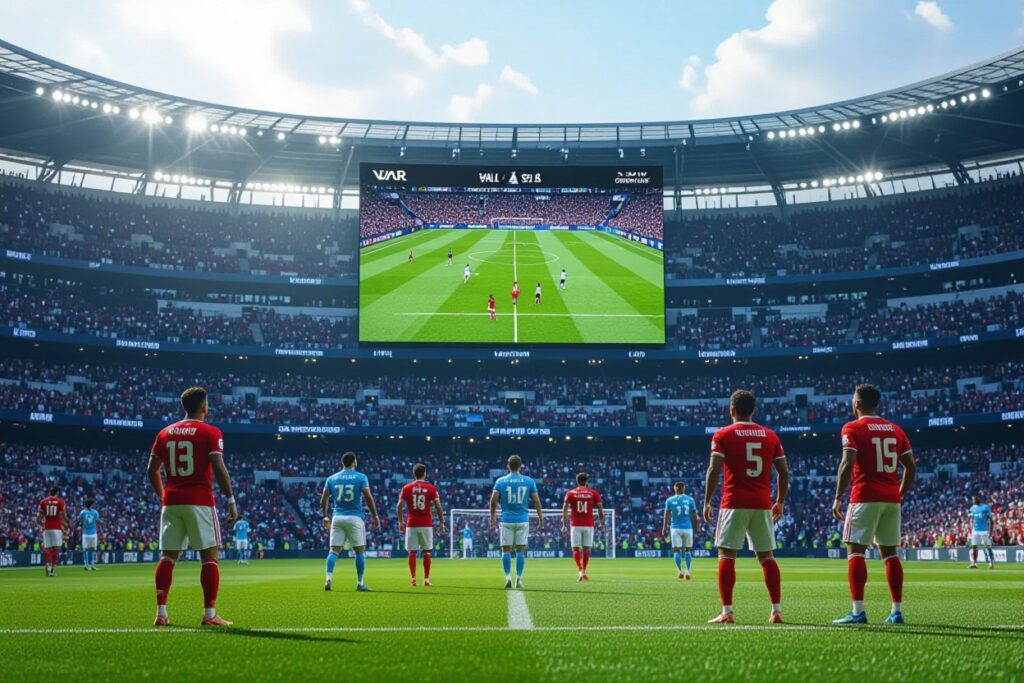
Over the past decade, VAR has reshaped decision-making, reducing clear errors while sparking debates about match flow, referee authority, and the sport’s emotional dynamics, forcing clubs and fans to adapt to faster, data-driven rulings that prioritize accuracy.
The Birth of VAR: A Game-Changing Innovation
Television replay, faster communications and rising stakes forced modern football into a tech solution; the introduction of VAR began as IFAB-approved trials in 2016 and matured into the 2018 FIFA World Cup rollout, reshaping how referees handle offsides, penalties and red-card incidents while creating debate over game flow and fairness.
The Historical Context of VAR Implementation
Widespread live broadcasting exposed errors to millions, prompting rule-makers to act after goal-line technology’s IFAB approval in 2012 proved technical interventions viable; expanding camera arrays and instant replays amplified backlash over missed calls in Champions League ties and domestic finals, increasing pressure from fans, clubs and broadcasters for broader review mechanisms.
Key Events Leading to Its Adoption in Football
IFAB authorized controlled VAR trials in 2016, UEFA endorsed pilot use in select competitions in 2017, and FIFA’s decision to deploy VAR at the 2018 World Cup signaled global acceptance; top leagues followed—most notably the Premier League’s rollout in the 2019–20 season—transforming experiments into routine match governance.
Protocol confined VAR to four clear football categories—goals, penalties, direct red cards and mistaken identity—with a dedicated VAR team communicating via headset and initiating on-field reviews; referees retained final authority, yet several high-profile reversals underlined both the system’s capacity to correct errors and persistent concerns about subjectivity and match disruption.
The Ripple Effect: How VAR Has Transformed Match Dynamics
VAR has shifted match rhythms by introducing an extra layer between on-field calls and final outcomes, producing an average of 1–4 reviews per match and stoppages typically lasting about 30–90 seconds. Top competitions since the 2018 World Cup and widespread league rollouts in 2019–21 show managers adapting substitution timing, set-piece routines and time-wasting tactics to the new cadence, while broadcasters and clubs track interventions to refine coaching decisions and match preparation for football.
Analyzing Decision-Making and Game Flow
Refereeing now follows a tiered workflow: immediate calls, VAR checks, and occasional on-field reviews, with most interventions focused on offside, penalties, red cards and mistaken identity. This layered approach reduces glaring errors but produces more stoppages, forcing teams to manage momentum, rehearse restart scenarios, and alter pressing patterns during the intermittent pauses.
Impact on Players’ Behavior and Strategy
Players have grown more cautious in the box, delaying celebrations and appeals until reviews conclude; attackers alter runs to avoid marginal offsides and defenders exploit VAR’s frame-by-frame scrutiny to challenge goal attempts. Coaches now drill situational responses for VAR pauses and instruct captains on measured interaction with officials to avoid secondary bookings.
Detailed tactical shifts include defenders holding a higher line when teams trust VAR to catch marginal offsides, while forwards refine timing to prevent nullified goals—training sessions now emphasize split-second timing and video-synced drills. Widespread adoption in the Premier League, Serie A and Bundesliga led managers to plan substitutions around likely review windows and to use set-piece rehearsals that anticipate VAR interventions; sports scientists also monitor heart-rate dips during stoppages to maintain player readiness for resumed intensity. Reduced simulation and more disciplined appeals have become clear behavioral outcomes of these strategic adaptations.
Controversies and Debates: VAR’s Role in Modern Football’s Integrity
Debates center on whether VAR has strengthened match integrity or simply shifted controversy into new forms: frequent millimetre offside rulings, inconsistent interpretations of handball and contact, and lengthy stoppages have led to frustrated players and fans while officials insist on reducing clear errors; the introduction of semi-automated offside at the 2022 World Cup aimed to address speed and accuracy concerns but revived questions about subjective thresholds and consistency.
The Balancing Act between Technology and Human Judgment
VAR operates within IFAB’s four categories—goals, penalties, direct red cards, mistaken identity—yet every review still requires human interpretation, so referees retain the final authority; tension arises when protocol-driven replay data clashes with live perception, for example when a clear numerical offside margin exists but the perceived foul or intent remains debatable, forcing referees to weigh cold evidence against context and precedent.
Public Opinion: Supporters vs. Detractors
Supporters point to fewer blatant errors and greater fairness in decisive moments, while detractors cite disrupted flow, loss of spontaneous celebration, and perceived inconsistency after high-profile reversals; social media spikes following late VAR interventions illustrate how divided the fanbase is, with many accepting technical fixes but unwilling to tolerate ambiguous, drawn-out rulings.
Managers and stakeholders magnify the split: some, like José Mourinho, have publicly criticized VAR’s impact on the game’s rhythm, whereas others grudgingly accept its corrective value; broadcasters responded by adding clearer on-screen explanations and replay transparency to reduce confusion, and leagues are experimenting with faster protocols and clearer messaging to address concerns about consistency and viewer trust.
The Evolution of Fan Experience: VAR’s Influence on Engagement
Stadium big screens and broadcast replays now deliver the same multiple camera angles referees see, helping spectators follow contentious moments in real time; after the Premier League introduced VAR in the 2019/20 season, viewers began to expect on-screen explanations and freeze-frame visuals. Broad coverage has led to greater transparency and a measurable drop in disputes over clear-cut offsides and goal decisions, while debates persist over subjective calls and interpretation.
Technological Integration and Spectator Interaction
Clubs and broadcasters have layered VAR footage with on-screen graphics, timeline markers and commentators’ mic-ins to create a second-screen experience that boosts engagement; social platforms routinely amplify reviews, driving spikes in live chat and viewership. Enhanced feeds offer real-time data and curated angles, but prolonged reviews can trigger fan frustration when momentum and atmosphere stall.
Behind the scenes, VAR rooms rely on multiple high-resolution camera feeds, sideline monitors and headset links so referees and assistants communicate swiftly; broadcasters typically present 3–6 replay angles plus slow-motion and line-drawing tools to clarify tight calls. These technical choices shape perception—clear visual evidence often calms crowds, whereas ambiguous frames fuel controversy and sustained social-media storms.
The Future of VAR: Predictions and Potential Improvements
Expect accelerated integration of AI-assisted decision tools, improved camera arrays, and clearer protocols to tackle persistent concerns about delays and consistency. Trials like the semi-automated offside system used at the 2022 World Cup show technology can cut review time and increase accuracy; leagues will push for wider adoption while balancing cost, spectator experience, and referee training to prevent inconsistency and game interruption.
Enhancements on the Horizon for VAR Technology
Developments include higher-frame-rate multi-angle imaging, advanced player-tracking and machine-learning models to flag incidents faster, plus embedded ball sensors for exact contact times. Successful pilots combined optical tracking with sensor data to reduce false offsides, and future systems aim for near-real-time alerts to VAR teams and match officials, reducing average review duration and improving reproducibility of subjective calls.
Anticipating Changes in Football Governance and Rules
Governing bodies like IFAB and FIFA are likely to mandate unified VAR protocols, set clear intervention thresholds, and standardize review time targets to limit disruption; expected rule tweaks target subjective laws such as handball and offside interpretation, while promoting transparency measures so fans and clubs understand outcomes.
Implementation will require investment in referee education, centralized oversight and licensing of VAR providers so smaller associations aren’t left behind; pilot programs may phase in mandatory performance metrics (accuracy, average review time) and public reporting of VAR decisions, creating accountability and measurable improvements across competitions.
Summing up
The introduction of VAR transformed modern football by improving decision accuracy, reducing blatant errors, standardizing outcomes across competitions, and altering tactics and officiating behavior; while debates about flow and interpretation persist, VAR has elevated fairness, accountability, and data-driven review in the sport, forcing teams, referees, and fans to adapt to a game where marginal calls carry greater strategic and institutional weight.