From Qualification To Kickoff: The Journey Toward The 2026 World Cup
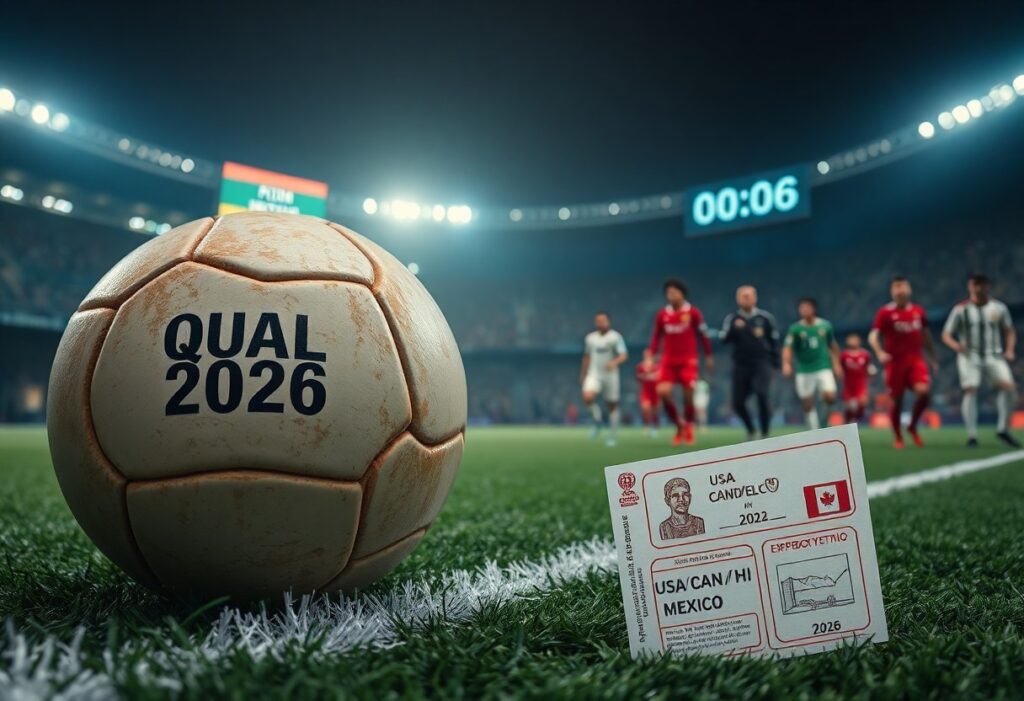
Many nations, federations and players are navigating the complex phases from qualifiers to event readiness, balancing logistics, form and strategy; the expanded 48-team format and host-city preparations will reshape qualification dynamics, while organizers must mitigate injury risks, congested calendars and travel strain and capitalize on broader representation, commercial growth and fan engagement to deliver a successful 2026 World Cup.
The Qualification Process
With FIFA expanding the finals to 48 teams and the three hosts-USA, Canada and Mexico pre-qualified, confederations reworked calendars to fit longer campaigns. Formats blend preliminary knockouts, multi-team group phases and playoff windows; smaller nations face more rounds while stronger confederations still field long home-and-away series. Federations must align domestic calendars, scouting networks and youth pipelines to convert opportunity into qualification slots.
Understanding the Qualification Stages
Early rounds typically remove lower-ranked sides via single-leg ties or two-legged playoffs, then group stages allocate most berths through round-robin play. Later, inter-confederation playoffs or seeded knockout matches decide remaining spots. For example, CONMEBOL’s ten-team double round-robin contrasts with CAF’s multi-group stage and UEFA’s groups-plus-playoffs model, so strategic planning changes by region and ranking.
Key Challenges for Teams
Squad depth, fixture congestion and cross-border travel strain preparations: international windows are short and clubs often control player availability. Injuries to key performers and limited budgets for scouting and camps hit smaller federations hardest. Environmental extremes and varied pitch conditions introduce match-day risks that can swing tight qualifiers.
Logistics amplify competitive gaps-long-haul flights from Asia or Oceania, or island-hopping in the Caribbean, increase fatigue and cost. Coaching turnover mid-cycle and limited high-level friendlies reduce tactical cohesion; teams that invested in centralized training camps, sports science and youth scouting (examples: mid-ranked federations that adopted extensive data analysis) consistently manage these pressures better, turning marginal advantages into qualification points.
The Role of Host Nations
With the 2026 World Cup split among the United States, Canada and Mexico, organizers face a unique tri-nation choreography: 16 host cities, a 48-team expansion and 104 matches demand synchronized scheduling, cross-border customs coordination and venue readiness. Host choices shape match atmospheres, local security postures and ticket pricing, while city-by-city differences in altitude, humidity and travel times will directly affect team routines and tournament pacing.
Impact on Team Performance
Home advantage often yields measurable gains: hosts benefit from shorter travel, familiar training sites and louder crowds, as seen when South Korea reached fourth place in 2002 and Russia reached the quarterfinals in 2018. Conversely, hosts can suffer under intense expectation-Brazil’s 7-1 semifinal in 2014 remains a stark example of pressure turning into performance collapse-so physical recovery, rotation policies and sports psychology will be decisive.
Infrastructure and Logistics
Stadium capacity and transport investment vary widely: venues range from ~40,000 seats to flagship arenas like Estadio Azteca (~87,000) and MetLife (~82,500), requiring layered transport planning, intercity rail and airport throughput upgrades, plus cross-border immigration lanes for fans. Broadcast fiber, 5G backhaul and security tech deployments must be standardized across jurisdictions to ensure consistent match delivery and fan safety.
Operationally, host cities must deliver training sites, emergency medical plans and accreditation systems on strict timelines-major capital upgrades and temporary stands often finish within 18-24 months before kickoff. If average attendance hits ~60,000, the 104-match schedule could move over 6 million spectators, forcing coordinated hotel allocations, crowd-flow modeling, and contingency transport plans to prevent bottlenecks and maintain matchday timelines.
The Evolution of International Football
Globalization and technology have accelerated change: the World Cup grew from 13 teams in 1930 to 32 in 1998 and now 48 for 2026, while innovations like VAR (introduced in 2018) and expanded substitution rules reshape tactics and outcomes. Data analytics, club-country calendar friction, and commercial pressures have altered squad management, increasing both opportunity for smaller nations and the danger of player overload during longer tournaments.
Historical Context
Early tournaments were compact-Uruguay 1930 featured 13 teams-then FIFA expanded to 24 teams in 1982 and to 32 in 1998 to reflect global growth. Continental qualification systems evolved accordingly, with confederations gaining progressive representation and power shifts visible in more African and Asian qualifiers reaching knockout stages in recent decades.
Changes in Tournament Format
For 2026 FIFA approved a 48-team format with 16 groups of three, producing 104 matches-up from 64-where the top two advance to a 32-team knockout. This increases broadcast inventory and revenue but creates tactical quirks in three-team groups and sharper scheduling demands on players and hosts.
Beyond match counts, FIFA added a six-team intercontinental playoff to award final places, while confederation berths were redistributed to broaden access. Logistical challenges include greater travel across three host countries and compressed windows for recovery, yet the format also delivers more competitive exposure for emerging nations and new commercial opportunities.
Key Players to Watch
Expect the balance between emerging stars and seasoned veterans to define group stages and knockout ties: Jude Bellingham and Alphonso Davies bring youthful intensity and width, while proven scorers like Erling Haaland threaten every box. With the 48-team format, squads must field depth-teams that pair a creative midfield engine with a clinical striker will convert narrow margins into wins. Specific matchups, such as Davies’ pace versus slower full-backs, will recur as decisive factors.
Emerging Talents
Young players born after 2000 are already logging heavy minutes at elite clubs: Jude Bellingham (Real Madrid), Bukayo Saka (Arsenal) and Gio Reyna (when fit) supply creativity and vertical runs that disrupt defensive blocks. Coaches will exploit their stamina across congested 2026 schedules; in qualifying many under-24s averaged over 60% playing time, turning raw potential into consistent tactical roles.
Veteran Contributions
Seasoned internationals continue to supply match management, set-piece proficiency and tournament know-how: Lionel Messi (2022 World Cup winner), Cristiano Ronaldo (record international goals) and Luka Modrić provide composure under pressure. Teams relying on veteran decision-making often concede fewer late goals and convert key moments in extra time.
For more detail, veterans frequently shape squad selection beyond minutes: they mentor younger players in camp routines, dictate pressing triggers from deeper positions, and handle critical kicks-pens and free-kicks-where experience translates into points. Case studies include Argentina’s 2022 use of Messi to marshal attacks and Portugal’s reliance on Ronaldo’s presence to unsettle defenses, evidencing how leadership and set-piece delivery swing tight matches.
Fan Engagement and Support
Stadium atmospheres, diaspora turnouts and coordinated fan programming will shape matchday momentum across the tri-nation 2026 footprint: the 48-team expansion adds 16 more federations and broader global interest, pushing host cities to plan for larger fan zones and sell-out crowds. Expect targeted hospitality packages, multilingual outreach and cross-border travel corridors to manage waves of supporters while local organizers measure impact with ticketing KPIs and attendance projections for key fixtures.
Building Team Spirit
Supporter groups, official fan clubs and grassroots campaigns will drive morale, with examples like organized marches, volunteer-led away travel networks and school outreach clinics that convert casual viewers into lifelong fans. Federations invest in fan accreditation, licensed merchandise drops and community coaching programs to sustain year-round engagement; these activations often translate to louder home venues and measurable growth in membership databases ahead of tournament kickoff.
The Role of Social Media
Federations will prioritize platforms where attention concentrates-TikTok (1B+ monthly users) and Instagram (2B+ users)-leaning on short-form video, player takeovers and hashtag campaigns to amplify narratives. Content strategies mix behind-the-scenes clips, matchday countdowns and targeted ads to convert followers into ticket buyers and volunteers, while analytics guide spend across markets with the highest engagement.
Operationally, teams should deploy geotargeted ads in metro areas like New York (~20M), Los Angeles (~13M) and Mexico City (>20M), tie social campaigns to CRM funnels and use APIs for real-time performance tracking. Protect the ecosystem by routing sales through verified channels, flagging phishing attempts and coordinating platform takedowns for fake tickets-these controls reduce fraud and preserve fan trust ahead of kickoff.
Predictions and Expectations
Bookmakers and models still list Brazil (5 titles), Germany (4) and Argentina (3) among favorites, but the 48-team format and tri-nation venues open space for surprises; Morocco’s 2022 semi-final run and Japan’s group-stage upsets demonstrate underdogs can reach deep, and travel, scheduling and altitude in Mexico could shift match-by-match momentum.
Analysts’ Insights
Data teams such as Opta and FiveThirtyEight prioritize xG, pressing intensity and set-piece efficiency when projecting outcomes; tactical breakdowns highlight Spain’s possession value and England’s transition threat, while case studies show that teams pairing defensive resilience with clinical finishing produce the most consistent tournament results.
Fan Polls and Predictions
Domestic fan polls and social-media snapshots typically favor host nations and established powers, with U.S., Mexico and Canada generating the largest engagement volumes; these polls often overrepresent younger demographics and vocal diasporas, so public optimism frequently reflects passion more than predictive accuracy.
Deeper scrutiny improves reliability: broadcasters and analysts that apply weighting by region, age and diaspora turnout, combine sentiment analysis with historical match data, and cross-reference betting markets produce far more informative forecasts than raw social polls alone.
Conclusion
To wrap up, the article “From Qualification To Kickoff – The Journey Toward The 2026 World Cup” highlights how qualification campaigns, squad-building, venue preparation and international coordination converge to shape tournament readiness; federations, coaches and host cities must synchronize strategy, logistics and player welfare to ensure a competitive, well-organized expanded World Cup.
FAQ
Q: How does the qualification process work for the 2026 World Cup and what timeline should teams and fans expect?
A: Qualification for the 2026 World Cup is organized by each confederation with slot allocations set under the 48-team format: UEFA (16), CAF (9), AFC (8), CONMEBOL (6), CONCACAF (6, with three automatic host berths for Canada, Mexico and the USA), OFC (1), plus two places decided via a six-team intercontinental play-off tournament. Most confederations run multi-stage formats-group stages, home-and-away rounds, and knockout playoffs-spread across international windows from 2023 through 2025. The intercontinental playoff is scheduled close to the end of the qualification cycle to determine the final two teams. National associations publish their detailed schedules, but fans should expect continental qualifiers to conclude by late 2025, with final squad selections and preparatory camps taking place in the months before the tournament kickoffs in June 2026.
Q: What logistical steps must host cities and organizers complete between qualification and kickoff?
A: Host cities must complete stadium upgrades and final certifications, run test events to validate match operations, and finalize transport, accommodation and security plans. Coordinated cross-border procedures are required across the three host countries for customs, visas and team/official mobility. Organizers will stage volunteer recruitment and training, implement venue technology (ticketing, accreditation, broadcast connectivity), and confirm medical and emergency response protocols. Legacy planning-community use of facilities after the tournament-must be locked in, while commercial partners, hospitality packages and sponsor activations are rolled out. Timelines typically compress in the final 12-18 months, when delivery moves from planning to operational execution.
Q: How should fans plan from qualification through kickoff to secure tickets, travel and the best matchday experience?
A: Start by registering on official FIFA and national association platforms to gain access to ticketing lotteries and priority phases; expect multiple sales phases (registration, lottery, general sale and last-minute releases). Book flights and accommodation early, with flexible tickets and refundable options where possible, because demand and intercity travel needs will be high. Check entry requirements and health protocols for each host country, and consider travel insurance that covers event changes. Follow official broadcast and streaming partners for live coverage if you cannot attend in person. For matchday, arrange local transport in advance, arrive early for security screening, and use official supporter zones and apps for schedules and venue updates. Fan packages and certified hospitality offerings can simplify logistics but come at a premium, so compare options against independent planning based on personal priorities and budget.