Premier League History Timeline: Title Races, Records & Legends
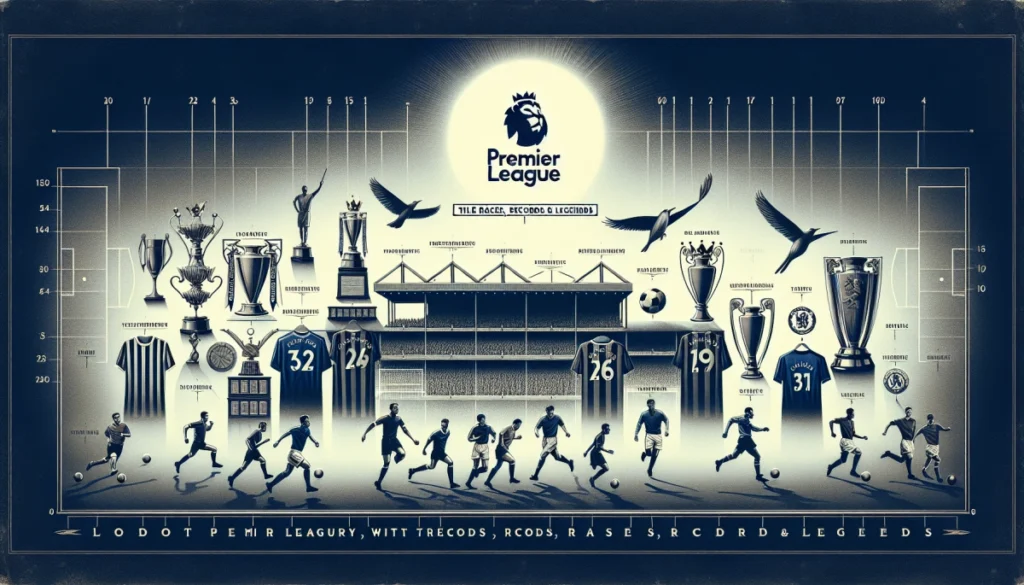
Why the Premier League’s birth mattered for the game you follow
You may think of the Premier League as simply the top division of English football, but its creation in 1992 marked a seismic shift in how the sport operated, was watched and was financed. When the top-flight clubs broke away from the Football League to form the Premier League, they did so to take control of broadcasting revenue and to professionalize the competition for a global audience. That decision transformed player recruitment, stadium redevelopment, and the profile of English teams worldwide—changes you’ll still see shaping modern club strategies.
From the very first season, the league was built around television exposure, commercial partnerships and a condensed broadcast-friendly schedule. You began to witness new levels of income flowing into the game, which accelerated the arrival of foreign talent, modern training methods and high-profile managers. Those early commercial shifts set the stage for the dramatic title races and record-breaking performances that would follow.
How the early seasons set patterns for title races and legends
The initial decade of the Premier League is where many of the competition’s recurring storylines took shape. You can trace several lasting patterns back to the 1990s:
- Dominance and dynasties: Manchester United, under Sir Alex Ferguson, established the template for sustained success in the Premier League era, combining youth development, shrewd signings and late-game drama to win multiple titles.
- Surprise champions: The early seasons showed that investment and timing could yield rapid success—Blackburn Rovers famously won the 1994–95 title after significant backing, proving the league could produce unexpected winners.
- Managerial influence: The arrival of continental managers, most notably Arsène Wenger at Arsenal in 1996, introduced new training regimes, dietary standards and tactical thinking that altered how teams prepared and played.
- High-profile personalities: Figures such as Eric Cantona and Alan Shearer became emblematic of the era, both for their on-field impact and for how they drew attention to the league internationally.
Key moments, records and the rise of household names
In those early years you saw records and narratives form around individual brilliance and team achievements. Alan Shearer emerged as the era’s archetypal striker and would become the Premier League’s all-time top scorer—an enduring benchmark for forwards. The 1998–99 season is particularly notable for Manchester United’s famous treble (Premier League, FA Cup and UEFA Champions League), a feat that underlined how English clubs could compete at the highest continental level while dominating domestically.
These formative seasons also cultivated rivalries and storytelling that still excite you today: title races decided on the final day, champions restored and dethroned in dramatic fashion, and a steady stream of icons—players and managers—whose reputations grew as the league’s global audience expanded. Tactically, you can trace changes such as faster tempo, increased athleticism and a growing emphasis on technical training back to this period.
Next, you’ll follow how the Premier League evolved into the 2000s: the shift in financial power, the emergence of new super-clubs, and the modern records and rivalries that define the 21st-century era.

The money era: takeovers, super-clubs and a remade transfer market
As the Premier League entered the 2000s the single biggest change was cash — not incremental, but transformational. A new wave of wealthy owners and sovereign backers reshaped the competitive map. Roman Abramovich’s purchase of Chelsea in 2003 and Sheikh Mansour’s takeover of Manchester City in 2008 rewired expectations about how quickly investment could translate into trophies. Those two examples crystallised a wider trend: clubs with deep-pocketed owners could accelerate stadium improvements, expand scouting networks, and buy elite talent almost overnight.
The consequences were immediate and enduring. Transfer fees and wages escalated as English clubs competed to attract global stars; the transfer market became a financial arms race rather than a steady ladder of recruitment. You saw mid-table teams aim for strategic sell-on models while top clubs invested in world-class squads, sports science and data departments. At the same time the Premier League’s broadcast riches meant even clubs outside the very top tier could professionalise and globalise their brands, widening the league’s commercial footprint.
That influx of money also altered competitive balance. It created new dynasties — not only Manchester United’s continuation, but fresh runs of dominance from Chelsea under Jose Mourinho and Manchester City under Pep Guardiola — while also making surprise challengers harder to sustain without significant backing. The result was a league where ownership, ambition and commercial strategy began to matter almost as much as on-field tactics.
Tactics, records and the modern faces of Premier League drama
On the pitch the 21st century brought rapid tactical evolution and a fresh slate of records that give you the modern game’s landmarks. Arsène Wenger’s earlier influence on nutrition and technique paved the way for later tactical revolutions: José Mourinho’s organised pragmatism, Jürgen Klopp’s high-intensity gegenpressing and Pep Guardiola’s positional play and inverted full-backs all shifted how teams sought control. The Premier League’s pace and athletic demands increased, and managers leaned harder on analytics and individualized training.
Those tactical shifts produced headline moments and lasting records. Arsenal’s unbeaten 2003–04 season remains an emblem of consistency; Sergio Agüero’s 2012 stoppage-time title clincher at 93:20 is one of the league’s most cinematic moments; Manchester City’s 2017–18 100-point season redefined what dominance looked like in a 38-game campaign; and Mohamed Salah’s goal-rich 2017–18 run set new standards for attacking output. New technology, especially the introduction of VAR in 2019, added another layer of drama by changing how decisions — and therefore title races and relegation fights — are decided.
Finally, a new generation of household names — from Rooney and Rooney’s contemporaries to Salah, Kevin De Bruyne and Harry Kane — have become global icons, continuing the Premier League’s trajectory as both a playing competition and a cultural export. As tactics, finance and global reach continue to evolve, you’ll see those intertwined threads shape every title race and record chase in the seasons ahead.
Beyond headline transfers and famous matches, the Premier League’s story is still being written. Emerging priorities — sustainable ownership models, tighter financial controls, expanded youth development and the continued integration of analytics and sports science — will shape which clubs rise and how the game looks in stadia and on screens. At the same time the league’s global reach ensures that every tweak to rules, broadcast deals or competition formats reverberates far beyond England. That mix of local passion and worldwide interest guarantees more dramatic title races, surprise challengers and new legends in seasons to come.
Looking ahead: legacy, evolution and what to watch
The Premier League’s character comes from a constant tension between tradition and change. Historic clubs carry cultural weight; new owners bring fresh resources and ambition; managers introduce tactical revolutions while technology alters refereeing and preparation. Fans, too, remain the ultimate arbiters — their loyalties, protests and celebrations influence governance, stadium atmosphere and commercial directions. If you want a single place to revisit the league’s milestones as they accumulate, see the Premier League history resource for official highlights and records.
Watch for three recurring themes in the coming years: how financial rules balance competitiveness and sustainability, which clubs best convert data and development into consistent success, and how governing bodies manage technology without eroding the human drama that defines the sport. Those forces will determine not just winners and losers, but the stories that fans will retell for generations.
Frequently Asked Questions
How did major takeovers reshape the Premier League?
Big takeovers — notably Chelsea (2003) and Manchester City (2008) — accelerated spending on transfers, facilities and global marketing. That influx of capital changed competitive dynamics by enabling rapid squad upgrades, professionalisation across clubs and a higher commercial ceiling for the league, while also prompting debates over financial fairness and long-term sustainability.
Which tactical changes have most influenced title races since 1992?
Several tactical shifts reshaped outcomes: Mourinho’s organised defence and counter-attacking pragmatism, Guardiola’s positional play and inverted full-backs, and Klopp’s gegenpressing and high-intensity transitions. Those approaches, combined with advances in sports science and analytics, have altered recruitment priorities and match strategies that decide tight title races.
Has VAR changed who wins titles or avoids relegation?
VAR has had a measurable impact on match outcomes by reducing clear officiating errors, which in turn can affect points totals critical in title races and relegation battles. While it hasn’t removed controversy, VAR has changed how pivotal decisions are reviewed and has introduced new debates about timing, consistency and the spirit of the game.