La Liga History and Records: Top Scorers and Club Achievements
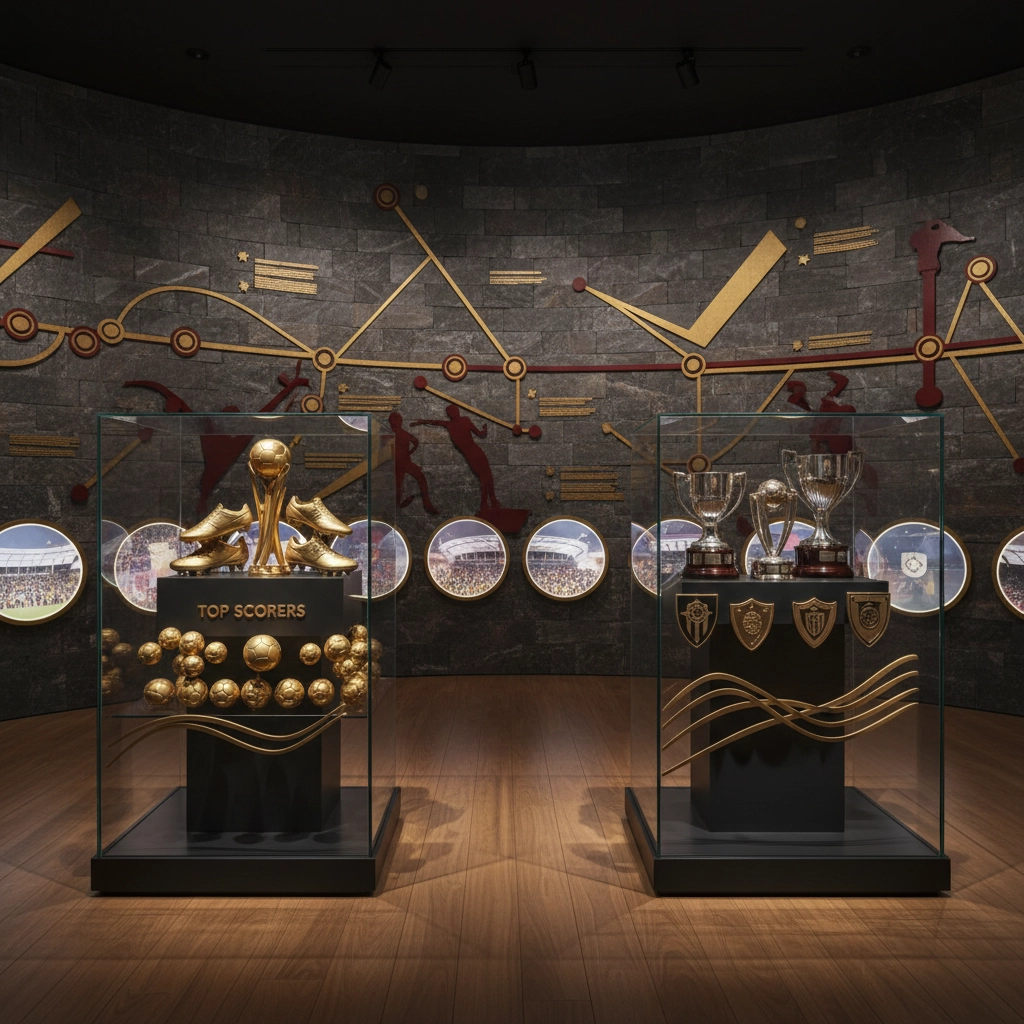
How La Liga Began and why its early years set the tone for Spanish football
When you study La Liga’s origins, you see more than a competition: you see the foundation of modern Spanish football identity. La Liga was established in 1929 as a national round-robin championship bringing together the strongest regional clubs into a single, season-long contest. That inaugural season was compact compared with today’s league, but it created the competitive framework—home-and-away fixtures, a points table, and a seasonal race for the title—that still defines the competition.
You’ll notice the first champions were among the clubs that would become pillars of Spanish football. Barcelona took the inaugural title, and alongside Real Madrid and Athletic Bilbao they formed the early triumvirate that dominated trophies, fans, and media attention. Those first decades also produced unique features you still encounter in La Liga lore: regional rivalries intensified on a national stage, and scoring feats and defensive records from those years remain touchstones for later generations.
Early champions, format shifts, and the interruption that changed momentum
From the outset, La Liga’s structure was straightforward, but it evolved rapidly. The league started with a small group of teams and expanded as the sport professionalized across Spain. Key developments you should note:
- League expansion: Teams were gradually added across the 1930s and beyond, reflecting football’s growing reach and the need for a longer, more competitive season.
- Spanish Civil War pause: The Civil War (1936–1939) suspended competitive football, disrupting momentum for clubs and players and leading to a brief reset when league play resumed.
- Post-war consolidation: After the war, several clubs reasserted themselves quickly, while others rebuilt—creating decades where club fortunes rose and fell more dramatically than before.
These shifts mattered because they shaped how you interpret early records. A top-scorer tally or a club’s string of titles in the 1930s must be read against interruptions, fewer fixtures, and different tactical approaches from later eras.
Standout players and the first lasting scoring records
Even in its early decades, La Liga produced clear scoring stars whose names you still encounter in record lists. Rafael “Pichichi” Moreno, who played before the league’s formation, inspired the Pichichi Trophy—a persistent symbol awarded to each season’s top scorer. In the league itself, figures like Telmo Zarra emerged as dominant goal-getters; Zarra’s prolific scoring in the 1940s and 1950s set marks that stood for generations.
- Pichichi Trophy: The seasonal award that highlights the league’s foremost goalscorer and helps you trace scoring traditions.
- Early record holders: Players from the pre-war and immediate post-war eras established baseline records for goals and single-season tallies that later stars would chase.
Understanding these origins—the competition format, interruptions, and the first iconic scorers—gives you the context needed to appreciate later record-breaking runs and club dynasties. Next, you’ll explore the era-by-era top scorers and the major club achievements that redefined La Liga across the 20th and 21st centuries.

Post‑war dynasties and the consolidation of club power
After the interruptions of the 1930s and 1940s, La Liga settled into patterns of recurring dominance. Certain clubs—backed by resources, institutional stability, and the ability to attract top players—established long runs of success that shaped expectations for decades. Real Madrid’s post‑war project, culminating in the 1950s European triumphs, turned the club into an international benchmark; their blend of star names and continental ambition meant domestic titles were often accompanied by European headlines. Barcelona responded through different cycles: periods of tactical innovation and homegrown youth combined with strategic signings to mount title challenges and rebuild identities.
Beyond the two giants, other clubs created their own legacies. Athletic Bilbao’s philosophy of local talent yielded early trophy hauls and a uniquely persistent presence in the top tier. Valencia, Atlético Madrid and Deportivo La Coruña each produced eras—whether through youth development, tactical breakthroughs or shrewd management—that interrupted the duopoly and reminded observers that La Liga’s balance could shift. These club achievements did more than fill trophy cabinets; they redefined institutional expectations, altered rivalries, and fed the narratives that make Spanish football so compelling.
The modern explosion: Messi, Ronaldo and a new scoring paradigm
The turn of the 21st century brought not only tactical evolution but a concentration of world‑class attacking talent that reconfigured La Liga’s scoring records. Two figures in particular—Lionel Messi and Cristiano Ronaldo—did more than collect individual honors; they raised the statistical ceiling of the competition. Messi finished his La Liga career as the competition’s all‑time top scorer, and his single‑season haul of 50 goals remains the benchmark for goal‑getting excellence. Ronaldo, during his years in Spain, redefined what a complete forward could contribute in terms of athleticism, consistency and big‑game output.
Their rivalry had a multiplying effect. Clubs reorganized tactically to either contain or exploit these players, spending on defensive improvements and complementary attackers in equal measure. Media attention and global broadcast deals amplified every milestone; as goals and records accumulated, La Liga’s identity shifted toward a showpiece of elite attacking talent. The Pichichi continued to be the seasonal barometer of finishing skill, but the Messi–Ronaldo era also highlighted how individual greatness can skew long‑standing metrics and inspire new generations.
Records, awards and the lenses we use to compare eras
When you read La Liga’s record books, remember that trophies and statistics are measured through changing contexts: different season lengths, tactical eras, and financial landscapes. Individual awards like the Pichichi (top scorer) and the Zamora Trophy (best goalkeeper by goals‑per‑game) provide consistent yearly benchmarks, yet the meaning of a goal or a shutout varies across decades. Club milestones—most championships, longest unbeaten runs, or landmark European achievements—reflect both on‑field performance and off‑field organization.
Modern record‑keeping makes comparisons clearer but also invites nuance. Transfer market inflation, tactical trends favoring possession and high press, and improved player conditioning have all influenced goal rates and defensive metrics. To appreciate La Liga’s history and records fully, you need to read numbers alongside the stories behind them: the club projects, the managerial philosophies, and the cultural moments that made certain achievements possible.
Legacy, evolution and where records lead next
Records do more than decorate club cabinets or individual CVs; they shape how fans, clubs and historians perceive progress. As La Liga continues to globalize and adapt—through analytics, youth development pipelines and evolving tactical ideas—its record book will keep accumulating figures that reflect both individual brilliance and broader structural change. The stories behind those numbers matter: they reveal how institutions are built, how rivalries intensify, and how moments of creativity or crisis rewrite expectations.
In that sense, the archive of top scorers, trophy runs and statistical milestones is best read as a living conversation between past and future. New talents will challenge long‑standing marks; new club projects will test existing hierarchies. Following those shifts requires attention to both the raw data and the context that produces them: managerial vision, financial architecture, and cultural identity. For up‑to‑date standings and official records, see the LaLiga official site.
Frequently Asked Questions
Who is La Liga’s all‑time top scorer?
Lionel Messi is widely recognized as La Liga’s all‑time top scorer and also holds the single‑season record for goals scored in the competition, achievements that epitomize the modern era of attacking excellence.
What do the Pichichi and Zamora trophies represent?
The Pichichi is awarded each season to La Liga’s top scorer, while the Zamora Trophy goes to the goalkeeper with the best goals‑conceded‑per‑game ratio. Both prizes are longstanding seasonal benchmarks used to recognize individual performance.
Can La Liga records from different eras be fairly compared?
Comparisons across eras are always imperfect: changes in season length, tactics, travel, training, and finance influence statistics. The most meaningful comparisons consider those contexts alongside raw numbers, viewing records as reflections of their time rather than direct one‑to‑one equivalences.