Controversial VAR Moments in the Premier League: A Timeline

When VAR arrived in the Premier League and what it meant for you as a fan
When the Premier League introduced the Video Assistant Referee (VAR) system in the 2019–20 season, you were promised greater accuracy in key match-defining decisions. Instead, you often encountered a new set of debates: delays, marginal offside calls, and differing interpretations of handball and what constitutes a “clear and obvious” error. Understanding the context of those first seasons helps you see why VAR controversies became part of the match-day narrative almost overnight.
Key implementation features and why they sparked immediate debate
To make sense of the disputed moments you saw on TV, you need to know how VAR was structured and why that structure created controversy:
- Scope of review: VAR could intervene for goals, penalties, direct red cards and mistaken identity, but not for fouls leading to buildup or tactical incidents. You quickly realized this narrow remit left many contentious plays untouched.
- On-field review (OFR): Referees could either accept the VAR recommendation or conduct an on-field review at a monitor. Those replays and the lack of standardized communication created inconsistent outcomes and long stoppages you found frustrating.
- Offside technology and marginal calls: The introduction of calibrated lines to adjudicate millimetre-level offsides produced visually precise but divisive outcomes. You saw goals celebrated and then overturned by hairline rulings, which inflamed fans and pundits alike.
- Handball interpretation: The rule changes around handball were vague in practice. You often wondered whether the hand was “in an unnatural position” or if the touch was accidental — judgments that VAR was supposed to clarify, but frequently compounded confusion.
Typical early-season flashpoints you likely remember
Across the first seasons with VAR you saw recurring patterns of controversy. These patterns help explain why debates intensified rather than subsided:
- Long delays and loss of flow: Extended checks and multiple camera angles broke momentum and left you uncertain about the final outcome until long after the ball had gone out of play.
- Inconsistent outcomes between matches: Similar incidents in different games produced different decisions, leading you to question whether VAR standards were consistently applied.
- Manager and player reactions: High-profile managers publicly criticized VAR’s clarity and consistency, influencing how you interpreted contentious decisions and fueling media coverage.
These initial issues set the tone for the VAR debate and created a long list of controversial moments that you’ll want to explore in sequence. In the next section, you’ll get a season-by-season timeline of the most disputed VAR decisions and the matches that defined the early VAR era in the Premier League.
2019–20: Growing pains — the first season’s headline controversies
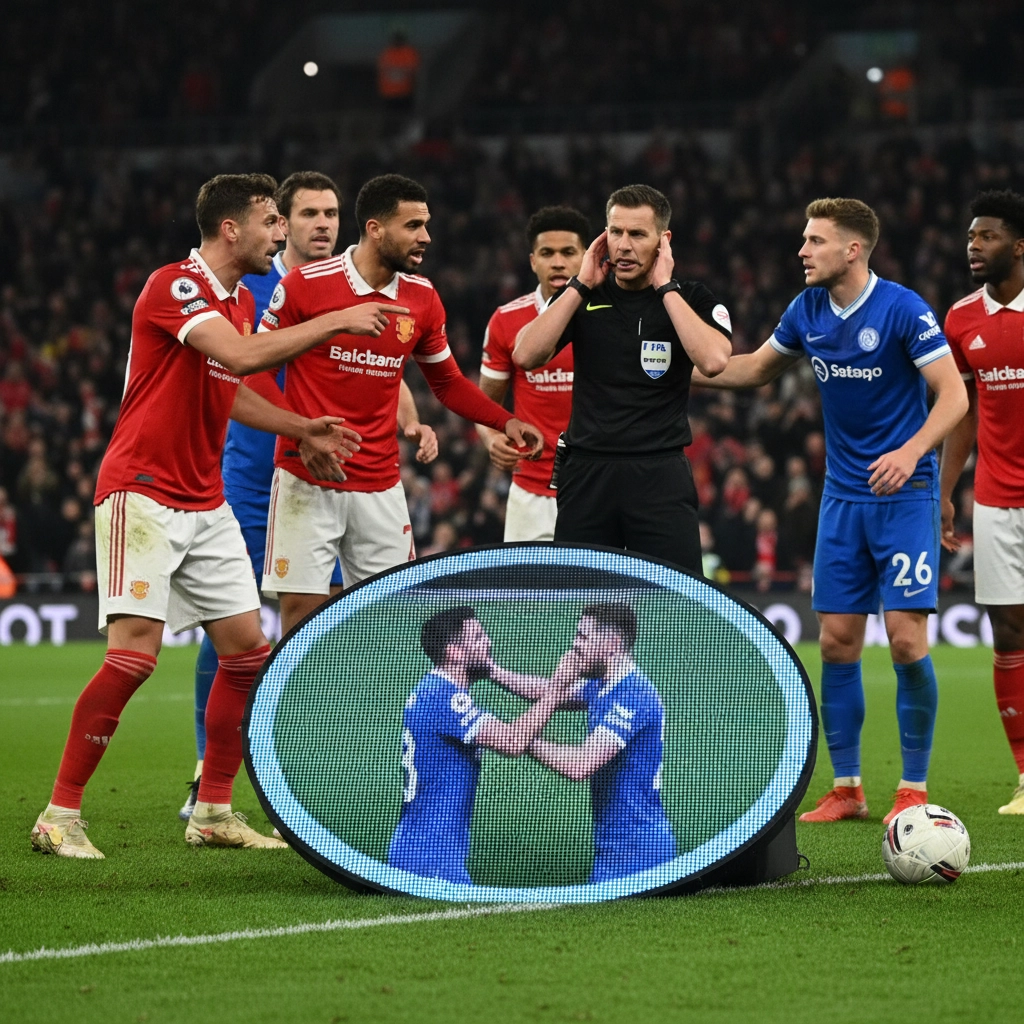
In your first season watching VAR in the Premier League you noticed a pattern almost immediately: big moments were being taken away from the pitch and re-litigated in a studio. The early months were dominated by two recurring flashpoints. The first were marginal offside rulings: goals that would have stood under the old referee’s eye were routinely ruled out by pixel-perfect lines, producing euphoric celebrations followed by abrupt reversals. The second were handball calls where the “natural position of the arm” became a matter of forensic debate. The result for you was a succession of high-profile stoppages that felt disproportionate to the incidents themselves.
Managers and broadcasters amplified the tension. You heard repeated public criticism — managers asked for consistency, pundits argued the spirit of the rules was being lost to technicalities, and fans felt robbed when a late winner was overturned. The VAR protocol (goals, penalties, direct red cards, mistaken identity) meant many contentious build-up fouls stayed untouched, which only increased frustration: why stop the game for an offside that took place seconds before but ignore the shove that led to the shot? That tension defined the inaugural VAR season and set expectations for further tweaks.
2020–21: Consistency under the microscope — penalties, reviews and the human factor
By the following season your complaints shifted from technology to interpretation. Penalty decisions became the headline battleground. VAR’s involvement in perceived “soft” penalty awards or non-awards exposed the thin line between acceptable contact and a foul worthy of spot-kicks. The on-field review (OFR) — where referees walked to a pitch-side monitor — intensified the drama. You saw VAR used to overturn or confirm decisions, but the same play in a different stadium might receive a different outcome, driving home that VAR could not eliminate subjective judgment.
High-profile managers continued to make VAR a public topic, demanding clearer public explanations and uniformity. The Premier League and refereeing bodies responded with guidance and improved audio-visual transparency in some fixtures, but the human element remained: VAR could present replays, but it could not remove human interpretation. That reality kept controversial moments in the headlines instead of settling the debate.
2021–22: Margins, messaging and the move toward reform
Entering this period you began to notice more targeted attempts to fix VAR’s obvious weaknesses. The controversies shifted subtly — less about basic implementation and more about margins, messaging and speed. Clubs, pundits and the FA pushed for clearer communication so fans would better understand why a decision had been made. The conversation also turned to whether the rules themselves needed simplification so VAR wouldn’t be forced to parse grey areas.
On the pitch, the same themes persisted: hairline offsides, contentious handballs and penalty controversies. Off the pitch, however, there was movement — incremental rule clarifications and pilot programs aimed at reducing stoppage time and improving consistency. That period framed VAR not as a one-off fix but as an evolving system; you came to expect controversy, but also the sense that VAR’s most heated problems were being recognised and slowly addressed.
Looking Ahead: VAR’s Next Chapter
VAR is no longer an experiment; it is embedded in the Premier League fabric. What matters now is not whether VAR exists, but how it evolves. The path forward will be defined by clearer rules, faster processes, and better communication — all aimed at preserving the game’s flow while keeping decisions fair. Success will come from iterative fixes, open dialogue between regulators, clubs and supporters, and technological advances that reduce human ambiguity rather than amplify it. For those tracking the debate, the conversations around semi-automated offsides, refined handball guidance and improved referee explanations are the most consequential developments to watch. For official rule updates and ongoing guidance, see the IFAB resources on the Laws of the Game: IFAB guidance.
Frequently Asked Questions
Why do offside decisions still cause so much controversy even with VAR?
Offside technology can determine precise positions down to millimetres, but that precision highlights marginal calls that fans previously accepted. Camera angles, player movement, and where the frame places the relevant body part introduce interpretation. Newer tech (like semi-automated offside) aims to reduce those variables, but debates about fairness and timing persist.
Has VAR improved consistency in the Premier League?
VAR has reduced some clear human errors, but consistency remains an issue because many decisions rely on interpretation (handball, contact, intent). Improvements in protocols, training and transparency have narrowed gaps, yet perfect uniformity is unlikely given the subjective elements that remain.
What practical reforms are being considered to reduce controversial VAR moments?
Key reforms include clearer handball definitions, speedier decision-making protocols, greater broadcast transparency (real-time explanations), and automated or semi-automated detection for offsides. Alongside technology, ongoing referee education and published rationale for decisions are seen as crucial to rebuilding trust.