The Evolution Of Tactics In La Liga: From Possession Football To High Press
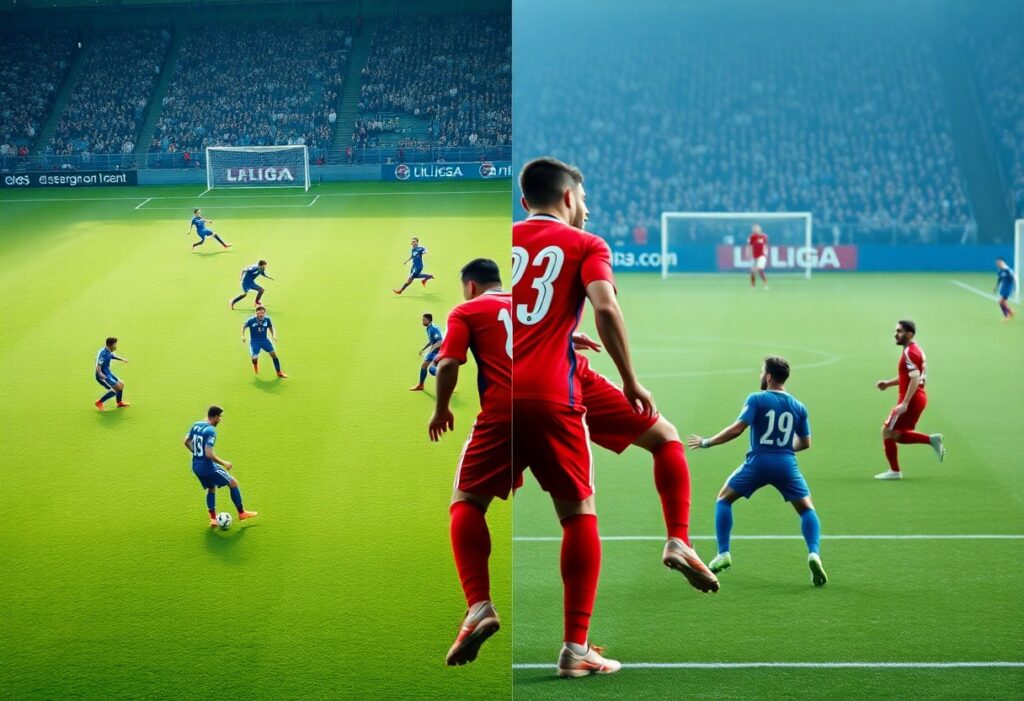
Just as La Liga shifted from possession dominance-built on patient passing and positional play-to a model defined by intense space-winning and transition, coaches introduced pressing structures that deliver lethal counter-pressing and expose opponents’ errors; this guide analyzes how training, analytics and player profiles enabled elevated intensity and tactical flexibility, how risks in build-up created defensive vulnerabilities, and what these trends mean for the league’s future.
Types of Football Tactics in La Liga
Clubs alternate between control-oriented and reactive models: possession teams focus on tempo and short passing, while compact sides exploit transitions and set-piece efficiency; Guardiola’s Barcelona (2008-2012) and Atlético under Simeone are textbook contrasts, with the former dominating possession and the latter prioritising structure and counter-press. Analysts track metrics like PPDA, possession percentage and turnover zones to map trends. Perceiving how managers trade space for control explains lineup and substitution patterns.
- Possession
- High Pressing
- Counter‑attack
- Low Block
- Width/Wing Play
| Possession Football | Short passing and positional play; example: Guardiola’s Barcelona (2008-2012), often exceeding 60% possession in many matches. |
| High Pressing | Aggressive front-third pressure measured by PPDA <10, forcing turnovers high up the pitch – used by Atlético in transitional phases. |
| Counter‑attack | Low-possession strategy prioritising quick vertical transitions and pace; effective against overcommitted possession teams. |
| Low Block | Deep, compact defending to limit space between lines, sacrificing possession to reduce high-quality chances for opponents. |
| Width / Wing Play | Stretching the pitch with full-backs and wingers to create crossing or cut-back opportunities; favoured by teams exploiting aerial or late runs. |
Possession Football
Guardiola’s Barcelona institutionalised possession as a defensive and offensive tool, using short passes, third-man runs and tight positional rotations; Xavi, Iniesta and Busquets controlled tempo, enabling sustained territorial dominance and multiple La Liga titles plus Champions League wins (2009, 2011). Coaches now quantify success via pass completion, possession in final third and progressive carries to evaluate control-based systems.
High Pressing
High pressing in La Liga deploys coordinated triggers to compress opponents early, often using a 4-4-2 or 4-3-3 to create numerical superiority; teams aim for PPDA below 10 to disrupt build-up and recover the ball near goal, turning pressured turnovers into high-xG chances. Atlético’s disciplined transitions and frequent turnovers in the attacking half demonstrate the tactic’s effectiveness when combined with compact lines.
Press setups demand synchronized movement, clear pressing triggers (back passes, weak-foot touches) and fitness; tactical success is measurable by recovery zones and counter-xG, but the approach carries a major risk: a high line and aggressive press leave exploitable space behind the defence, so managers mitigate that with swift cover and tactical fouls.
Factors Influencing Tactical Evolution
Institutional shifts, coaching icons and market forces each nudged La Liga from possession dominance toward greater pressing. Guardiola’s Barcelona (2008-2012) and Atlético’s 2013-14 title are practical case studies linking success to distinct systems, while investment in analytics and sports science sped tactical adoption across clubs. Youth pipelines and transfer strategies supplied more versatile athletes, and high press installations changed match rhythms. Thou note the combined weight of coaching trends, data and player profiles in steering system choices.
- Coaching philosophy (e.g., Guardiola, Simeone)
- Analytics & sports science
- Youth development pipelines like La Masia
- Transfer market economics and squad depth
- UEFA/FA regulations and global tactical trends
Historical Context
Guardiola’s Barcelona (2008-2012), culminating in the 2009 treble, cemented short passing and territorial control as a template; Atlético’s 2013-14 La Liga win then validated compact defending and rapid transitions. Tactical fashions spread after those landmark seasons, with rival clubs selectively importing elements-possession patterns, defensive blocks or pressing schemes-based on what delivered trophies and points in the preceding cycles.
Player Development
La Masia graduates like Xavi, Iniesta and Busquets formed the spine of Barcelona’s possession era, showing how academy philosophy translates to senior tactics. Clubs increasingly prioritize technical touch, spatial understanding and press-readiness from U12 onward to supply teams with players suited to both ball retention and aggressive transition play.
Academies now blend tactical periodization, small-sided games and position-specific drills with modern tools: GPS tracking, video analysis and individualized load management. Coaches schedule targeted sessions-press triggers, recovery runs and passing patterns-so teenagers experience 3-5 weekly tactical blocks that mirror first-team demands; this creates adaptable players who fit possession frameworks or intense pressing systems as required.
Pros and Cons of Possession Football
| Pros | Cons |
|---|---|
| Control of tempo and match rhythm | Vulnerable to aggressive high press |
| Reduces opponent scoring opportunities | Turnovers in dangerous areas risk instant counters |
| Creates higher-quality chances via patient build-up | Can become predictable and easy to defend |
| Protects leads by keeping the ball | Requires elite technical players and training |
| Improves team cohesion and passing networks | Slow transitions can be punished on the break |
| Often yields >60% possession, pressuring opponents | Physically taxing when repeatedly pressed |
| Controls midfield battles | Struggles against compact low blocks without verticality |
| Helps recycle possession and wait for openings | Can limit directness and finishing opportunities |
Advantages
Guardiola’s Barcelona and similar sides regularly averaged 65-70% possession, using it to suffocate opponents and generate superior shot locations; sustained control forces opponents into defensive errors, lowers their xG, and lets coaches dictate pace-valuable in tight leagues where managing matches and protecting leads matters as much as scoring.
Disadvantages
High-level presses have exposed possession systems: Bayern’s 2013 demolition of Barcelona and Atlético Madrid’s 2013-14 La Liga title show how a coordinated press or compact counter can exploit turnovers, creating dangerous, game-deciding transitions despite lower overall possession.
Coaches must invest in training to play through presses: teams need a goalkeeper and defenders comfortable on the ball, midfielders who can break lines, and tactical variants to add verticality; lacking those, possession becomes predictable and fragile, inviting repeated turnovers and fatigue from constant recovery runs.
Pros and Cons of High Press
Adopting a high press in La Liga reshaped games by forcing opponents into rushed passes and turnovers, a tactic that helped Atlético Madrid secure La Liga titles in 2013-14 and 2015-16. It creates immediate scoring chances from transitions and compresses space for build-up, but also demands intense conditioning, tactical discipline, and squad depth to avoid late-game collapses or exploitation by quick long balls.
| Pros | Cons |
|---|---|
| Forces turnovers in the final third | Leaves space behind the defensive line |
| Generates high-quality transition chances | High physical and stamina demands |
| Sets match tempo and pressure opponents | Vulnerable to accurate long passes and switches |
| Improves defensive statistics like tackles in opp half | Requires tactical cohesion-mistakes punished quickly |
| Can force opponent errors leading to set-pieces | Increases risk of fouls, bookings and suspensions |
| Enhances crowd engagement and momentum swings | Demands larger squad and rotation policy |
| Effective against possession-focused teams | Less effective versus deep-block, long-ball strategies |
| Promotes aggressive, proactive identity | Fatigue can lead to late-game goals conceded |
Advantages
High press converts defensive actions directly into chances: teams that press effectively recover possession higher up the pitch, producing more shots inside the box and increasing expected goals from transitions. Managers who implement it gain control of tempo and force opponents into errors; Atlético’s title runs showed how aggressive pressing plus compact shape can outperform technically superior possession sides.
Disadvantages
Deploying a sustained high press exposes lanes behind defensive lines, so a single accurate long pass or quick switch can punish the team immediately. It also raises injury and fatigue risk across a 38-game La Liga season, forcing managers to manage minutes and rotations carefully to maintain intensity without collapse.
More concretely, clubs need specialized conditioning, a rotation plan of at least a dozen reliable first-team options, and tactical training to limit counters; without those investments teams often see performance dip after 60-70 minutes and concede late goals-an operational cost that has sunk several high-press experiments in Spain. Squad depth, recovery protocols, and defensive discipline become non-negotiable.
Step-by-Step Analysis of Tactical Shifts
| Phase | Tactical shift & examples |
|---|---|
| Possession dominance (mid‑2000s-2012) | Positional play, short passing and high ball retention – Barcelona (Guardiola 2008-2012) often registering 60-70% possession to control tempo and create overloads. |
| Counter‑pressing adoption (early‑2010s) | Immediate pressure after loss of possession; teams sought quick ball recoveries in advanced areas, raising turnovers in the final third and accelerating transition goals. |
| Low block & compact defence (Simeone era) | Atlético Madrid’s 2013-14 template: narrow lines, disciplined zonal structure and rapid counter‑attacks that punished opponents’ space. |
| Hybrid high‑press + positional play (late‑2010s-present) | Blended phases of intense pressing (single‑digit PPDA in key spells) with structured possession to exploit turnovers while retaining control across 90 minutes. |
Key Phases of Evolution
Possession dominance established spatial control-Guardiola’s Barcelona (2008-2012) averaged roughly 60-70% possession to manipulate opponents; then counter‑pressing raised recovery rates high upfield, while Simeone’s Atlético (2013-14 title) illustrated how a compact low block and fast counters win matches; contemporary teams now alternate press and possession, using metrics like PPDA and high pressing intensity to trigger turnovers and create high‑value chances.
Impact on Team Performance
Shifts reshaped outcomes: possession teams increased shot quality by controlling build-up, pressing teams boosted turnovers and quick‑chance creation, and low‑block systems improved defensive solidity-tactical choices produced measurable differences in goal differential, squad workload and match control, with higher turnovers and improved goal differential on one hand, and increased injury risk or fatigue on the other.
Deeper analysis shows trade‑offs: high press correlates with more recoveries in the final third and short‑term xG spikes but demands greater rotation and sports science support; conversely, low‑block teams reduce opponent xG over long stretches but concede initiative and rely on precision counter‑attacks, making recruitment and training priorities decisive for sustained success.
Tips for Understanding Tactical Changes
- Possession – track tempo, pass length and percentage to spot shifts from control to direct play.
- High press – watch opponent’s build-up exits and forwards’ starting positions to judge intensity.
- PPDA – use passes-per-defensive-action as a quantitative gauge of pressing (lower = more pressure).
- Transitions – count turnovers leading to shots or entries into the box within 10 seconds.
- Defensive shape – map distances between lines; compactness under 30 metres indicates deep, organised blocks.
Observational Techniques
Compare 15-minute blocks: note if a team moves from averaging 60% possession to 45% or if fullbacks stop overlapping. Use heatmaps, sprint counts and substitution timing as concrete signals; watch how often forwards close the first pass and how many counter-attacks occur per turnover. Emphasise off-ball pressing triggers and moments when opponents choose long balls over buildup to detect tactical pivots.
Tactical Terminology
Pin down terms like possession (control and passing sequences), verticality (passes aiming to break lines), and pressing triggers (bad touches, backpasses). Cite examples: Guardiola’s Barcelona (2008-12) prioritised possession and positional rotation, while Simeone’s teams favoured compactness and quick counters. Use concise labels so patterns become comparable across matches.
When analysing match footage, convert jargon into measurable proxies: define a possession spell as 8+ passes, deem a press intense when PPDA falls under 8, and classify a transition as a shot within 10 seconds of turnover. Combine video clips with stats (possession%, PPDA, entries into box) to link language to evidence. This creates a repeatable framework for interpreting tactical shifts.
Final Words
With these considerations, La Liga’s tactical trajectory reflects a dynamic synthesis: traditional possession principles matured into versatile frameworks embracing intense pressing, positional fluidity, and data-informed rotations. Coaches balanced aesthetic control with aggressive ball recovery, producing hybrid systems that adapt to opponent and personnel. Future iterations will likely fuse technical mastery with athletic intensity while preserving the league’s identity for strategic innovation.
FAQ
Q: How did possession football become the dominant style in La Liga and what principles defined it?
A: Possession football in La Liga gained prominence through the influence of Johan Cruyff’s Barcelona in the early 1990s and reached a new peak under Pep Guardiola’s Barcelona (2008-2012). Core principles included positional structure (players occupying specific zones to create passing triangles), patient ball circulation to unbalance the opponent, a high technical standard emphasizing short passing and first-touch play, and the use of a midfield pivot or “double pivot” to control transitions. Teams prioritized ball retention to limit opponent opportunities, used full-backs to provide width while inverted midfielders supported central overloads, and often deployed a false nine or a creative number 10 to pull defenders out of position. Tactical coaching stressed spatial occupation, rehearsed patterns of play, and coordinated pressing immediately after loss to recover possession quickly.
Q: Why did many La Liga teams shift toward high pressing, and what tactical changes made it effective?
A: The shift toward high pressing was driven by the search for quicker regains, faster attacking transitions, and the influence of coaches and methods emphasizing intense, coordinated pressure (e.g., Marcelo Bielsa, Jürgen Klopp, and adaptations by Spanish coaches). Tactical changes that enabled effective high pressing included better physical conditioning, zonal and trigger-based pressing schemes, forward players organized to close passing lanes, and defensive lines coordinating with midfield runners to compress space. Full-backs and wide midfielders were required to press high and aggressively, center-forwards became pressing focal points, and teams used compact vertical spacing so pressing traps could force predictable passes. Advances in analytics and load management allowed clubs to measure pressing intensity (passes allowed per defensive action, PPDA) and structure training (small-sided games, scenarios) to replicate match pressure, making pressing both sustainable and tactically precise.
Q: How did player roles and formations evolve during the transition from possession-dominant to high-press tactics, and what hybrid approaches do modern La Liga teams use?
A: Formations shifted from rigid possession shapes (classic 4-3-3 or 4-2-3-1 with a dedicated playmaker) to more flexible systems where roles are interchangeable. New or adapted roles included ball-playing center-backs who start attacks, inverted full-backs who move into midfield to create overloads, a “pressing nine” whose primary job is to disrupt out-build, and double pivots that split responsibilities between shielding the backline and progressing play. Coaches combined positional play with selective pressing-retaining structured possession in certain phases and pressing intensely after specific triggers (poor touches, back passes, isolated full-backs). Modern hybrids mix elements of juego de posición with Gegenpressing: teams build patiently from the back but launch coordinated high-intensity pressing after loss, or they press selectively to create turnovers that lead to quick vertical attacks. Managers also exploit data-driven match preparation (opponent passing tendencies, trigger zones) to decide when to press high and when to sit deeper, making tactics more situational than purely possession- or press-oriented.