Sustainability And Innovation: How The 2026 World Cup Aims To Set New Standards?
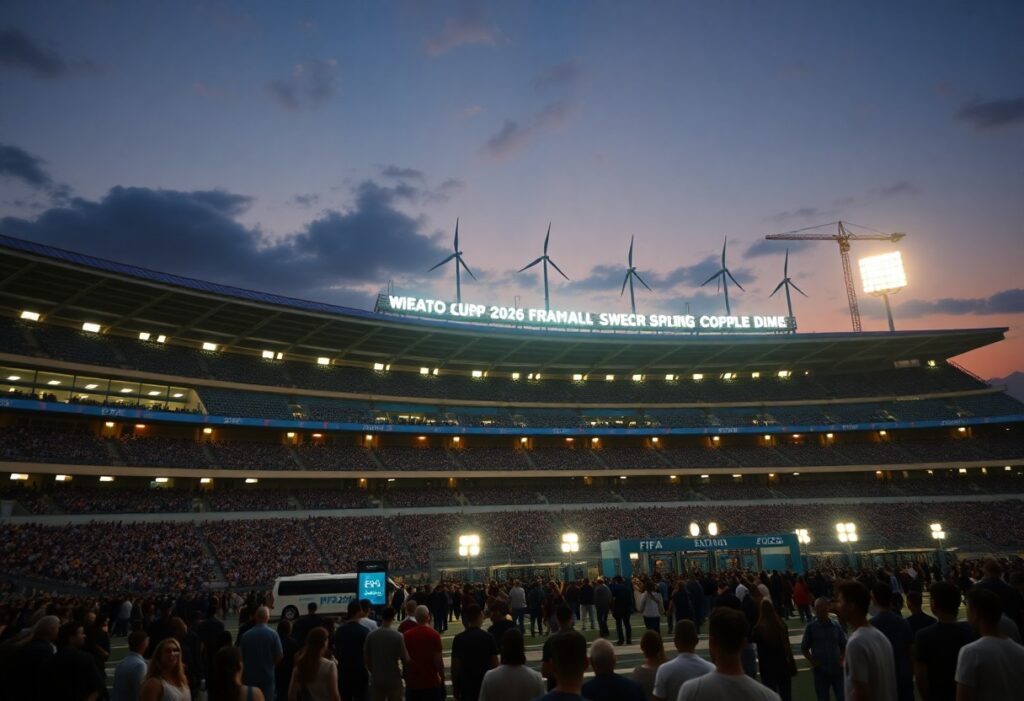
Most host cities and organizing bodies are using the 2026 World Cup to pilot integrated sustainability and innovation strategies that could redefine large-scale sports events. The bid combines net-zero stadiums, renewable energy, and circular construction with digital systems for transport and waste, while acknowledging supply chain vulnerabilities and climate risks that demand resilient planning; successful execution promises lasting community investment and a new operational benchmark for future tournaments.
Overview of the 2026 World Cup
By expanding to 48 teams and staging 104 matches across the United States, Canada and Mexico, the tournament becomes a testbed for large-scale sustainable operations. Organizers will coordinate across 22 host cities (16 U.S., 3 Canada, 3 Mexico) to deliver integrated solutions-vehicle electrification pilots, stadium energy retrofits and regional transit capacity increases-while balancing intense matchday logistics and long-term legacy commitments.
Host Cities and Venues
Host cities range from mega‑markets to midsize cities: MetLife Stadium (East Rutherford, ≈82,500), AT&T Stadium (Arlington, ≈80,000), Estadio Azteca (Mexico City, ≈87,000), SoFi Stadium (Inglewood, ≈70,000), BMO Field (Toronto, ≈30,000) and BC Place (Vancouver, ≈54,500). Cities are sequencing stadium retrofits, crowd-flow redesigns and transit upgrades to handle peaks, with venue-specific sustainability measures-LED lighting, water reuse and solar arrays-planned or already underway.
Expected Economic Impact
Analysts estimate the combined economic effect could range from roughly $10-20 billion in incremental activity across the three countries, driven by tourist spending, hospitality and matchday commerce; organizers anticipate over 1 million visitors and hundreds of millions in revenue for major host markets, though benefits will vary widely between large and small cities.
Deeper breakdowns show revenue streams from ticketing, broadcast rights and sponsorships concentrated at marquee venues, while local gains come from hotel room‑nights, F&B and transport fares; models project tens of thousands of temporary jobs and legacy tourism lifts, yet public cost overruns and infrastructure timing remain measurable risks-smaller cities may see returns in the tens of millions, whereas gateway cities could capture several hundred million in direct spending.
Sustainability Goals
The tournament sets clear, measurable benchmarks across the 16 host cities to reduce operational impact for 48 teams and 104 matches: targets focus on carbon reduction, water conservation, and waste diversion tied to venue operations and fan mobility. Cities are aligning stadium upgrades, procurement rules and legacy investments so that match-day emissions, resource use and single-use waste are tracked and reported against public KPIs.
Environmental Initiatives
Stadiums will combine on-site renewable procurement, LED retrofits and advanced HVAC controls to cut energy intensity, while host cities expand transit and EV shuttle fleets to lower fan-travel emissions. Waste programs pair composting and recycling with supplier take-back schemes, and water-saving fixtures plus rainwater capture aim to reduce municipal demand during the tournament footprint.
Social Responsibility
Organizers require local-hire clauses, accessible ticketing allocations and community legacy funds to ensure the event delivers social benefits; several host cities are earmarking facilities upgrades for youth sport and workforce training programs to convert short-term investment into long-term inclusion and skills development.
More detail: procurement standards mandate supplier codes of conduct, with monitoring for labor conditions and diversity metrics, and match-day operations will prioritize accessibility (ramped entrances, sensory rooms) plus discounted travel for low-income residents. Legacy commitments include repurposing temporary infrastructure into community pitches and funding sustained coaching programs to reach underserved neighborhoods.
Innovations in Technology
Across host venues, deployment of 5G, edge computing and IoT systems is being paired with digital twins and AI-driven operations to shave energy use and streamline logistics; for example, stadium digital twins predict crowd flows and HVAC loads to optimize performance, while suppliers like Microsoft Azure Digital Twins and Cisco Connected Stadiums are already contracted for pilot projects in several host cities, promising lower operational CO₂ and faster incident response.
Smart Stadiums
Stadium upgrades focus on integrated systems: rooftop solar plus battery storage for partial islanding, LED lighting with smart dimming, and sensor-based HVAC that adjusts by sector; many venues-capacities ranging roughly from 18,000 to 80,000-are testing real-time energy dashboards and modular infrastructure to reduce peak demand and improve resilience, though operators must mitigate single-point network failures that could disrupt services during high-attendance matches.
Fan Engagement Enhancements
5G and Wi‑Fi 6 rollouts enable immersive AR replays, personalized content pipelines, and in-seat ordering with millisecond latency, while biometric and mobile-ticketing systems speed entry and reduce queues; partnerships with app platforms will deliver localized offers and sustainability nudges to fans, highlighting faster access and potential privacy risks that organizers are addressing through consented data policies.
Operational pilots show stadium networks must handle tens of thousands of concurrent connections, so operators combine stadium-grade Wi‑Fi 6, CBRS slices and private 5G to keep latency under target thresholds (often 20 ms for AR). Edge servers run live video analytics for instant highlights, while CRM-driven engines use opt‑in telemetry to tailor food, transit and low‑carbon options; early case studies indicate queueing times fell and concession revenue rose, but rigorous anonymization and penetration testing remain mandatory to manage cyber and privacy exposure.
Transportation Solutions
Coordinating across 16 host cities and a 48‑team format, organizers prioritized shifting fans from cars to mass transit through integrated scheduling, cross‑border coordination and unified fare systems. Cities are committing to dedicated match‑day corridors, temporary curb reallocations and real‑time passenger information to handle peak flows, with the explicit aim of reducing congestion and improving safety while managing millions of additional trips during the tournament.
Sustainable Transit Options
Hosts are deploying fleets of zero‑emission buses, expanding commuter rail frequencies to 10-15 minute headways on key corridors and scaling bike‑share and protected lanes near stadiums. Several cities will run dedicated electric shuttle loops and extend late‑night rail services, combining service intensity and active‑mobility investments to absorb match‑day demand without resorting to temporary parking fields or unmanaged ride‑hail surges.
Reducing Carbon Footprint
Electrifying buses and shuttles, signing long‑term renewable energy contracts for stations, and using carbon monitoring platforms form the backbone of the transport emissions strategy. Match‑day planning emphasizes modal shift targets, priority lanes for high‑occupancy transit, and pre‑booked tickets that nudge fans toward lower‑emission options while enabling transparent reporting on transport‑related CO2.
Implementation follows recognized standards such as ISO 20121 and third‑party verification, with operational examples informing targets: Tokyo 2020’s use of battery and hydrogen buses demonstrated large‑scale electrified fleets can operate reliably for major events. Combining electrification with a targeted modal shift of 20-30% on match days, comprehensive telemetry and avoided single‑occupancy trips can deliver measurable reductions in lifecycle emissions versus business‑as‑usual transport patterns.
Legacy and Future Impact
Legacy planning focuses on converting tournament investments into lasting community assets across the 16 host cities, with organizers aiming that infrastructure built for 104 matches leaves measurable benefits: expanded transit corridors, retrofitted stadiums, and workforce training programs. Several host governments are mandating post-tournament use, prioritizing affordable community sport facilities and climate resilience projects because rising temperatures and extreme weather pose immediate operational and safety risks if not addressed.
Long-term Sustainability Practices
Many venues are locking in long-term gains through LED lighting upgrades that can cut stadium energy use by up to 70%, on-site solar plus battery systems to shave peak demand, and wastewater recycling to reduce potable use by as much as 40%. Waste-management contracts target high diversion rates, while procurement clauses require lifecycle assessments so materials like modular seating are designed for reuse rather than landfill.
Influencing Future Sporting Events
By embedding requirements for digital twins, operational carbon accounting and mandatory legacy plans into host agreements, the 2026 framework creates a template other federations can adopt; several venues plan to donate modular components to local clubs, establishing a visible model for resource circularity and scalable transport-first event planning that future bids will likely reference.
Concrete precedents include converting temporary stands into community fields, reallocating transit investments into permanent bus-rapid-transit lanes, and establishing monitoring dashboards that publish annual GHG, waste and ridership metrics for five to ten years. These measurable commitments are meant to shift bidding criteria globally, though continued funding and governance are needed to mitigate the risk of legacy decay once the spotlight moves on.
Summing up
Ultimately the 2026 World Cup combines sustainability and innovation to redefine major sporting events, prioritizing renewable energy, low-carbon transport, circular construction, and adaptive stadium design. Leveraging smart technologies, cross-sector partnerships, and legacy planning, organizers aim to minimize environmental impact while maximizing community and economic benefits. If successful, the tournament will establish measurable standards and scalable practices for future events, demonstrating how large-scale sport can drive lasting environmental and social progress.
FAQ
Q: What major sustainability measures are planned for the 2026 World Cup to reduce its environmental footprint?
A: The tournament combines venue-level and system-wide measures: stadiums will prioritize energy efficiency (LED lighting, high-performance envelopes, advanced HVAC controls) and on-site renewable generation (solar panels, district energy connections). Waste management follows a circular approach with source-separated recycling, composting, and supplier requirements for reusable packaging; single-use plastics are being phased out. Water strategies include low-flow fixtures, rainwater harvesting and treated wastewater reuse for irrigation. Transport plans emphasize public transit upgrades, park-and-ride, electrified fleet operations and expanded active-transport infrastructure to cut vehicle miles. Construction uses lower-embodied-carbon materials, modular seating and temporary structures designed for reuse or resale. All measures are backed by procurement policies that prioritize local sourcing, social procurement clauses, and community benefit agreements to reduce indirect emissions and support local economies.
Q: How will innovation and technology be used to both lower impacts and enhance the fan experience?
A: Smart-stadium technologies – integrated building management systems, IoT sensors and data analytics – will optimize energy, water and waste in real time and enable predictive maintenance to extend asset life. Digital ticketing, contactless payments and crowd-management AI reduce paper use and improve flows, lowering congestion-related emissions. Fan-facing apps will provide transit routing, carbon-impact information and incentives for sustainable choices. Innovations include waste-sorting sensors and automated collection, modular construction that shortens build time and material use, advanced glazing and shading for passive climate control, and immersive digital content (AR/VR) that delivers rich experiences without extra travel. These technologies are deployed with cybersecurity, accessibility and usability standards so benefits are inclusive and measurable.
Q: What accountability, monitoring and legacy mechanisms will ensure the World Cup sets lasting standards?
A: Organizers have set measurable targets (GHG reductions, waste-diversion rates, water savings) with mandatory monitoring protocols and independent verification by accredited auditors. Transparent, periodic public reporting will publish baseline data, progress and post-event audits. Legacy planning requires host cities to commit to long-term reuse of facilities, transport improvements that remain in public service, workforce development programs and community benefit funds that support local climate and social projects. Temporary assets must have decommissioning or resale plans to avoid stranded materials. Lessons learned will be codified into best-practice toolkits and procurement templates to accelerate adoption by future mega-events and local governments.