The Evolution Of Tactics: From Classic Defenses To Modern Football Mastery At The World Cup
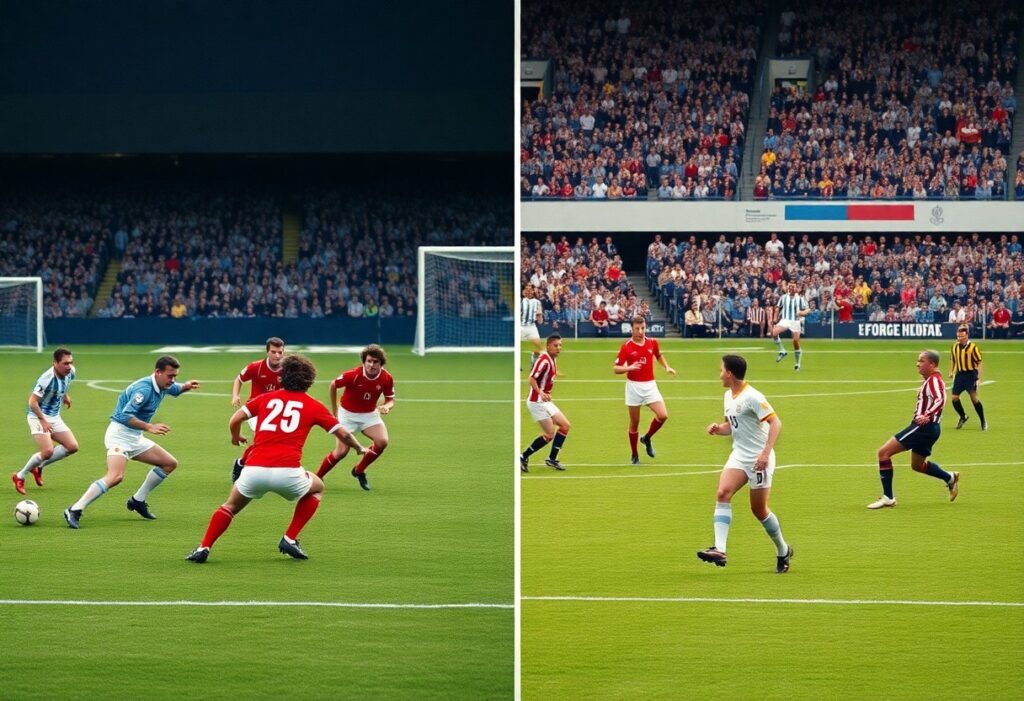
It’s a fascinating journey through time as we explore the transformation of football tactics in the World Cup, where teams have evolved from rigid, defensive strategies to dynamic, fluid formations. The shift reflects not only changes in player skill sets but also the influence of coaching innovations and technological advancements. This post investigates into iconic tactical eras, examining their impact and how the world’s greatest tournament continues to shape the future of the beautiful game.
The Historical Context of Football Tactics
The evolution of football tactics cannot be understood without considering the historical backdrop that shaped the game. From its inception in the mid-19th century, football was influenced by societal changes, technological advancements, and evolving athletic styles. The rudimentary rules from the Cambridge Rules of 1848 laid the groundwork for tactical development, leading to a complex interplay between offense and defense as teams sought to capitalize on emerging strategies over decades.
Early Defensive Strategies
In the early days of football, teams relied heavily on defensive formations to maintain control of the game. The 2-3-5 formation was predominant, often sacrificing offense for a more solid backline. Key strategies included man-to-man marking and a focus on physical play to disrupt opponents. This defensive mindset reflected both the nascent understanding of teamwork and the necessity to secure results with limited tactical knowledge.
Formation Evolution Through the Decades
Tactical formations in football have undergone significant transformation over the decades, adapting to the game’s evolving demands. The shift from the 2-3-5 to formations like the 4-4-2 in the late 20th century highlighted a more balanced approach to play. This change emphasized defensive solidity paired with quick counterattacks. In the modern era, formations such as 4-2-3-1 and 3-5-2 further diversified tactical options, allowing teams to exploit both compact defensive setups and fluid attacking movements.
The transition between formations illustrates football’s tactical diversification. The widespread adoption of the 4-4-2 in the 1980s and 90s provided midfield stability through a strong presence in both attack and defense. This was followed by the rise of the 4-3-3 and 4-2-3-1 in the 2000s, which prioritized possession and pressing. Teams began employing distinctive styles, as seen with FC Barcelona’s tiki-taka and Italy’s catenaccio. By adapting formations not only to players’ strengths but also to counter opponents, football tactics have entered an era that celebrates fluidity and complexity, shaping the landscape of modern football significantly.
The Rise of Total Football
Total Football emerged in the 1970s as a revolutionary approach, emphasizing positional interchangeability and collective responsibility. This philosophy enabled players to adopt multiple roles fluidly, creating a dynamic on-field environment where defenders could join attacks and forwards could contribute defensively. The Dutch national team epitomized this strategy, particularly during the 1974 World Cup, showcasing innovative formations that left opponents scrambling to adapt.
Key Innovations in Playstyles
Key innovations included the use of fluid formations, where players constantly switched positions, and an emphasis on ball possession, enabling teams to control the game’s tempo. The reliance on collective pressing transformed defensive strategies, making it difficult for opponents to execute their game plans. This adaptability forced players to enhance tactical awareness and technical skills, marking a significant evolution in football philosophy.
Impact on International Competitions
Total Football’s influence reshaped international competitions, as teams began to adopt this system to gain a competitive edge. By emphasizing tactical versatility and teamwork, nations that embraced this style often excelled, culminating in more dynamic matches and unexpected outcomes.
The *1974 World Cup*, where the Netherlands showcased Total Football, greatly influenced how other teams approached the game. The phenomenon sparked a tactical arms race, prompting nations to reassess their strategies and training regimens. By attempting to emulate the Dutch success, teams such as West Germany and Argentina integrated elements of Total Football into their own systems, ultimately leading to higher scoring, more engaging matches. The rise of this method marked a definitive shift in international play, as the concept of holistic teamwork became central to global football tactics.
The Defensive Renaissance
The resurgence of defensive strategies has marked a significant phase in football’s tactical evolution, emphasizing organization and discipline. Teams have shifted from an outright offensive mindset to incorporating robust defensive setups, showcasing a blend of classic and innovative approaches that effectively neutralize opponents while creating counter-play opportunities.
The Role of Classic Defenses
Classic defensive formations, such as the 4-4-2 and 5-3-2, have provided a solid foundation for modern tactics. These formations emphasize compactness and tactical discipline, allowing teams to maintain shape while countering opponent attacks. Associations like Italy’s renowned Catenaccio exemplify how strong defensive principles can lead to success at the highest levels.
Modern Adaptations in Defensive Play
Modern teams have adapted traditional defensive strategies to integrate elements like high pressing and fluidity. The adoption of formations such as the 3-5-2 allows for increased wing play while maintaining defensive solidity. Incorporating advanced analytics and positional play, teams leverage high defensive lines and sweeper-keeper roles to regain possession more effectively.
Teams like Liverpool and Manchester City exemplify modern adaptations, utilizing a high defensive line to squeeze opponents while their full-backs push forward under heavy press. Data-driven tactics such as expected goals (xG) inform defensive adjustments, enabling squads to analyze opponent patterns and vulnerabilities. The emphasis on versatility allows defenders to transition seamlessly into offensive roles, creating a dynamic playstyle that prioritizes both defensive robustness and attacking fluidity.
Tactical Flexibility and Player Roles
Tactical flexibility has become a cornerstone of modern football, enabling teams to adapt to dynamic match situations and opponents’ strategies. Coaches prioritize a range of player roles, allowing for seamless transitions between formations. Players trained in multiple positions enhance the team’s ability to improvise and respond effectively, cultivating a fluid style of play that matches the fast-evolving nature of the game.
The Importance of Versatility
Versatility in player roles significantly amplifies a team’s tactical options. Players like Frenkie de Jong and Joao Cancelo showcase the ability to perform in various positions within formations, facilitating both offensive and defensive maneuvers. This flexibility allows coaches to implement strategies tailored to specific contexts, potentially altering the outcome of crucial matches.
Case Studies of Tactical Flexibility
Analyzing specific instances of tactical flexibility highlights the impact of adaptable strategies in high-stakes environments. For example, the 2014 World Cup saw Germany utilize a flexible 4-3-3 formation, allowing players like Thomas Müller to operate in multiple roles, ultimately leading to their championship victory. Similarly, France’s 4-2-3-1 formation in 2018 showcased their ability to shift to a 4-4-2 in moments of need, contributing to their success.
- Germany 2014: 4-3-3 formation adaptability led to a World Cup win.
- France 2018: Transitioned from 4-2-3-1 to 4-4-2, increasing effectiveness against opponents.
- Spain 2010: Fluid midfield roles with players like Xavi & Iniesta, optimizing possession and pressing.
- Italy 2020: Flexible 4-3-3, allowing players like Chiesa to shift positions fluidly.
These cases of tactical flexibility illustrate how successful teams leverage versatile player roles to maximize their strategic arsenal. In the 2022 FIFA World Cup, teams such as Argentina deployed multi-role players like Leo Messi, enhancing adaptation throughout matches and contributing to their path toward the title.
- Argentina 2022: Messi’s adaptability in roles, pivotal in securing the championship.
- Netherlands 2022: Employed several formations, demonstrating the importance of tactical variability.
- Brazil 2022: Integrated players across multiple positions, leading to a strong offense.
- Portugal 2022: Adjusted tactics during matches, reflecting their player versatility.
The Influence of Technology and Data Analysis
Emerging technologies and advanced data analysis have fundamentally transformed football tactics. With tools like video analysis software and GPS tracking, teams now gain insights into player performance, positioning, and opponents’ weaknesses. This evolution allows coaches to design precise game plans and adjust strategies in real time, optimizing player effectiveness while providing a competitive edge in high-stakes matches like the World Cup.
Analytics in Tactical Planning
Data analytics has become integral to tactical planning, enabling coaches to dissect match statistics and player movements both pre- and post-game. For example, squads can now utilize complex algorithms to analyze passing patterns, shot accuracy, and defensive structures, leading to well-informed decisions about formations and player roles. This reliance on analytics enhances not just player performance but also fosters an environment of continuous improvement.
The Future of Data-Driven Strategies
The trajectory of data-driven strategies points towards even greater integration into the football landscape. Anticipated advancements in artificial intelligence will provide real-time decision-making support during matches, allowing for immediate tactical adjustments based on live data feeds. Further, clubs are likely to invest more in specialized analytics teams, focusing on uncovering hidden correlations that impact match outcomes, leading to a sharper tactical edge.
As football continues to embrace a data-centric approach, fans can expect enhanced levels of insight during broadcasts. The utilization of machine learning algorithms will unveil patterns that had previously gone unnoticed, thereby enriching the viewing experience. Clubs that effectively harness these technologies are poised to revolutionize preparation and in-game strategy, potentially trademarking their playing style in ways that may redefine modern football tactics altogether.
Lessons Learned from World Cup Historical Matches
World Cup matches serve as a rich tapestry of tactical evolution, showcasing how nations adjust strategies to confront unique challenges. Each tournament reflects a broader narrative, where lessons gleaned from past encounters shape future competitions. Teams that have succeeded often refer to these historic clashes, analyzing the mistakes and triumphs of their predecessors, thereby enhancing their tactical acumen on the grandest stage of football.
Turning Points in Tactical Evolution
Significant turning points in tactical evolution are marked by innovations that reshaped strategies. The introduction of the back four in the 1960s drastically shifted defensive structures, while the rise of total football in the Netherlands during the 1974 World Cup showcased the potential of fluid positional play. These shifts not only affected individual matches but had long-lasting implications for how teams prepare and respond at the highest levels.
Iconic Matches That Redefined Strategy
Matches that redefined strategy often embody a paradigm shift in football thinking. The 1970 World Cup semi-final between Italy and West Germany, known as the “Game of the Century,” demonstrated the effectiveness of counter-attacking football and endurance under pressure. Similarly, the 1982 World Cup, highlighted by Italy’s tactical discipline and the brilliance of players like Paolo Rossi, exemplified the heroic potential of a cohesive unit operating under a clear strategic philosophy.
The 1982 World Cup semi-final, where Italy overcame West Germany 3-1 after an intense match, crystallized the importance of tactical discipline and player synergy. Italy’s ability to absorb pressure and retaliate with lethal counter-attacks altered perceptions of defensive football, showcasing that success often lies in a balanced approach. Conversely, the legendary 1998 knockout match between France and Brazil marked a pivotal shift towards possession-based strategies. Brazil’s reliance on individual skill was countered by France’s cohesive teamwork, underlining how collective tactics can outmaneuver stellar solo performances. Such iconic encounters not only entertained but also paved the way for modern tactical frameworks in international football.
Conclusion
Presently, the evolution of tactics from classic defenses to modern football mastery illustrates the sport’s dynamic nature. As strategies have advanced, teams have adapted their methods to maximize efficiency and exploit opponent weaknesses. The World Cup serves as a premier platform for showcasing these tactical innovations, where traditional formations give way to fluid, adaptive styles. This progression reflects not only changes in player skills and coaching philosophies but also the broader influence of technology and analytics in shaping the future of football.
FAQ
Q: How have defensive tactics evolved in football leading up to the modern World Cup?
A: Defensive tactics have transformed from rigid formations like the WM and 4-4-2 to more fluid systems such as the 3-5-2 and the 4-3-3. Modern teams focus on pressuring opponents higher up the pitch, employing zonal marking, and utilizing players’ versatility to adapt to dynamic game situations.
Q: What role does technology play in the evolution of football tactics at the World Cup?
A: Technology has significantly influenced tactical development by enabling in-depth analysis of matches and player performance. Tools such as video analysis, GPS tracking, and performance metrics allow coaches to refine strategies and adapt game plans based on data-driven insights, enhancing team effectiveness.
Q: How have attacking tactics changed from classic football to the current World Cup strategy?
A: Attacking tactics have shifted from primarily using wing play and crosses to incorporating quick, intricate passing movements and positional fluidity. Modern teams emphasize creating overloads in central areas and transitioning rapidly from defense to attack, allowing for more unpredictable and effective offensive strategies.